The Digital Euro and Deposit-Market Competition: Portfolio Choice, Bank Switching, and Funding Adjustment (Zenodo (CERN European Organization for Nuclear Research))
Summary
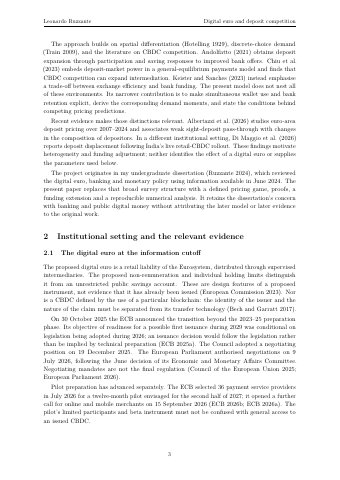
- On 30 October 2025, the ECB announced the transition beyond the 2023–25 preparation phase with potential readiness for first issuance during 2029.p.3
- The Eurosystem selected 36 payment service providers in July 2026 for a twelve-month pilot scheduled for the second half of 2027.p.3
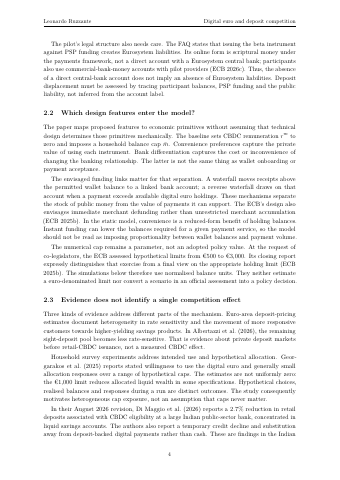
- At the request of co-legislators, the ECB assessed hypothetical individual holding limits ranging from €500 to €3,000.p.4
- Di Maggio et al. (2026) documented a 2.7% reduction in retail deposits associated with CBDC eligibility at a large Indian bank.p.4
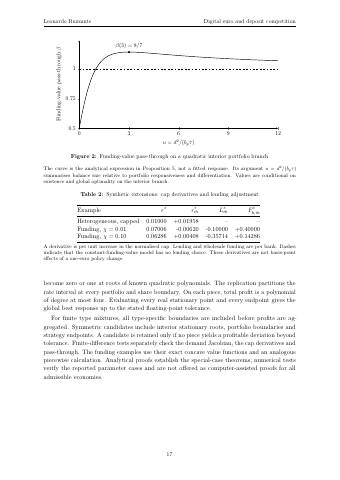
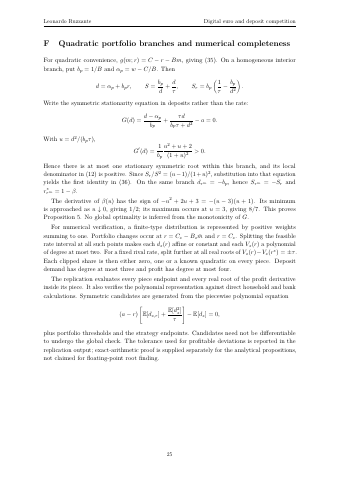
- Under a quadratic interior portfolio branch, the funding-value pass-through parameter β satisfies 1/2 < β ≤ 8/7, reaching its maximum at u = 3.p.15
- In Case 1 of the numerical simulations, introducing a holding limit m̄ = 0.30 leads to a deposit rate change of -21.43 basis points.p.16
Key insights
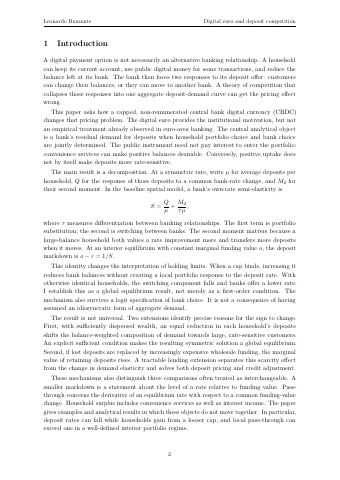
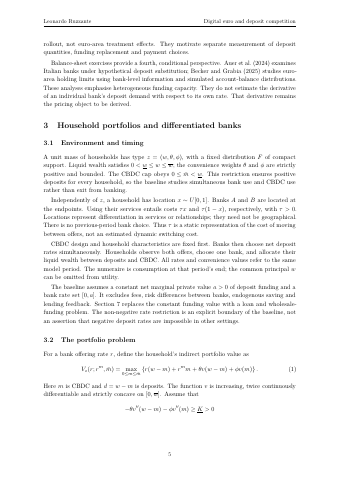
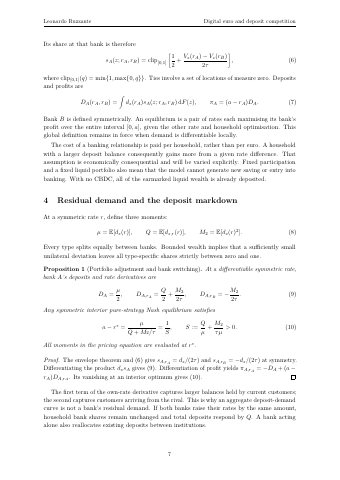
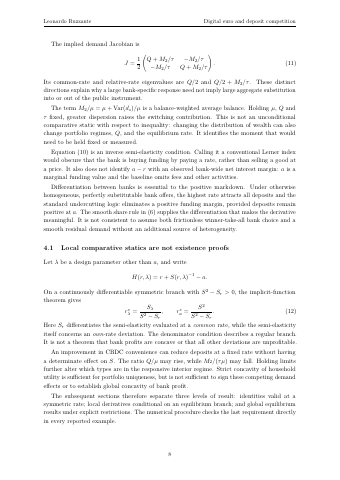
- Household bank switching depends on the second moment of deposit balances because larger accounts gain more from interest rate differences.p.2
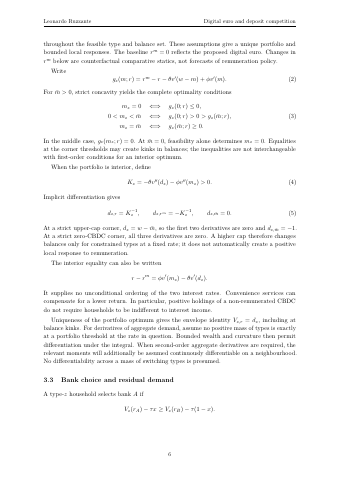
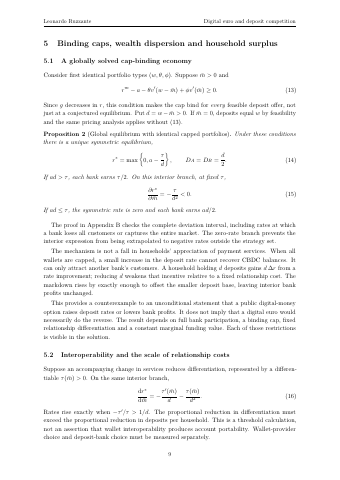
- With identical households and binding holding caps, raising the cap reduces the switching incentive and lowers the equilibrium deposit rate.p.2
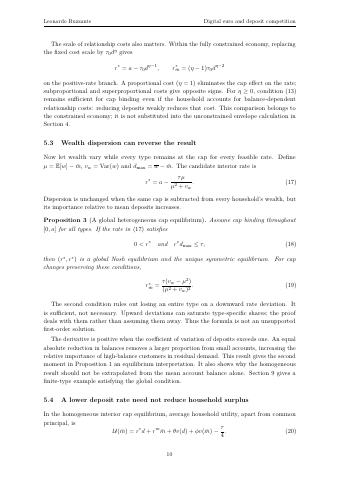
- Wealth dispersion can reverse the cap effect on deposit rates by shifting demand toward larger, rate-sensitive depositors.p.2
- Wholesale funding scarcity introduces an opposing effect that can raise deposit rates even when household portfolio responsiveness is zero.p.2
- Deposit rate markdowns, monetary-policy pass-through, and household surplus do not necessarily move together.p.2
- The absence of a direct central-bank account in the digital euro pilot does not imply an absence of Eurosystem liabilities.p.4
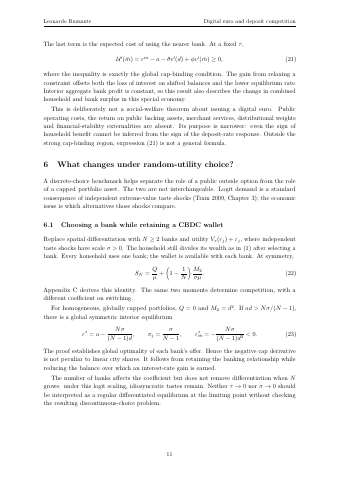
- Under logit bank choice with joint wallet use, the symmetric interior rate falls as the holding limit increases for capped portfolios.p.11
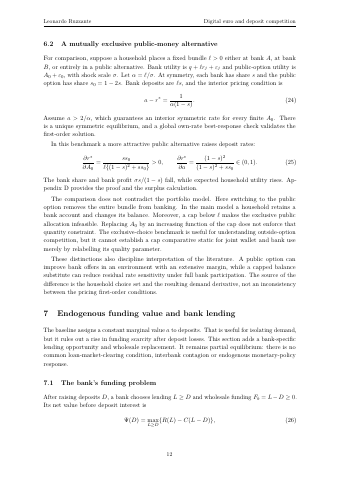
- A mutually exclusive public money alternative raises deposit rates when made more attractive, unlike a capped joint-use wallet.p.12
Pages
 p.1
 p.2
 p.3
 p.4
 p.5
 p.6
 p.7
 p.8
 p.9
 p.10
 p.11
 p.12
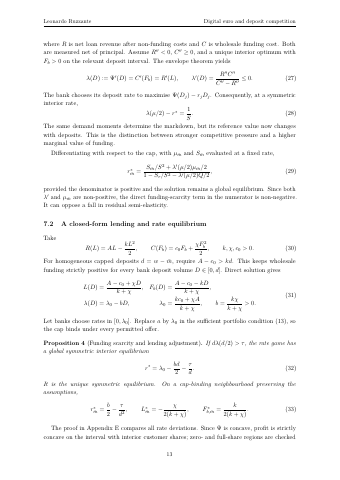 p.13
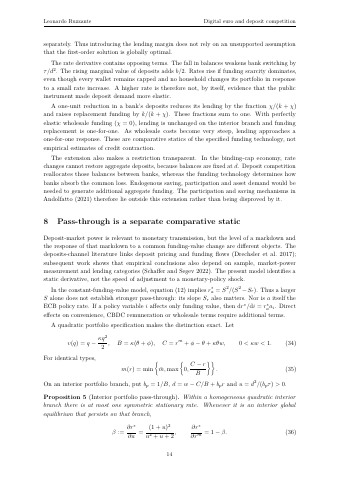 p.14
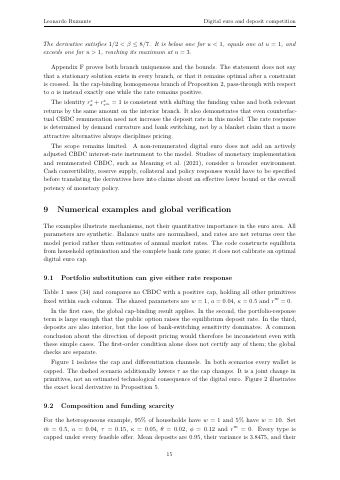 p.15
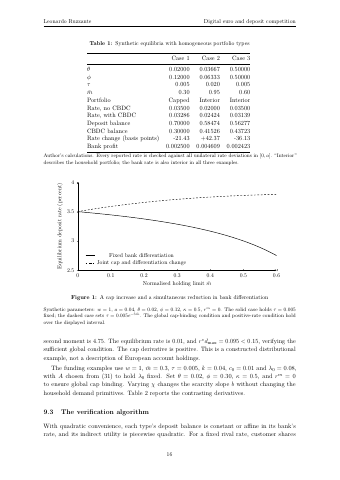 p.16
 p.17
 p.18
 p.19
 p.20
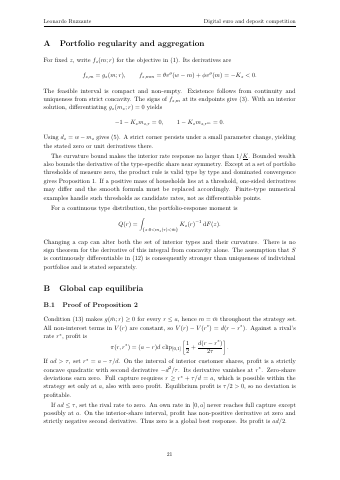 p.21
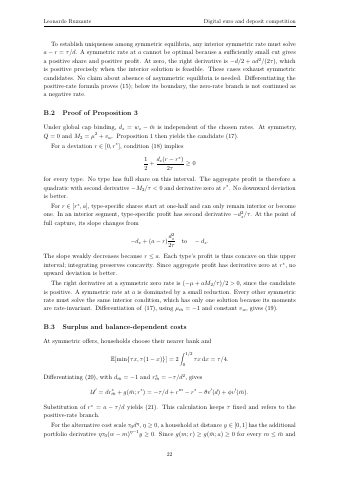 p.22
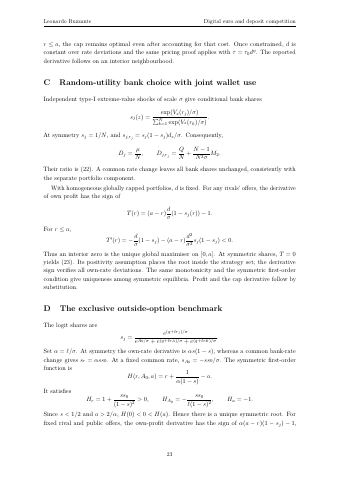 p.23
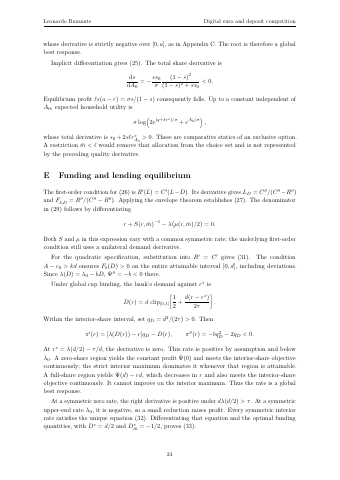 p.24
 p.25
 p.26
 p.27
 p.28
Topics and entities
Summary and figures generated from the document and checked automatically: every number shown appears on the cited page. Publishers can request removal.