Technology, Regulation, and the Divergent Trajectories of Retail and Cross-Border Central Bank Digital Currency (OpenAlex (recherche mondiale))
Largest segment
Journal of Payments Strategy and Systems
Most frequent publication outlet in retained Scopus corpus p.6
What changed
Interest-bearing commercial bank liabilities covered by deposit insurance
Legal classification of e-CNY bank wallet balances from 1 January 2026 p.8
Summary
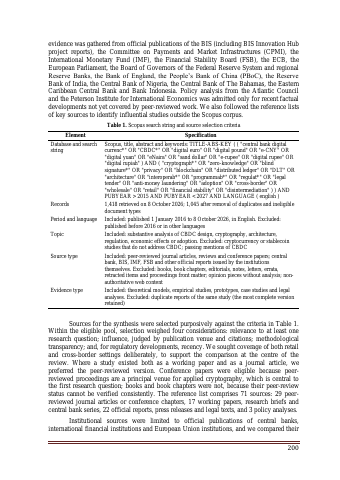
- A Scopus bibliometric search conducted on 8 October 2026 retrieved 1,418 records, from which 1,045 were retained for critical analysis.p.1
- In the 2024 BIS survey, 91 per cent of 93 responding central banks reported exploring retail or wholesale CBDC, driven by stablecoins and cryptoassets.p.1
- The Atlantic Council tracker recorded 146 countries and currency unions, representing over 98 per cent of global gross domestic product (GDP), exploring CBDCs as of May 2026.p.1
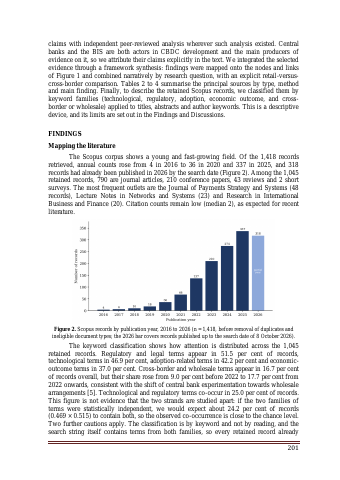
- Analysis of the literature shows regulatory and legal terms present in 51.5 per cent of records, while technological terms co-occurred at 25.0 per cent, matching chance levels.p.6
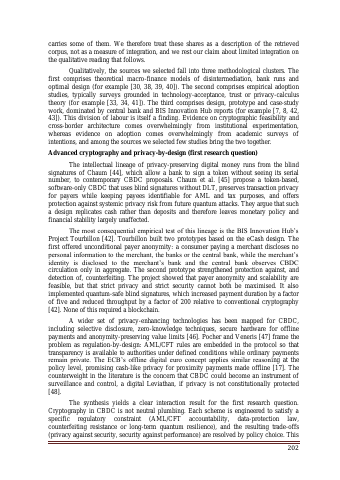
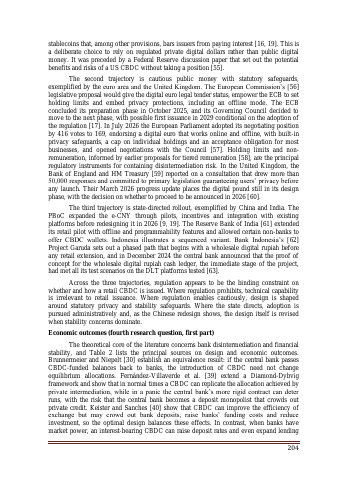
- Testing of quantum-safe blind signatures in Project Tourbillon showed a payment duration increase by a factor of five and a throughput reduction by a factor of 200.p.7
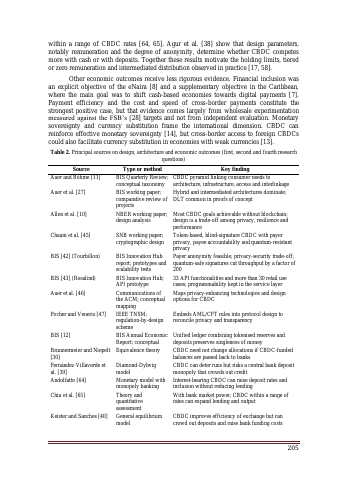
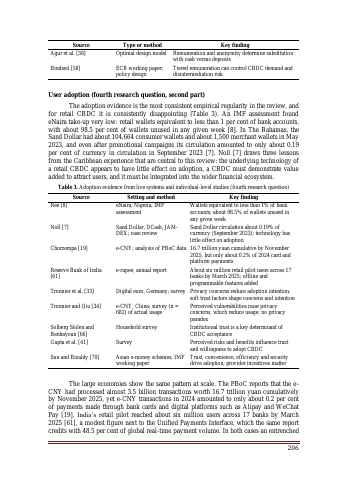
- Implementation of Nigeria's eNaira showed low engagement, with retail wallets under 1 per cent of bank accounts and about 98.5 per cent of wallets remaining unused weekly.p.11
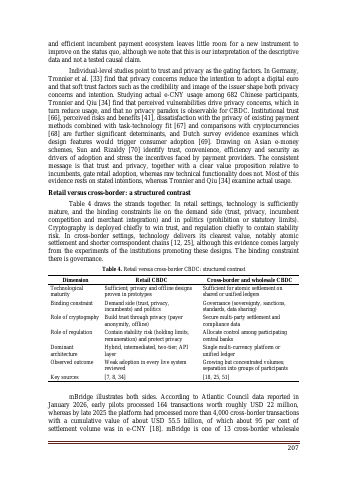
- Project mBridge scaled up by late 2025 to process over 4,000 transactions worth a cumulative value of about USD 55.5 billion.p.12
Key insights
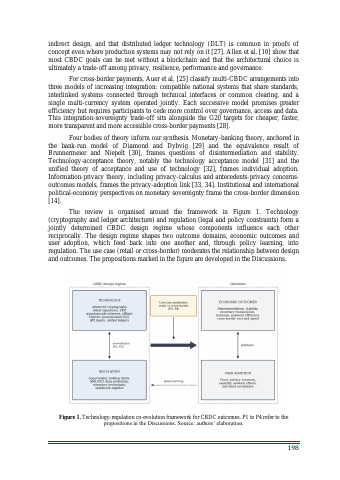
- Technology and regulation terms in CBDC literature co-occur at approximately the level expected by statistical chance, reflecting separate parallel research bodies.p.1
- The operational choices in retail CBDC designs lean heavily toward hybrid, intermediated two-tier structures across central banks.p.2
- Project Tourbillon proved that payer anonymity and scalability are technically feasible, though strict privacy and strict security cannot both be maximized concurrently.p.7
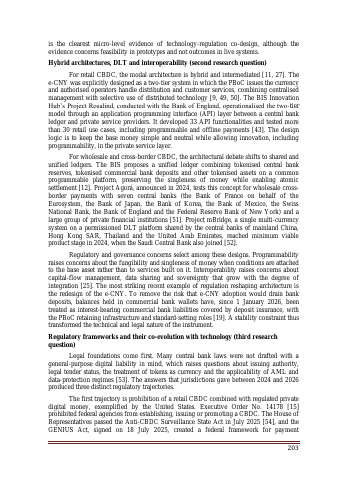
- Executive Order No. 14178 formally prohibited federal agencies in the United States from establishing, issuing, or promoting a CBDC.p.8
- China altered e-CNY architecture from 1 January 2026 by establishing commercial bank wallet balances as interest-bearing commercial bank liabilities covered by deposit insurance.p.8
- Retail CBDC adoption remains constrained globally because incumbent payment platforms offer strong competition, while consumer usage is gated by privacy concerns and institutional trust.p.11
- Wholesale cross-border multi-CBDC platforms demonstrate clear operational efficiency gains, but their expansion remains bound by monetary sovereignty and governance trade-offs.p.12
Pages
 p.1
 p.2
 p.3
 p.4
 p.5
 p.6
 p.7
 p.8
 p.9
 p.10
 p.11
 p.12
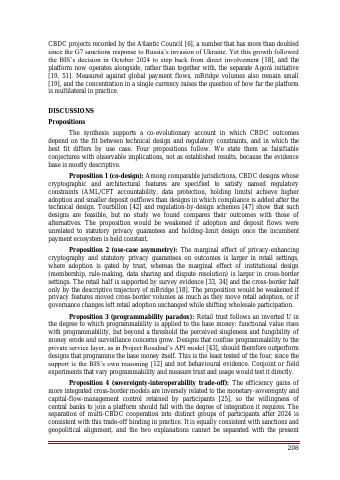 p.13
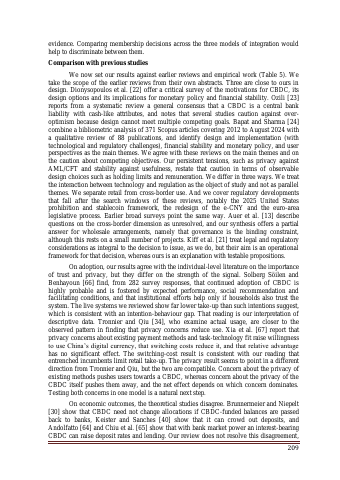 p.14
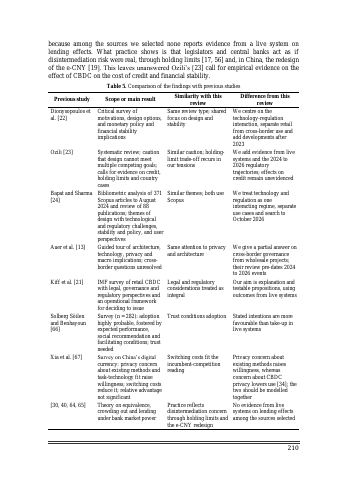 p.15
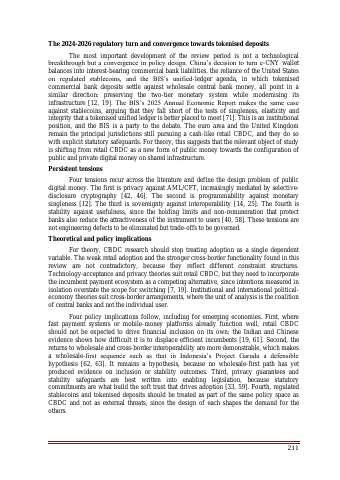 p.16
 p.17
 p.18
 p.19
 p.20
 p.21
 p.22
 p.23
Topics and entities
Summary and figures generated from the document and checked automatically: every number shown appears on the cited page. Publishers can request removal.