Qualitative Inquiry into FinTech Operation in Nigeria: A User Perspective (Journal of Business Development and Management Research)
Summary
- The study conducted qualitative in-depth interviews with 26 FinTech users across Kano (14) and Abuja (12) to examine digital payment experiences.p.6
- FinTech adoption in Nigeria is among the highest in Africa, with 54% to over 60% of adults actively using digital financial services.p.2
- The number of active FinTech start-ups in Nigeria expanded from 144 in 2021 to 217 in 2023.p.4
- By 2025, Nigeria hosted more than 430 FinTech start-ups, maintaining its status as Africa's leading FinTech hub.p.4
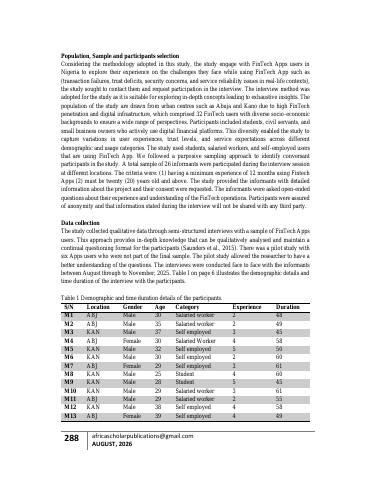
- Study participants were selected based on criteria requiring a minimum of 12 months of FinTech app experience and an age of twenty (20) years old and above.p.7
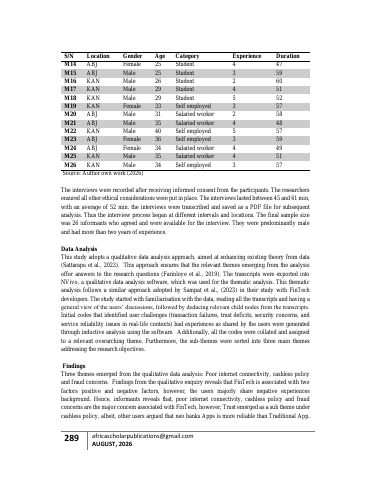
- Recorded semi-structured interviews lasted between 45 and 61 min, averaging 52 min per informant session.p.8
Key insights
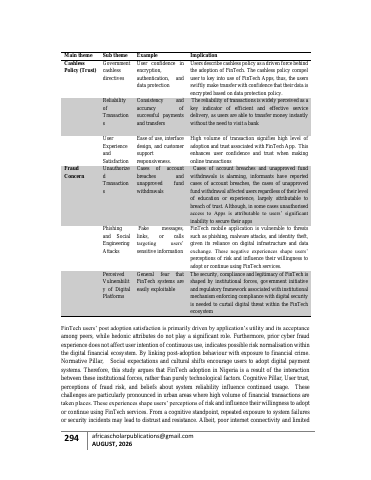
- User perspectives on Nigerian FinTech platforms are primarily defined by three overarching themes: poor internet connectivity, cashless policy, and fraud concerns.p.8
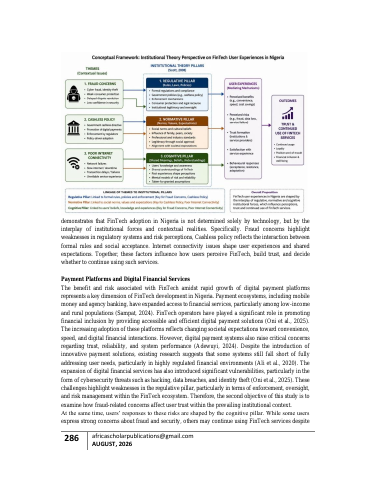
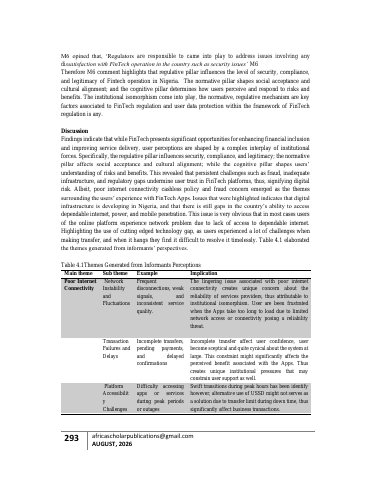
- Institutional Theory indicates that regulative, normative, and cognitive pillars collectively govern user trust, legitimacy, and risk perception in FinTech systems.p.1
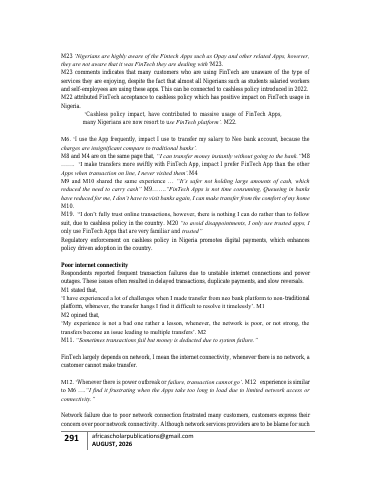
- Persistent infrastructure challenges such as network instability and power outages lead to frequent transaction failures, duplicate debits, and delayed money reversals.p.10
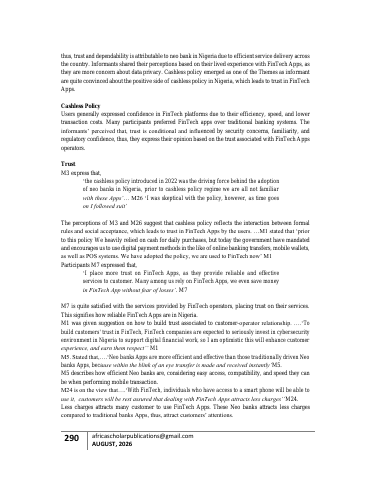
- The implementation of the government cashless policy in 2022 served as the main institutional driver accelerating user transition to neo-bank applications.p.9
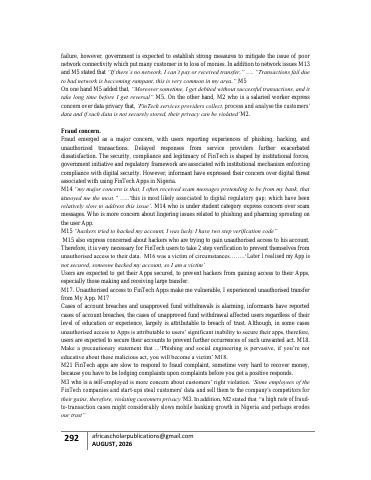
- Pervasive digital threats including phishing, account hacking, and unauthorized debits undermine overall consumer confidence in mobile payment applications.p.11
- Users frequently prefer neo-bank solutions over traditional bank applications due to faster transfer speeds, higher reliability, and lower transaction fees.p.9
- Customer dissatisfaction is heightened by slow response times and difficult resolution processes when lodging fraud complaints with FinTech operators.p.11
- Repeated exposure to security incidents and operational flaws leads to risk normalization, where users continue platform usage despite known cyber risks.p.13
Pages
 p.1
 p.2
 p.3
 p.4
 p.5
 p.6
 p.7
 p.8
 p.9
 p.10
 p.11
 p.12
 p.13
 p.14
 p.15
 p.16
Topics and entities
Summary and figures generated from the document and checked automatically: every number shown appears on the cited page. Publishers can request removal.