Dynamics and Fragilities of the Moroccan Entrepreneurial Ecosystem: From Seeding to Sustainable Growth
Morocco's National Entrepreneurship Context Index (NECI) score declined from 4.3 to 3.9 during the 2024–2025 period.
37 documents
Morocco's National Entrepreneurship Context Index (NECI) score declined from 4.3 to 3.9 during the 2024–2025 period.
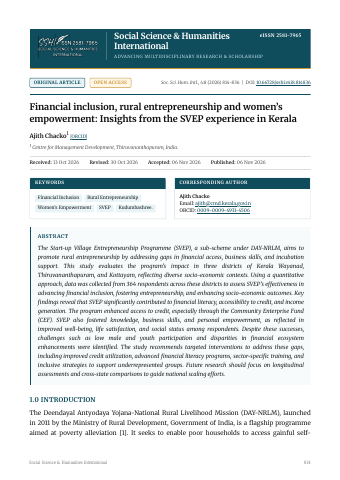
SVEP implementation blocks receive an average financial allocation of Rs. 5-6 crore per block, with around Rs. 2.5 crore earmarked as Community Enterprise Funds (CEF).
Canada's business entry rates fell from 24.5% in the 1980s to roughly 13% pre-pandemic, with fewer than 1.5% of small businesses ever scaling into medium or large firms.
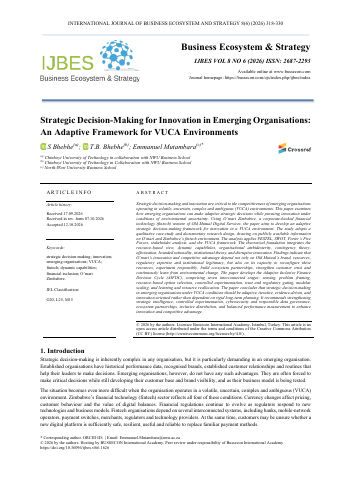
O’mari Zimbabwe was launched in 2023 by Old Mutual Zimbabwe through Old Mutual Digital Services as an interoperable digital financial platform.
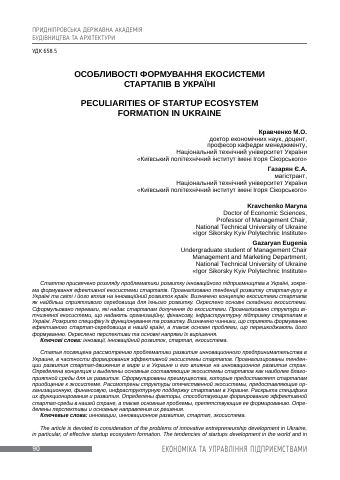
The share of innovative products in Ukraine's total output does not exceed 2%, compared to 85% in the US, 75% in Japan, and 55% in Germany.
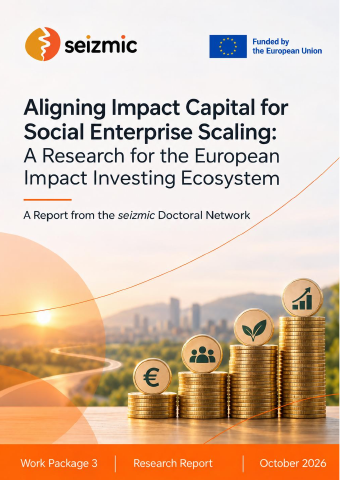
Institutional investors such as pension funds and insurance companies represent around 28% of assets under management in European private impact markets.
Vietnam's Law on Public-Private Partnerships 2020 defines 5 eligible sectors but omits specialized financial, digital data, and legal sandbox infrastructure.
Poland's fintech ecosystem includes over 400 active companies employing over 22,000 people.
Startups in Algeria face high operational risks and financial constraints, with a failure rate between 60 % and 90 %, and around 10 % failing during their first year of existence.
The Indian fintech market is projected to reach US$1 trillion by 2030, driven by rapid digital transformation across financial services.
Finnish VC funds raised a total of €678 million (+115%) in new funds for future investments.
The Venture Capital and Private Equity sector in Spain manages a portfolio of over 2,500 companies, representing 6.27% of Spain's GDP.
Spanish startups raised €1.9B in VC investment in 2024.
Swiss venture capital invested capital recorded a 23.9% increase after two consecutive years of decline.
Total VC investments in Swedish portfolio companies dropped sharply in 2023 to SEK 4.4 billion from SEK 9.6 billion in 2022.
The Nasdaq Composite Index grew 38% over the last twelve months, adding $8.4 trillion in market capitalisation.
The combined enterprise value of Spanish startups surpassed €100B in 2023.
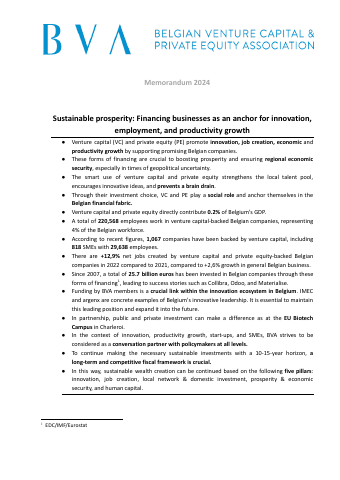
Since 2007, a total of 25.7 billion euros has been invested in Belgian companies through venture capital and private equity.
Europe's tech workforce reached 3.5M employees in 2024, expanding at a 24% compounded annual growth rate since 2015.
European venture capital firms receive an average of 851 investment proposals per year, with 6% leading to closed deals.
European tech ecosystem value bounced back to $3 trillion, recovering the $400 billion that was wiped out in 2022.
Tech Titans increased their market cap by 36% over the past year, adding $2.4T in value.
Combining 2021 and 2022 accounted for one third of all VC volumes invested since 2007.
Private capital in Spain invested an all-time record total volume of €9,238 million across 960 operations in 2022.
In 2021, Private Equity and Venture Capital in Spain invested a total volume of €7.572,7M across a record 933 investments.
Software and cloud giants with valuations above $100B lost approximately ~35% of their market capitalization.
In Vienna, 44 financing rounds were completed in 2021 (as of July 22), with investment volume increasing from €121 million in the previous year to €464 million.
European VC delivered EUR 12bn in new investment volumes in 2020, representing 7% growth over the previous year.
Microsoft represents c. 55% of total market value among software and cloud companies above $100bn in market cap.
According to Copenhagen Economics analysis, Swedish GDP is currently 0.8% higher than it would otherwise be due to venture capital.