Cybersecurity Challenges in Indian Fintech Start-Ups: A Regulatory Lens (International Journal of Technology & Emerging Research)
Summary
- The Indian fintech market is projected to reach US$1 trillion by 2030, driven by rapid digital transformation across financial services.p.2
- Digital lending accounts for approximately 27% of the fintech market, while digital payments represent nearly 22% of the market and over 45% of digital transactions through UPI.p.4
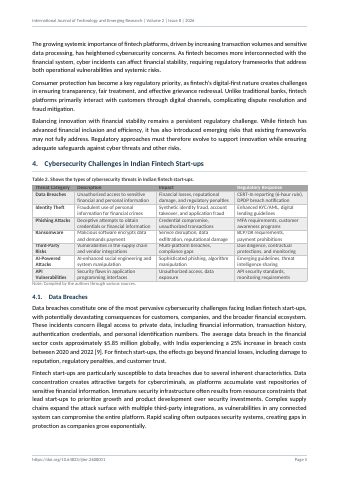
- The average financial sector data breach costs $5.85 million globally, with India experiencing a 25% increase in breach costs between 2020 and 2022.p.5
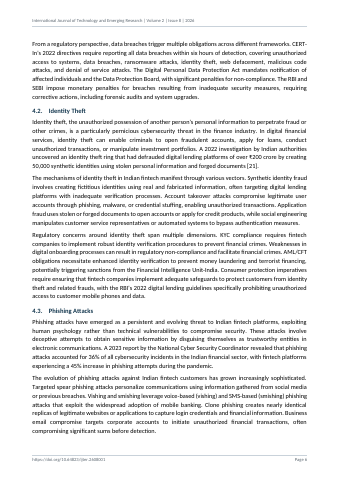
- In 2022, an identity theft ring defrauded digital lending platforms of over ₹200 crore by creating 50,000 synthetic identities using stolen data.p.6
- Phishing attacks accounted for 36% of all cybersecurity incidents in the Indian financial sector in 2023.p.6
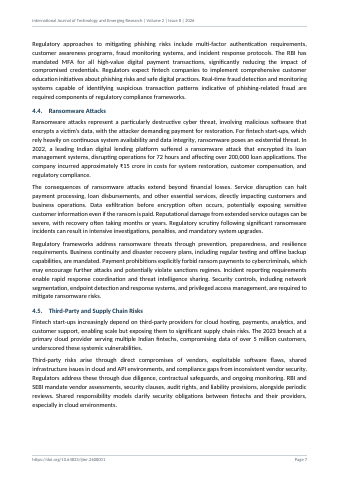
- A 2022 ransomware attack on a digital lending platform disrupted operations for 72 hours, affected over 200,000 loan applications, and cost approximately ₹15 crore.p.7
- A major 2023 cloud provider breach compromised the customer data of over 5 million individuals across multiple fintech platforms.p.7
Key insights
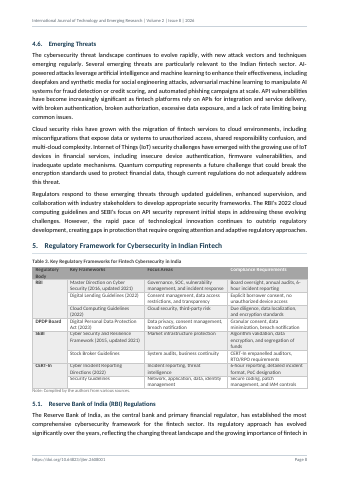
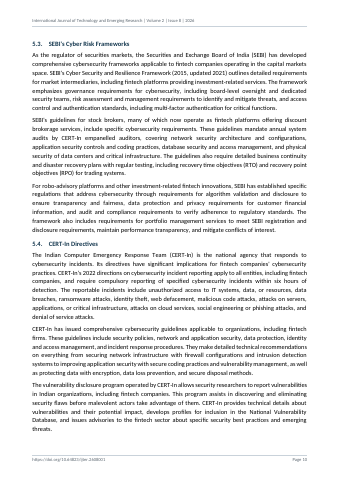
- CERT-In directions enforce a mandatory 6-hour window for fintech companies to report detected cybersecurity incidents.p.5
- India's digital payment ecosystem relies heavily on UPI, which processes over 10 billion monthly transactions.p.3
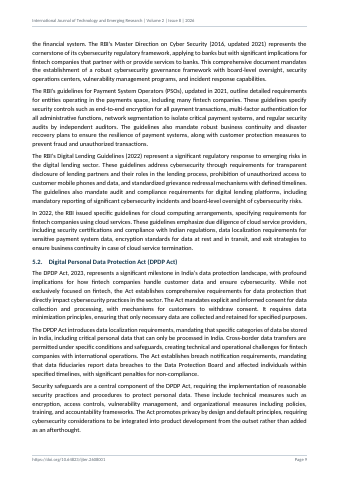
- The Digital Personal Data Protection Act of 2023 mandates explicit borrower consent, data minimization, and mandatory breach reporting to the Data Protection Board.p.9
- Fintech start-ups face high operational vulnerability due to resource constraints that lead them to prioritize rapid growth over security infrastructure.p.5
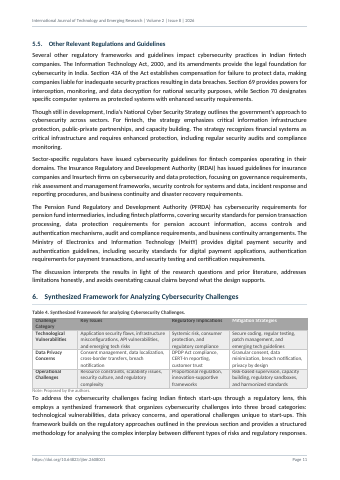
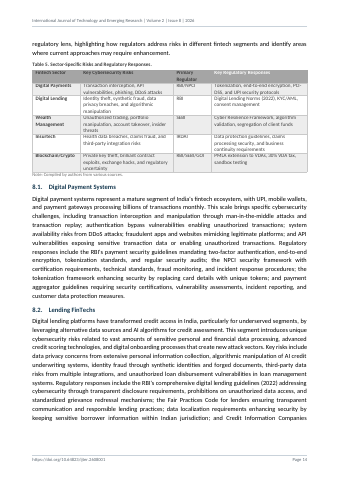
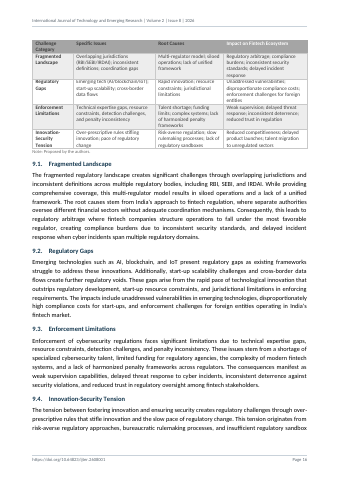
- Regulatory overlaps across the RBI, SEBI, IRDAI, and CERT-In create compliance friction and fragmented oversight for start-ups.p.16
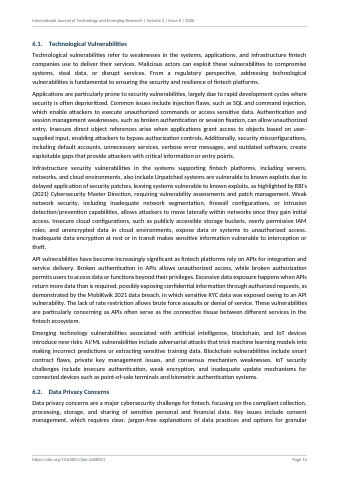
- Application security flaws frequently stem from rapid development cycles that leave unpatched vulnerabilities and broken authentication controls.p.12
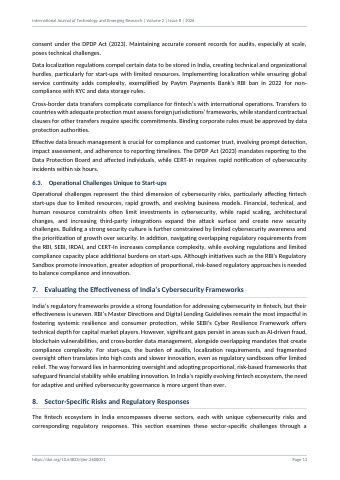
- Data localization requirements under Indian law create significant organizational and technical compliance challenges for start-ups with cross-border operations.p.13
Pages
 p.1
 p.2
 p.3
 p.4
 p.5
 p.6
 p.7
 p.8
 p.9
 p.10
 p.11
 p.12
 p.13
 p.14
 p.15
 p.16
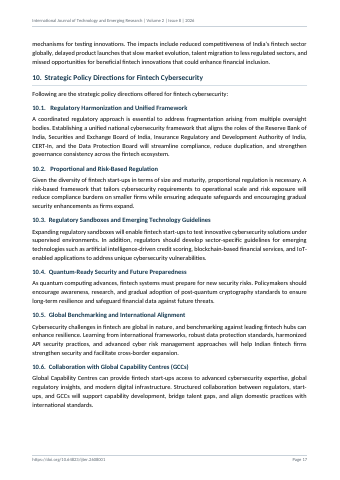 p.17
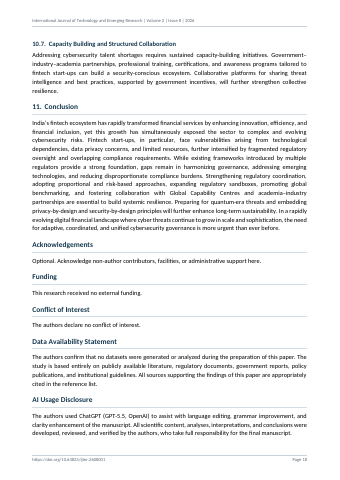 p.18
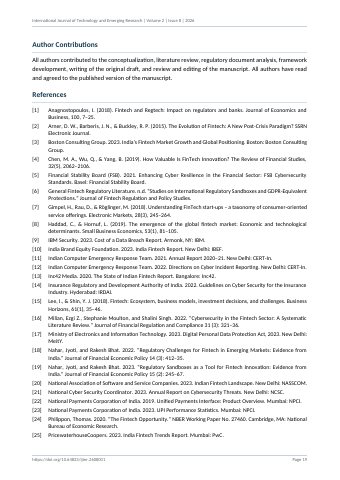 p.19
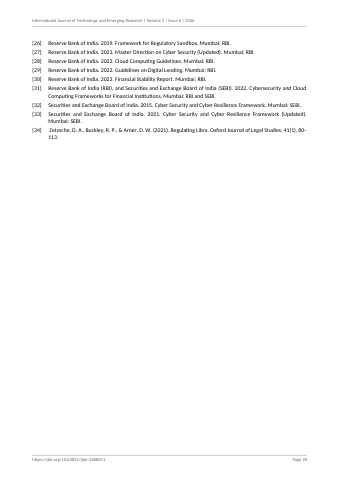 p.20
Topics and entities
Summary and figures generated from the document and checked automatically: every number shown appears on the cited page. Publishers can request removal.