Electronic Banking Fraud in South Africa: Key Drivers in the Digital Age (ACCESS Access to science business innovation in digital economy)
Largest segment
60% %
Share of reported digital banking fraud represented by application fraud in 2023 p.2
Summary
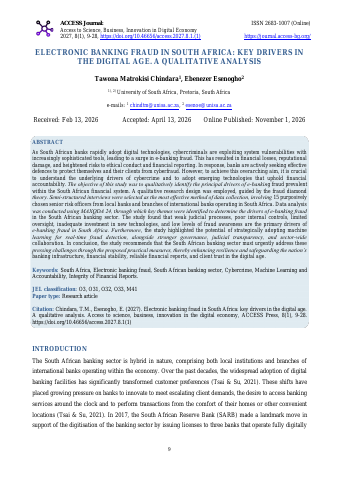
- In 2017, the South African Reserve Bank issued operational licenses to 3 fully digital banks, escalating competitive dynamics across the sector.p.1
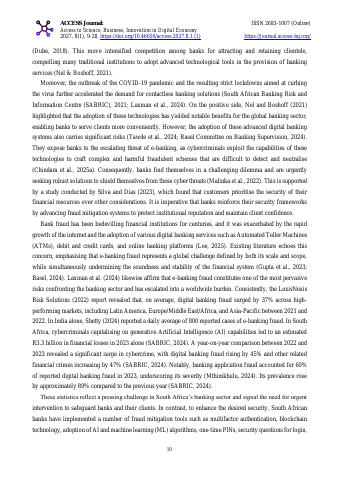
- Generative AI tools exploited by cybercriminals generated an estimated R3.3 billion in financial losses in South Africa during 2023.p.2
- Between 2022 and 2023, digital banking fraud in South Africa grew by 45%, with banking application fraud surging by approximately 89%.p.2
- Banking application fraud represented 60% of all reported digital banking fraud incidents in South Africa in 2023.p.2
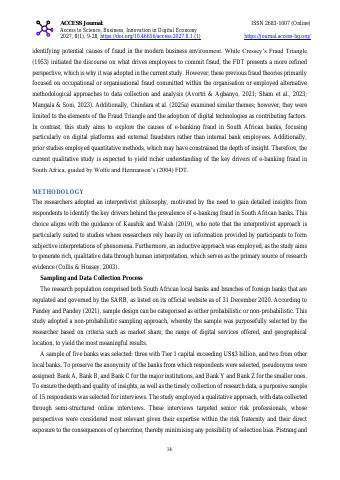
- The study examined 5 banks, including 3 institutions holding Tier 1 capital in excess of US$3 billion, conducting interviews with 15 senior risk officers.p.6
Key insights
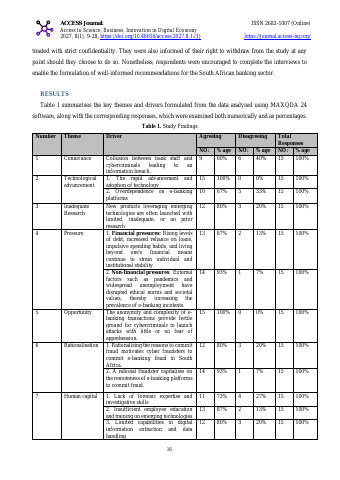
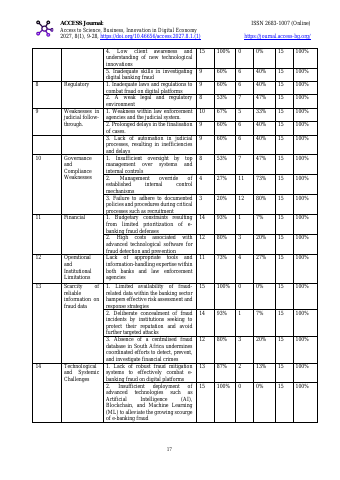
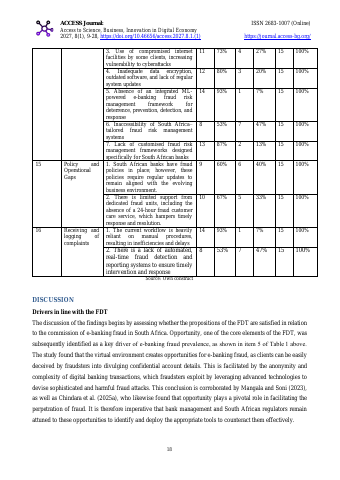
- 100% of study participants noted the complete absence of integrated machine learning-powered frameworks for real-time fraud deterrence and detection.p.9
- 67% of participants identified limited support from dedicated fraud units, including the absence of 24-hour customer care services, as a operational gap.p.15
- 80% of risk officers confirmed that executive management adheres to documented policies and procedures during recruitment processes.p.13
Pages
 p.1
 p.2
 p.3
 p.4
 p.5
 p.6
 p.7
 p.8
 p.9
 p.10
 p.11
 p.12
 p.13
 p.14
 p.15
 p.16
 p.17
 p.18
 p.19
 p.20
Topics and entities
Summary and figures generated from the document and checked automatically: every number shown appears on the cited page. Publishers can request removal.