Digital Business Ecosystem Vulnerability in Africa: A Multi-Method Analysis of Economic Scale and Cyber-Loss Exposure (OpenAlex (recherche mondiale))
What changed
R44.1 million (USD 2.45 million) from R54.10 million (USD 2.95 million)
South Africa Average Breach Cost (2024 vs 2025) p.3
Summary
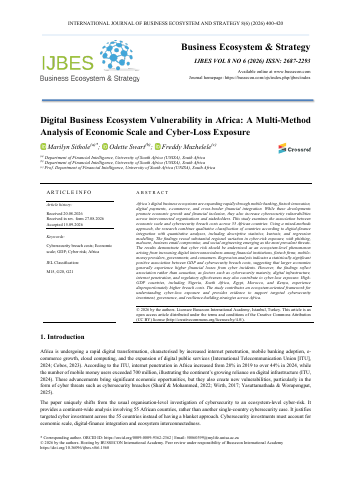
- Internet penetration in Africa rose from 28% in 2019 to over 44% in 2024, while mobile money users surpassed 700 million.p.1
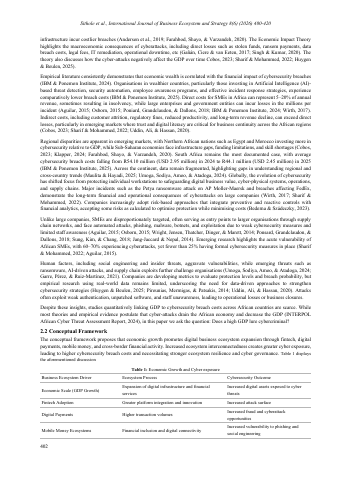
- Direct cyberattack costs for small and medium-sized enterprises (SMEs) in Africa can account for 5–20% of annual revenue.p.3
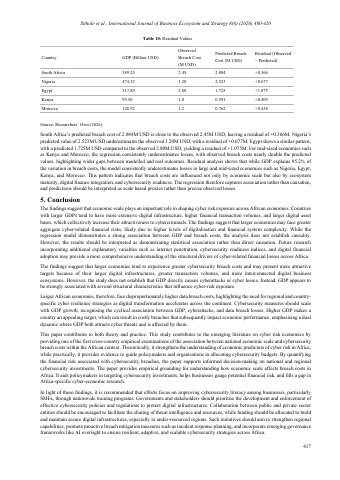
- South Africa's average cybersecurity breach cost decreased from R54.10 million (USD 2.95 million) in 2024 to R44.1 million (USD 2.45 million) in 2025.p.3
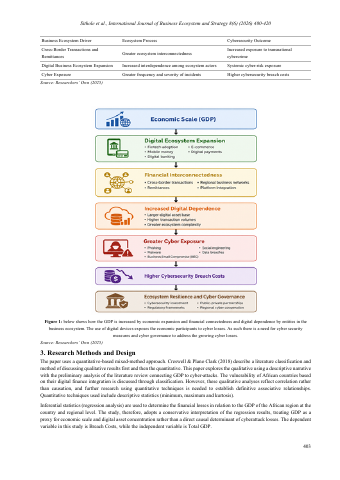
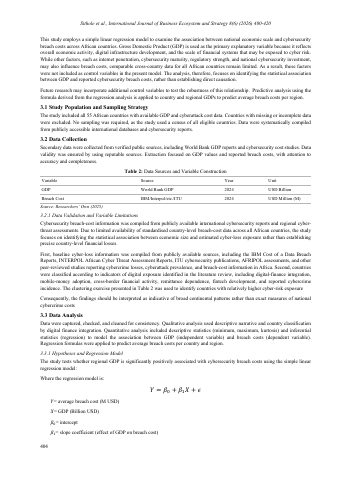
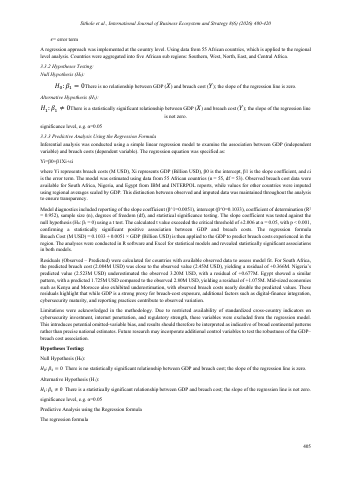
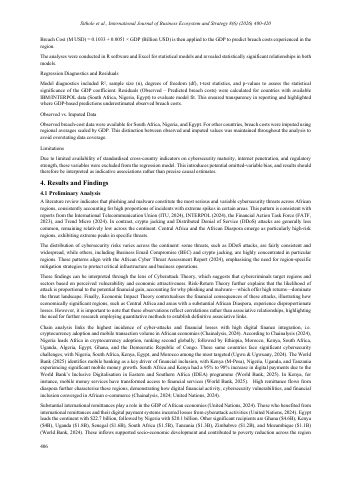
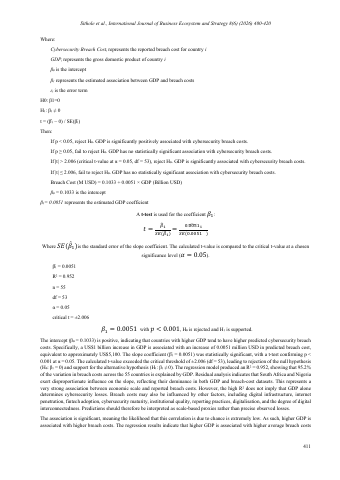
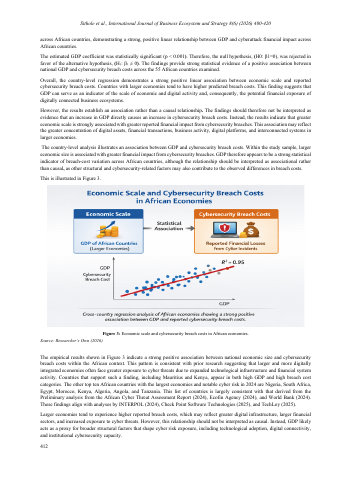
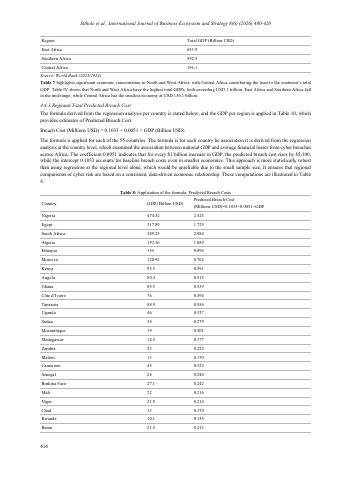
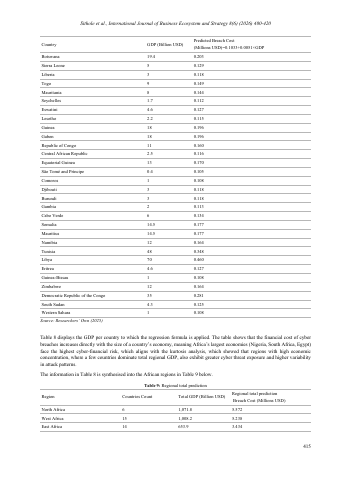
- Linear regression across 55 African countries yielded an R² of 0.952 using the formula Breach Cost (M USD) = 0.1033 + 0.0051 × GDP (Billion USD).p.6
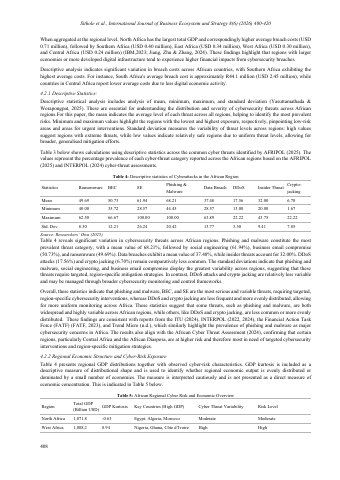
- Phishing and malware represent the most prevalent regional threat category with a mean prevalence of 68.21%, followed by social engineering at 61.94%.p.9
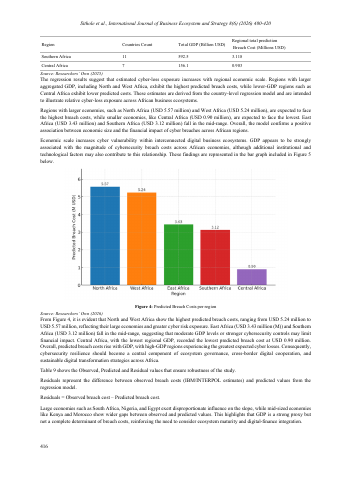
- South Africa's predicted breach cost of 2.084M USD generated a residual of +0.366M against the observed value of 2.45M USD.p.18
Key insights
- High-GDP African economies including Nigeria, South Africa, Egypt, Morocco, and Kenya experience disproportionately higher data breach costs.p.1
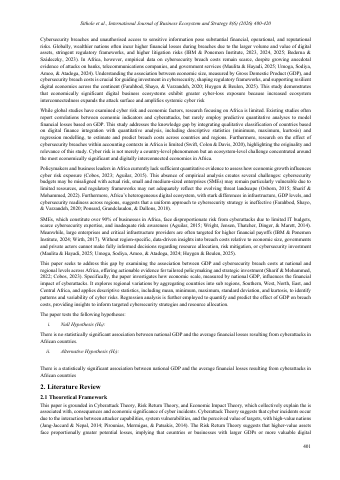
- SMEs represent over 90% of businesses in Africa and face heightened vulnerability due to limited IT budgets and scarce cybersecurity expertise.p.2
- Between 60–70% of African SMEs experience cyberattacks, yet fewer than 25% have formal cybersecurity measures in place.p.3
- A simple linear regression model across 55 African countries confirms a statistically significant positive association between GDP and breach costs with p < 0.001.p.6
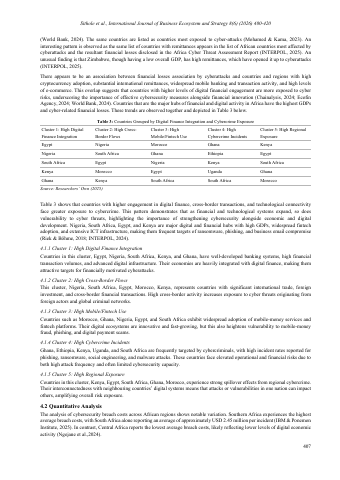
- Nigeria leads Africa in cryptocurrency adoption, placing second globally.p.7
- Crypto jacking and Distributed Denial of Service (DDoS) attacks are less common overall, showing continent-wide mean prevalence rates of 6.70% and 17.56% respectively.p.9
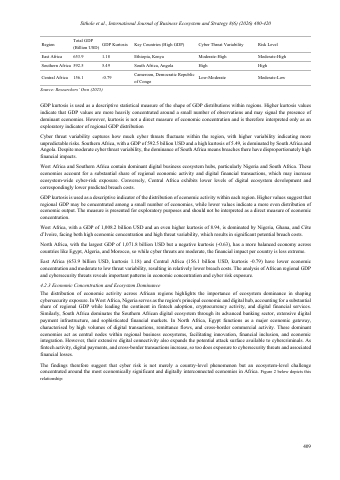
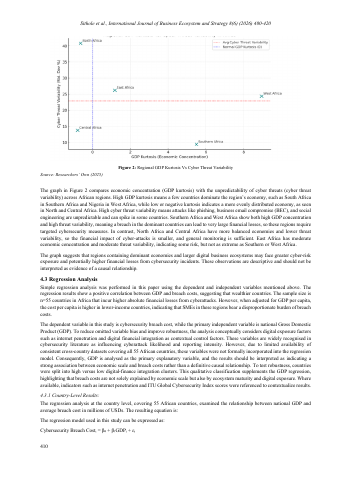
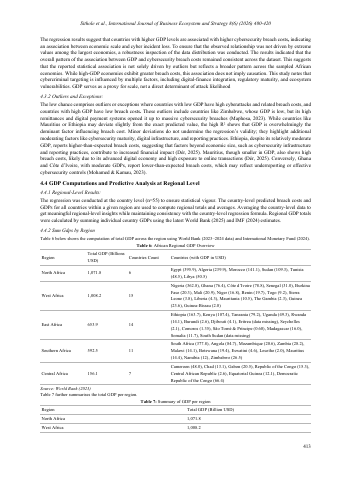
- Southern Africa exhibits a high regional GDP kurtosis of 5.49, reflecting strong economic concentration in South Africa and Angola.p.10
- Regression predictions consistently underestimate real losses in larger and mid-sized economies such as Nigeria, Egypt, Kenya, and Morocco.p.18
Pages
 p.1
 p.2
 p.3
 p.4
 p.5
 p.6
 p.7
 p.8
 p.9
 p.10
 p.11
 p.12
 p.13
 p.14
 p.15
 p.16
 p.17
 p.18
 p.19
 p.20
 p.21
Topics and entities
Summary and figures generated from the document and checked automatically: every number shown appears on the cited page. Publishers can request removal.