Artificial Intelligence Fintech and the Interaction between Digital and Traditional Finance in Expanding Financial Inclusion among Underserved United States Communities (American Journal of Financial Technology and Innovation)
Summary
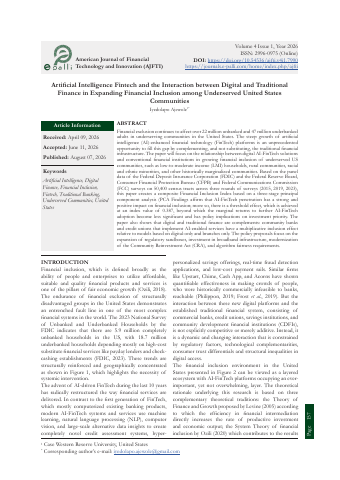
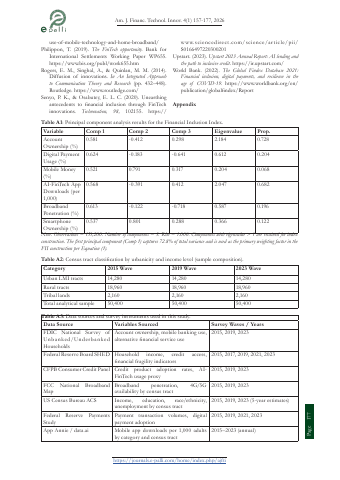
- Financial exclusion affects over 22 million unbanked and 47 million underbanked adults in underserved communities in the United States.p.2
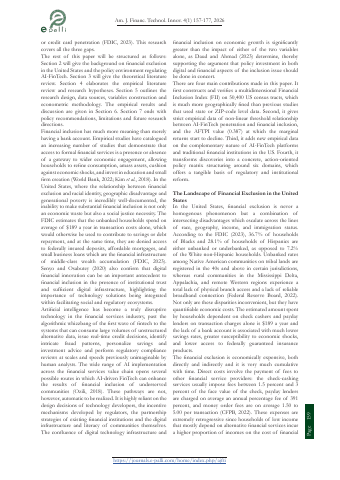
- Unbanked households spend an average of $189 a year in transaction costs alone.p.4
- According to the FCC, approximately 21.3 million Americans lack access to broadband internet at required speeds.p.6
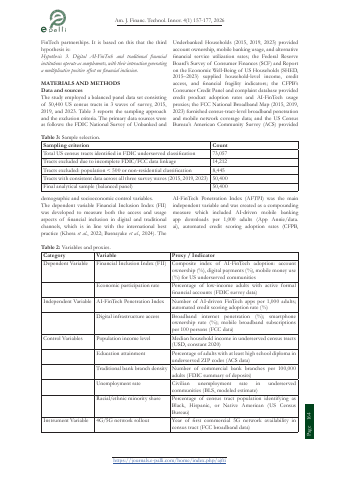
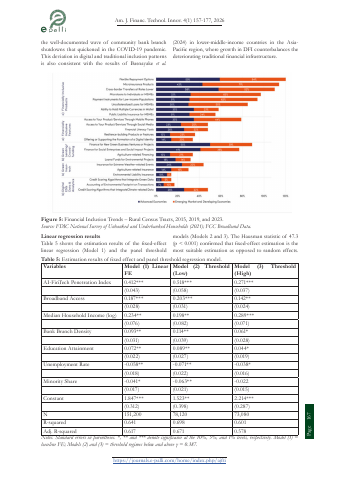
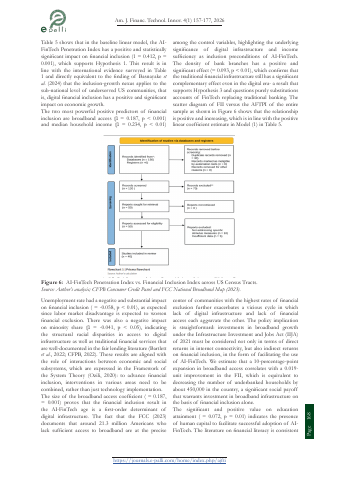
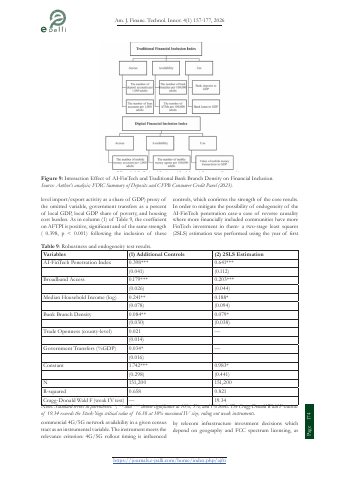
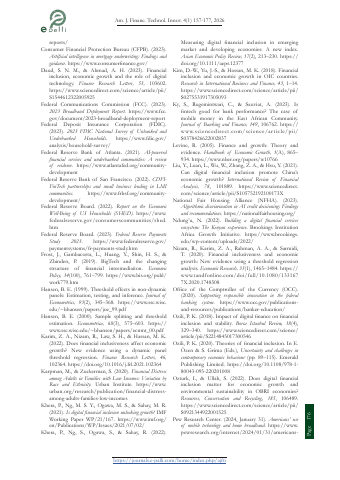
- The baseline linear model demonstrates that the AI-FinTech Penetration Index has a positive impact on financial inclusion with a coefficient of 0.412.p.13
- A panel threshold regression identifies a non-linear threshold effect at an AI-FinTech Penetration Index value of 0.387.p.14
Key insights
- AI-FinTech penetration has a statistically significant positive effect on financial inclusion across underserved US census tracts.p.13
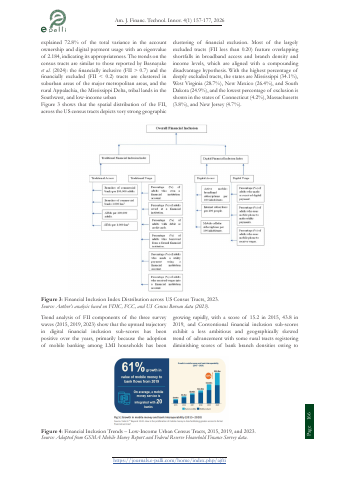
- A structural threshold exists at an index value of 0.387, beyond which marginal inclusion returns from AI-FinTech adoption start to diminish.p.2
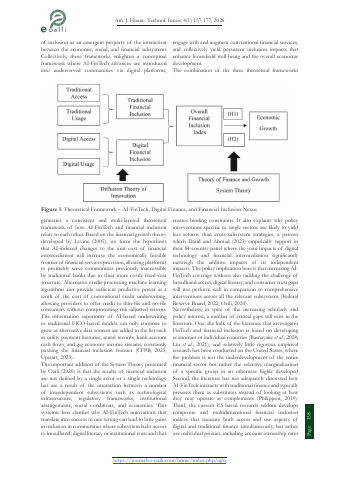
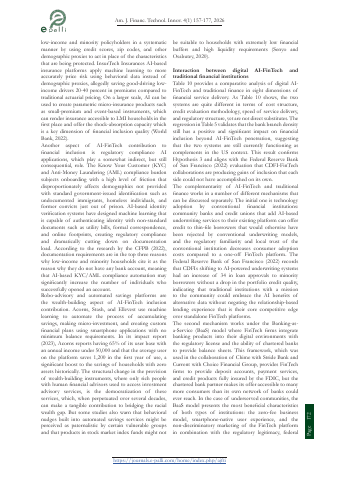
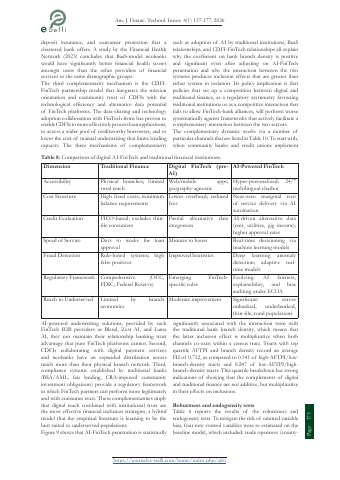
- Digital AI-FinTech platforms and traditional financial institutions function as complements, creating a multiplicative positive effect on inclusion.p.2
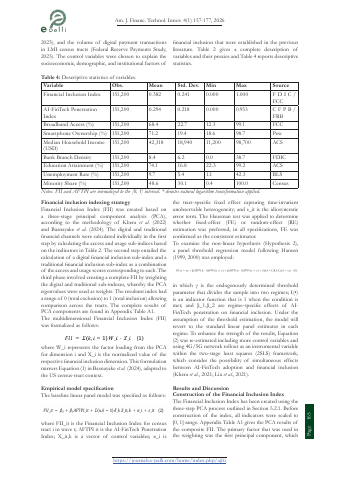
- Broadband access is a critical precondition for financial inclusion, where a 10-percentage-point expansion correlates with a 0.019-unit improvement in the Financial Inclusion Index.p.13
- Disparities persist in financial access, with 36.7% of Black households and 28.1% of Hispanic households being unbanked or underbanked compared to 7.2% of White non-Hispanic households.p.4
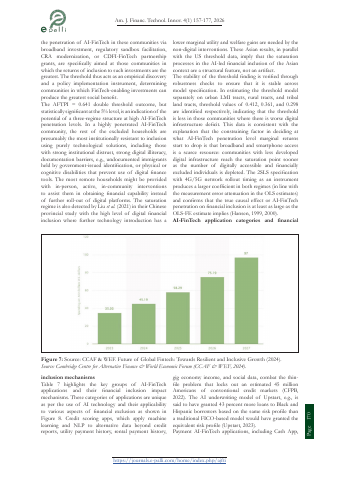
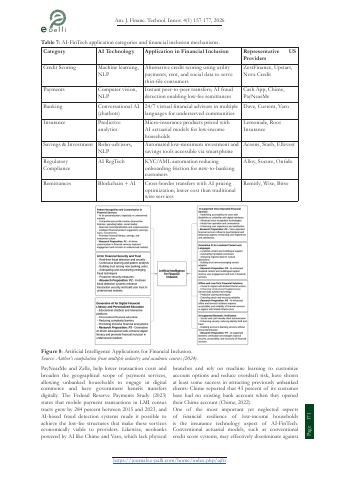
- AI-driven credit underwriting models using alternative data approved 43 percent more loans for Black and Hispanic borrowers compared to conventional FICO-based models at the same risk profile.p.15
- Neobank Chime reported that 43 percent of its customer base had no existing bank account prior to opening a Chime account.p.16
Pages
 p.1
 p.2
 p.3
 p.4
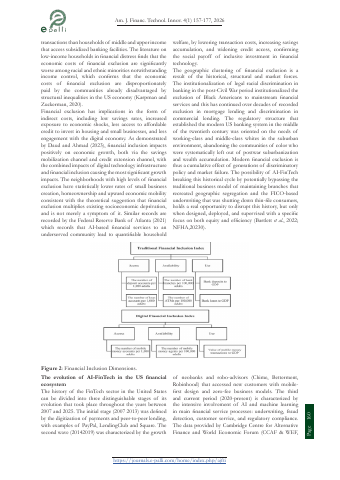 p.5
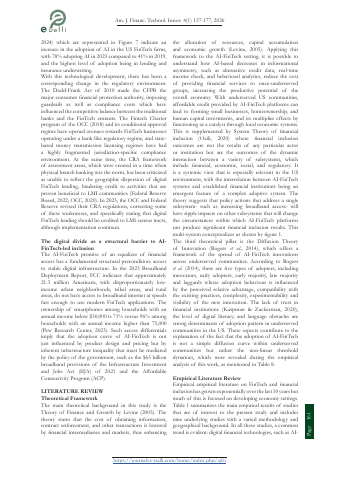 p.6
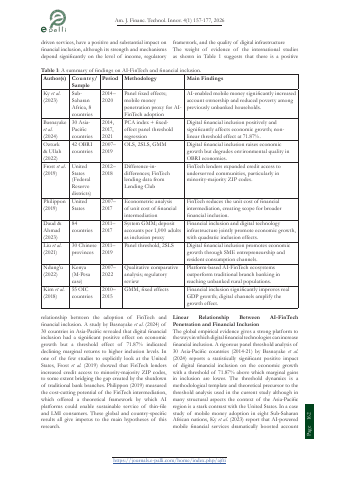 p.7
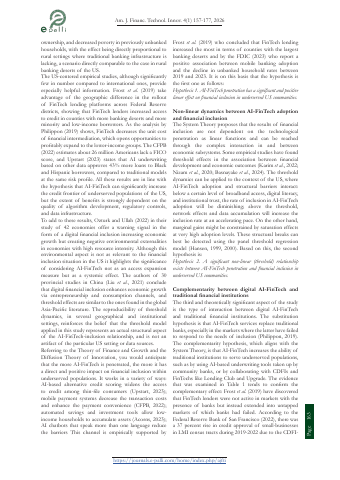 p.8
 p.9
 p.10
 p.11
 p.12
 p.13
 p.14
 p.15
 p.16
 p.17
 p.18
 p.19
 p.20
 p.21
 p.22
Topics and entities
Summary and figures generated from the document and checked automatically: every number shown appears on the cited page. Publishers can request removal.