Sustainable Development Finance as a Response to the Post-Industrial Economy Challenges (Economic scope)
Summary
- The conceptual framework of sustainable development finance integrates economic, environmental, and social dimensions into financial decision-making based on 10 bibliographic foundationsp.1
- Terminology varies by region, with Sustainable Finance commonly adopted in the United States while Social Finance is preferred in the United Kingdomp.2
- Sustainable development finance serves as a bridge between traditional return-focused finance and pure philanthropy by combining financial and non-financial goalsp.4
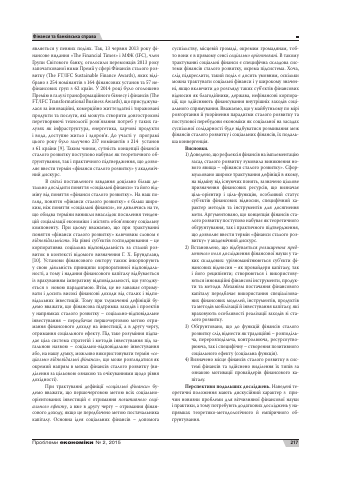
- In 2013, the FT/IFC Sustainable Finance Awards evaluated 254 nominees across 164 financial institutions and 57 non-financial groups from 62 countriesp.5
- In 2014, the FT/IFC Transformational Business Awards attracted 237 nominees from 214 institutions across 61 countriesp.5
Key insights
- Sustainable development finance evolved as a structural response to the exhaustion of traditional post-industrial economic paradigmsp.2
- Morgan Stanley established its Global Sustainable Finance group to target environmental protection capital, social finance, and local community developmentp.2
- Adopting sustainable development principles expands financial science by diversifying capital providers and recipients while creating innovative financial instrumentsp.3
- Impact investment focuses primarily on achieving positive social or environmental outcomes, accepting lower, zero, or negative financial returnsp.4
- Social finance acts as a targeted sub-system within the broader sustainable development finance ecosystemp.5
Pages
 p.1
 p.2
 p.3
 p.4
 p.5
 p.6
Topics and entities
Summary and figures generated from the document and checked automatically: every number shown appears on the cited page. Publishers can request removal.