Reinforcement Learning-Driven Optimal Capital Allocation for Intelligent Finance (PLoS ONE)
Summary
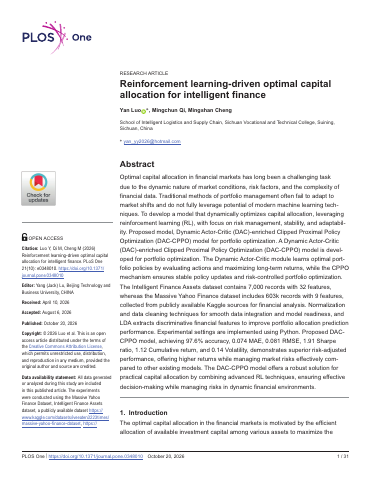
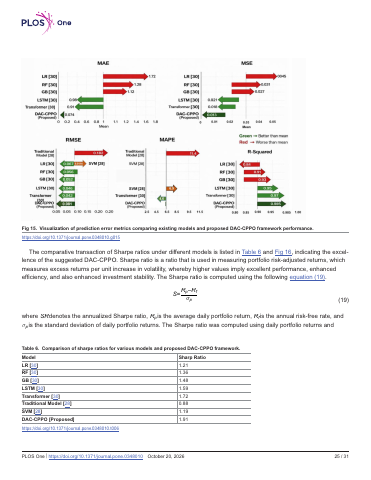
- The proposed DAC-CPPO model achieves an overall accuracy of 97.6%, an MAE of 0.074, and an RMSE of 0.081 for portfolio optimization.p.1
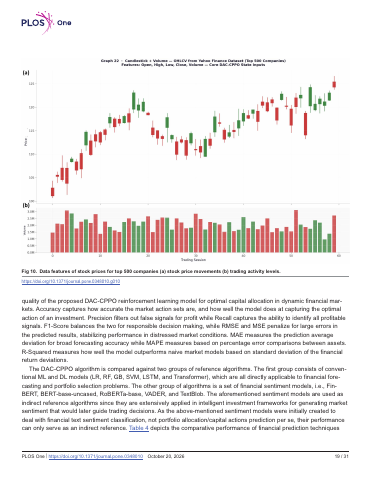
- The study evaluates two primary datasets: the Intelligent Finance Assets dataset containing 7,000 records with 32 features and the Massive Yahoo Finance dataset containing 603k records with 9 features.p.1
- Financial dataset partitioning employs an 80% training and 20% testing split structured chronologically to prevent look-ahead bias.p.6
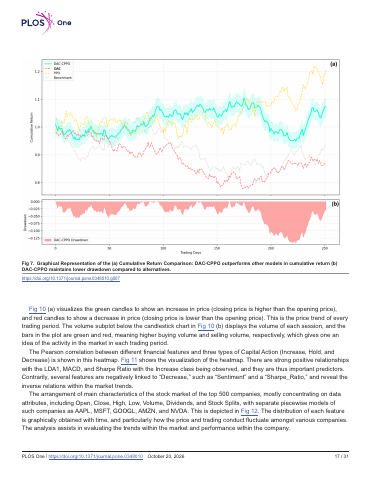
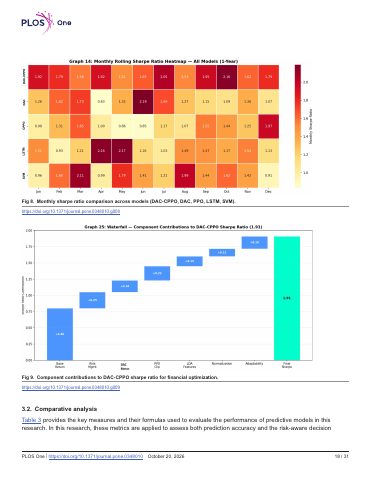
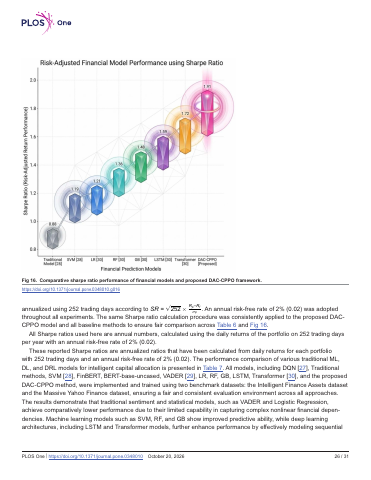
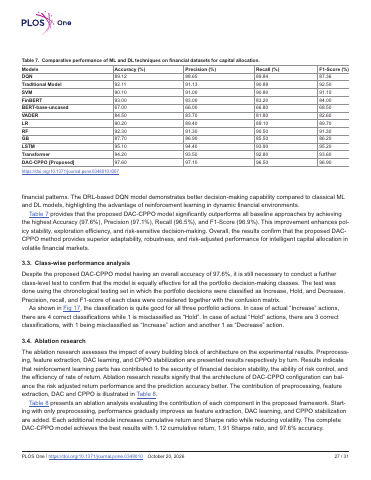
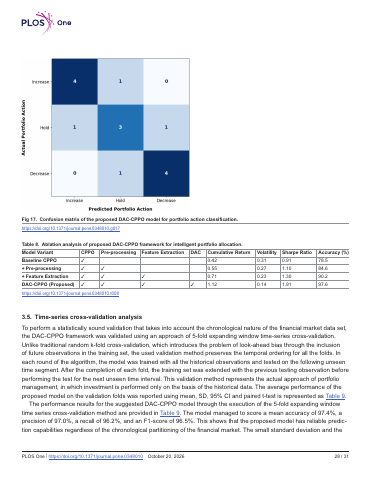
- The DAC-CPPO model yields a 1.91 Sharpe ratio, a 1.12 Cumulative return, and a 0.14 Volatility, outperforming baseline models.p.1
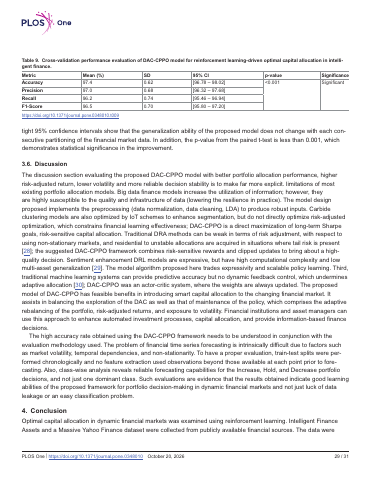
- Using a 5-fold expanding window time-series cross-validation, the DAC-CPPO model achieves a mean accuracy of 97.4% and an F1-score of 96.5%.p.28
Key insights
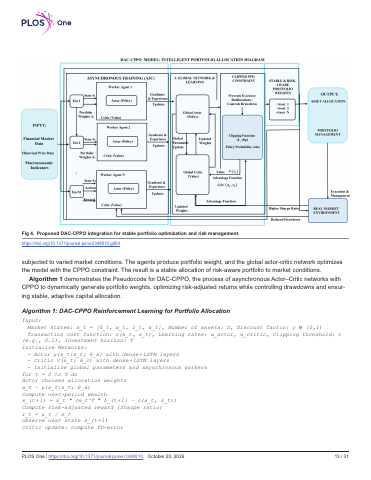
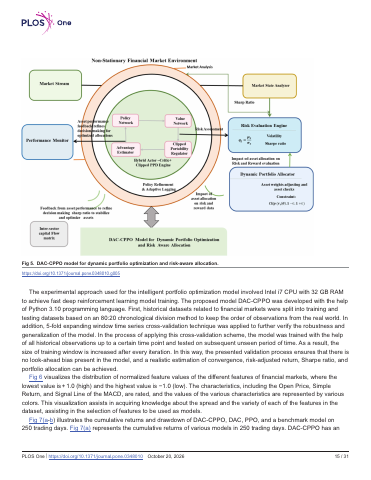
- The DAC-CPPO framework integrates Dynamic Actor-Critic parallel learning with a clipped PPO constraint layer to stabilize policy updates during extreme market volatility.p.4
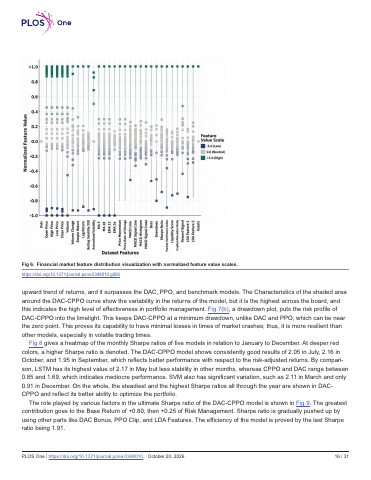
- Features are preprocessed using Z-score normalization to ensure zero mean and unit variance, preventing training bias across volume and price technical indicators.p.6
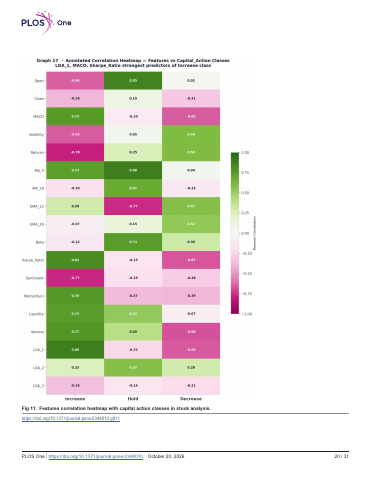
- Linear Discriminant Analysis (LDA) is applied as a dimensionality reduction technique to maximize between-class variance while reducing intra-class financial noise.p.7
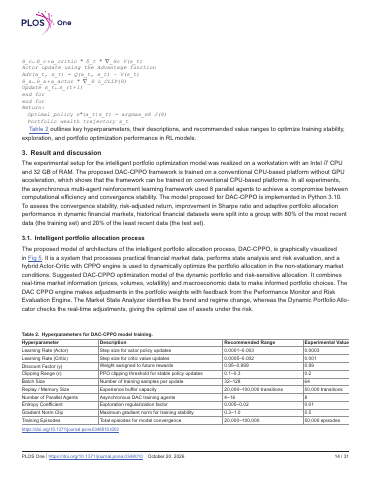
- The reinforcement learning environment utilizes 8 parallel worker agents to maintain computational efficiency and convergence stability on CPU hardware.p.14
- Sharpe ratios in the study are calculated on an annualized basis across 252 trading days assuming a 2% annual risk-free rate.p.26
Pages
 p.1
 p.2
 p.3
 p.4
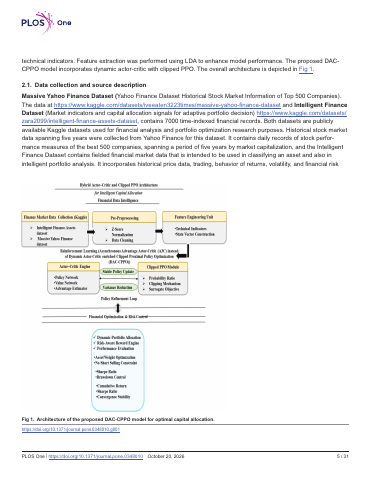 p.5
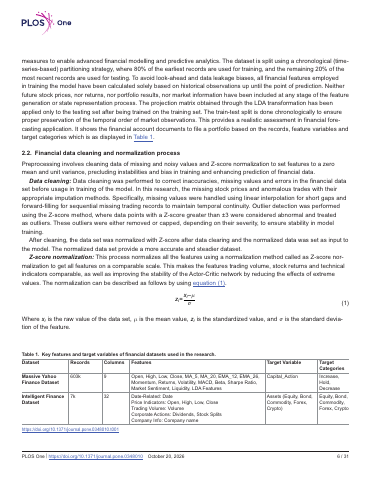 p.6
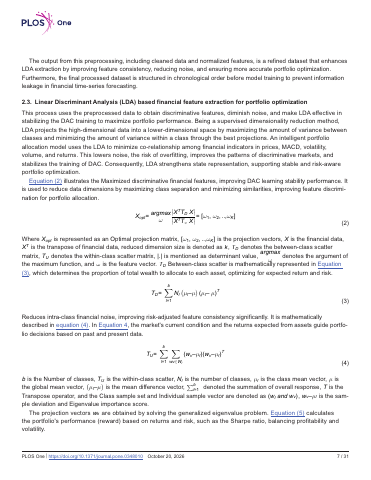 p.7
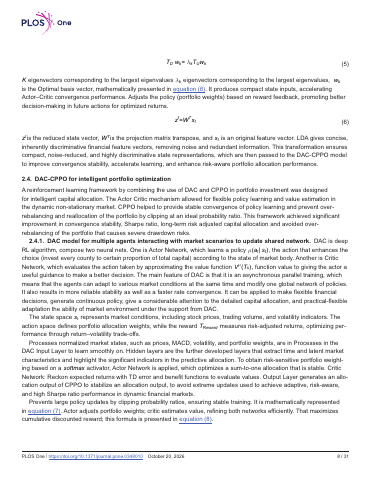 p.8
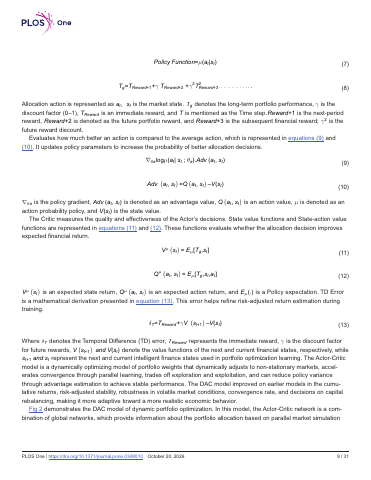 p.9
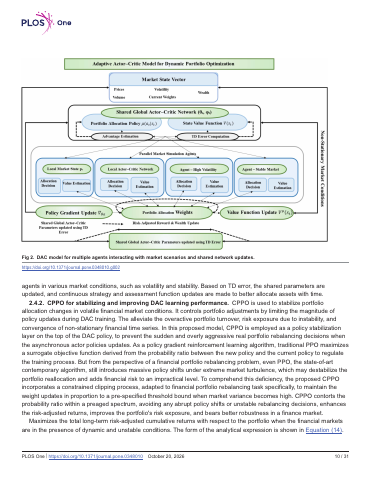 p.10
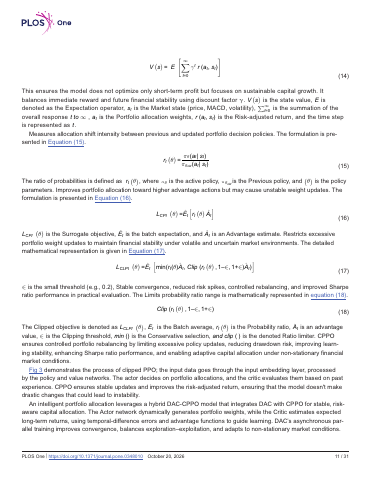 p.11
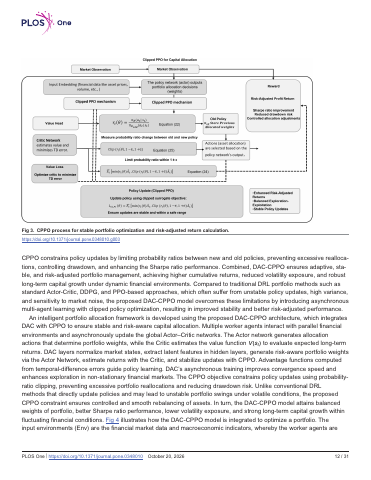 p.12
 p.13
 p.14
 p.15
 p.16
 p.17
 p.18
 p.19
 p.20
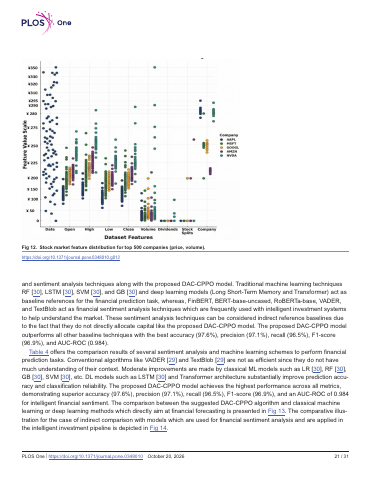 p.21
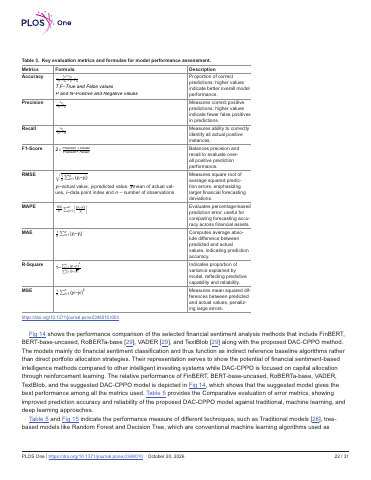 p.22
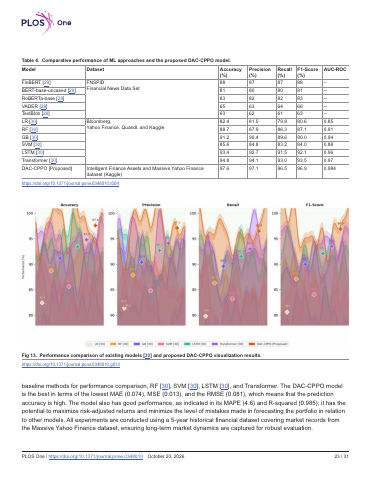 p.23
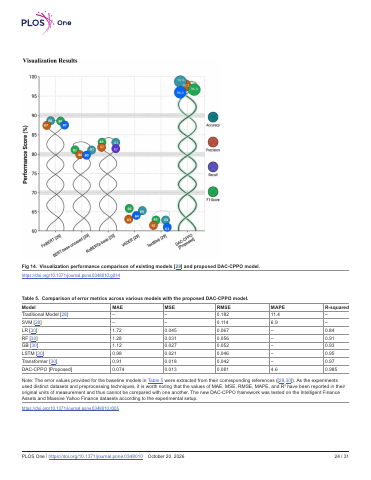 p.24
 p.25
 p.26
 p.27
 p.28
 p.29
 p.30
 p.31
Topics and entities
Summary and figures generated from the document and checked automatically: every number shown appears on the cited page. Publishers can request removal.