Financial Slack, Capital Intensity, and Firm Performance: Evidence from Global Listed Firms (Ubaya Repository (University of Surabaya))
Summary
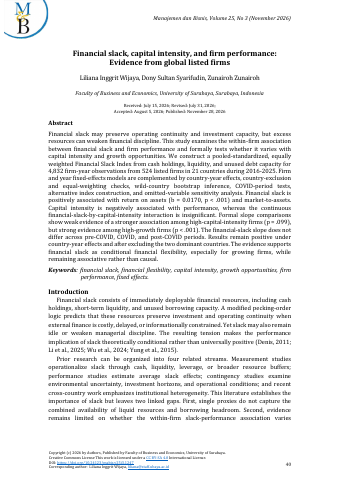
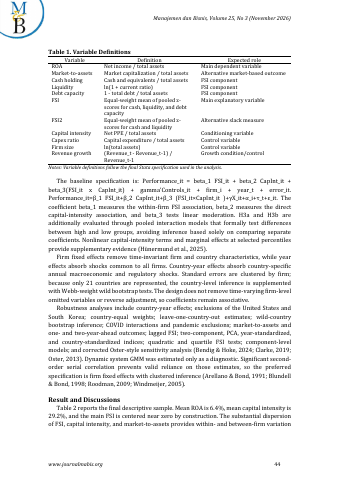
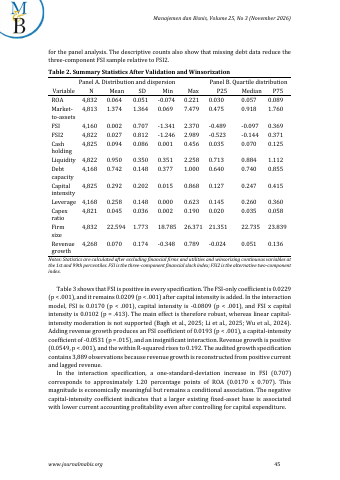
- The study analyzes a pooled-standardized Financial Slack Index using 4,832 firm-year observations from 524 listed firms in 21 countries during 2016-2025 [p.1].p.1
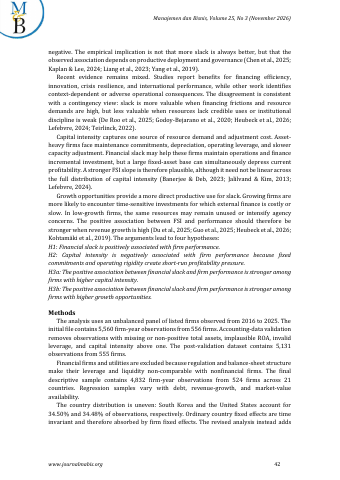
- The country sample is heavily weighted toward South Korea and the United States, which account for 34.50% and 34.48% of total observations, respectively [p.3].p.3
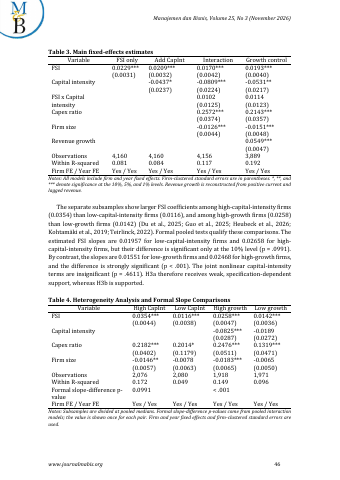
- Financial slack exhibits a positive within-firm association with return on assets (b = 0.0170, p < .001) [p.1].p.1
- Capital intensity demonstrates a negative direct association with firm performance (b = -0.0809, p < .001) in the interaction specification [p.7].p.7
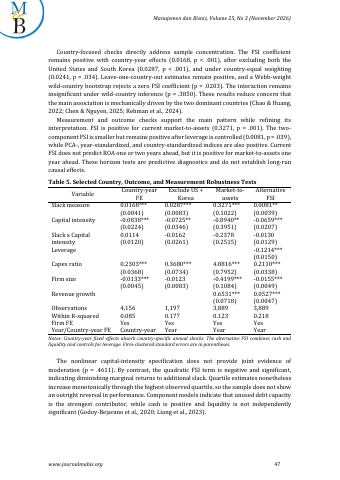
- Formal slope comparisons show strong evidence of a stronger slack-performance association among high-growth firms (p < .001) [p.1].p.1
Key insights
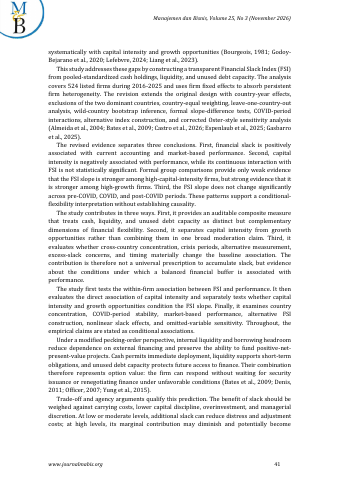
- Financial slack is positively associated with both current accounting return on assets and market-to-assets ratios [p.2].p.2
- Capital intensity is negatively associated with profitability due to fixed asset commitments and operating rigidity [p.3].p.3
- Formal slope testing shows strong evidence that the performance benefit of financial slack is higher for growing firms (p < .001) [p.8].p.8
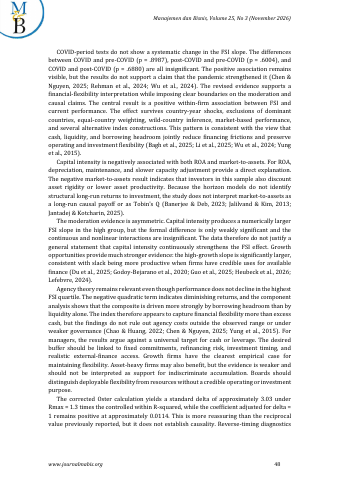
- The association between financial slack and performance does not differ significantly between pre-COVID, COVID, and post-COVID periods [p.9].p.9
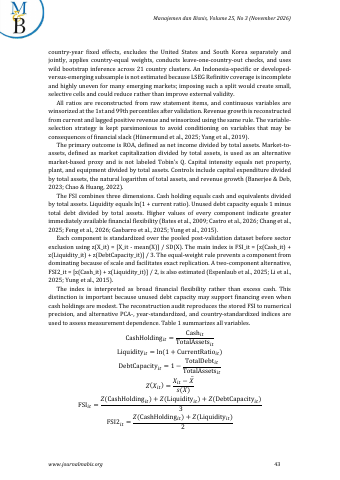
- Component-level models reveal that unused debt capacity is the strongest contributor to the positive slack composite association [p.9].p.9
Pages
 p.1
 p.2
 p.3
 p.4
 p.5
 p.6
 p.7
 p.8
 p.9
 p.10
 p.11
 p.12
 p.13
 p.14
 p.15
 p.16
 p.17
 p.18
Topics and entities
Summary and figures generated from the document and checked automatically: every number shown appears on the cited page. Publishers can request removal.