Intelligent Financial Fraud Detection Using Machine Learning Techniques (Academic research)
Summary
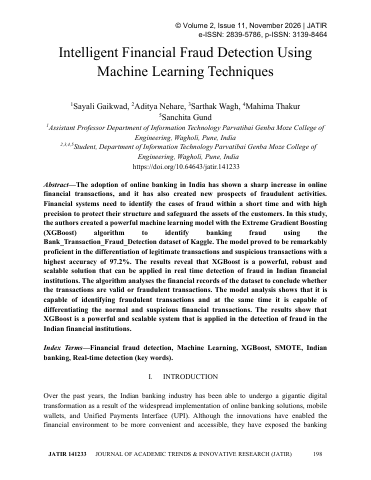
- The proposed Extreme Gradient Boosting (XGBoost) model achieved a highest accuracy of 97.2% in differentiating legitimate and suspicious banking transactions.p.1
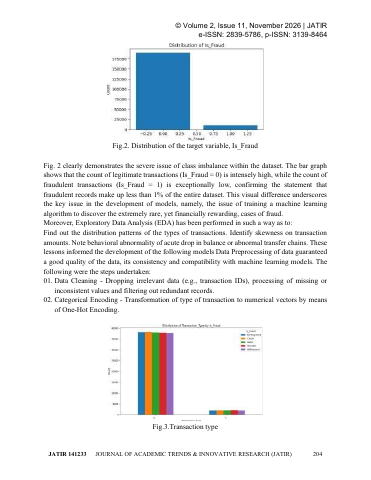
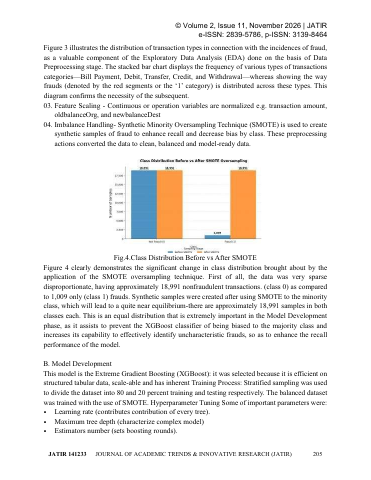
- The un-sampled dataset was heavily skewed, containing approximately 18,991 nonfraudulent transactions compared to 1,009 fraudulent transactions.p.8
- Applying SMOTE balanced the minority class, resulting in approximately 18,991 samples in both classes.p.8
- The final optimized XGBoost model attained a Precision of 0.99, a Recall of 0.94, and an F1-Score of 0.97.p.12
Key insights
- Fraudulent transaction records constitute less than 1% of the overall dataset.p.7
- Data preprocessing utilized One-Hot Encoding to convert categorical transaction types into numerical vectors.p.7
- The dataset was split into 80 percent training and 20 percent testing using stratified sampling.p.8
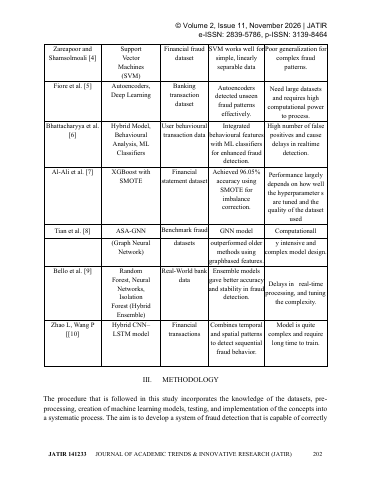
- Prior research by Al-Ali et al. achieved 96.05% accuracy using an XGBoost/SMOTE approach for financial statement fraud detection.p.5
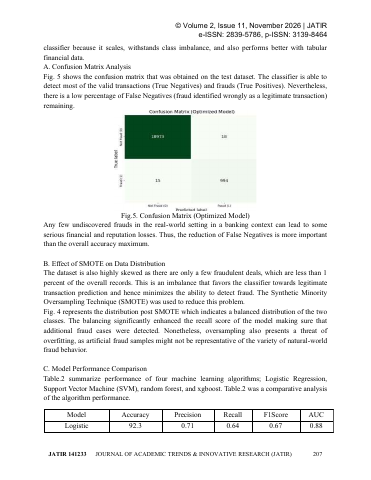
- Reducing False Negatives is prioritized over maximum raw accuracy in financial fraud detection to minimize uncaptured fraud losses.p.10
Pages
 p.1
 p.2
 p.3
 p.4
 p.5
 p.6
 p.7
 p.8
 p.9
 p.10
 p.11
 p.12
 p.13
Topics and entities
Summary and figures generated from the document and checked automatically: every number shown appears on the cited page. Publishers can request removal.