Does Academic Lineage Generate Excess Returns? Evidence from Deep-Tech Venture Capital (Zenodo (CERN European Organization for Nuclear Research))
Summary
- Mutual fund managers earn up to 7.8 percent a year more on firms whose board members share their educational networks.p.2
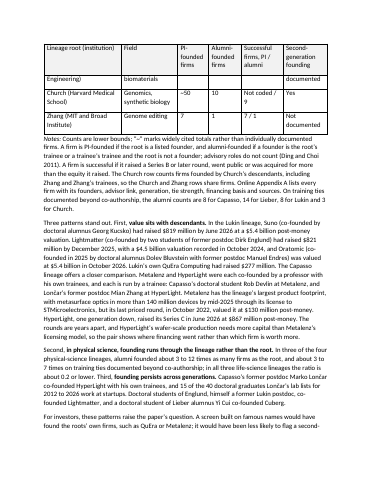
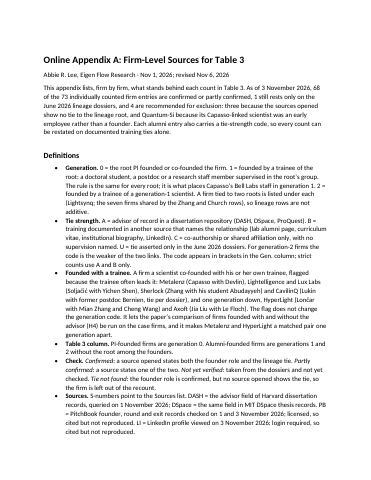
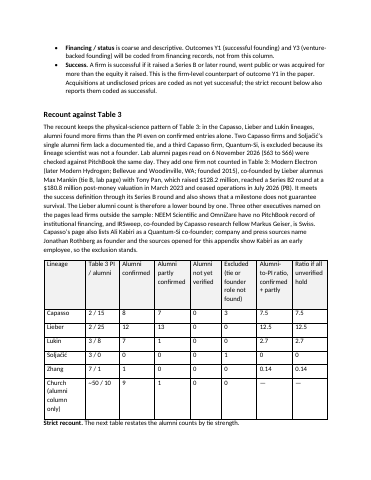
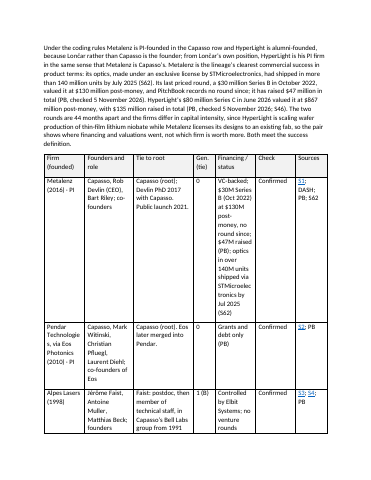
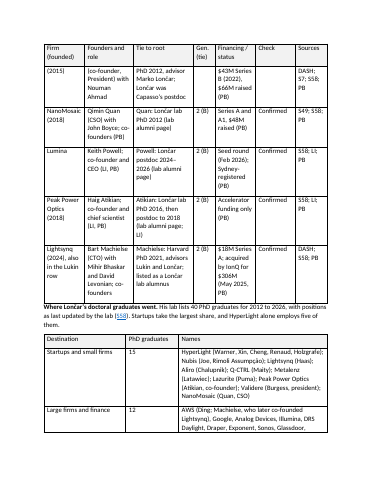
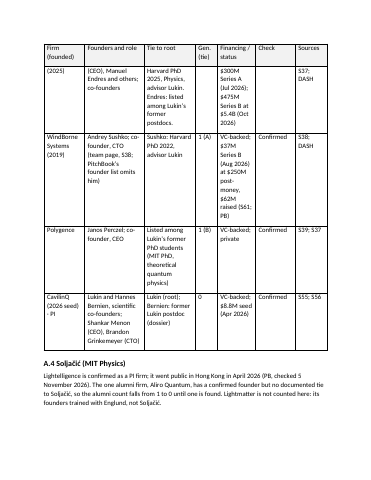
- Capasso's co-founded Metalenz had optics in more than 140 million devices by mid-2025 and was valued at $130 million in 2022, while HyperLight raised a 2026 round at $867 million.p.2
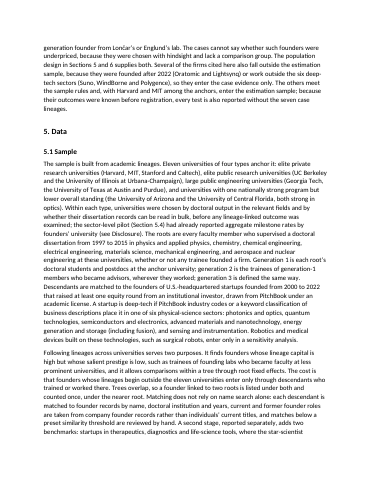
- The research sample tracks doctoral advisors active from 1997 to 2015 in physical sciences and engineering at eleven U.S. universities, matched to U.S. startups founded from 2000 to 2022.p.1
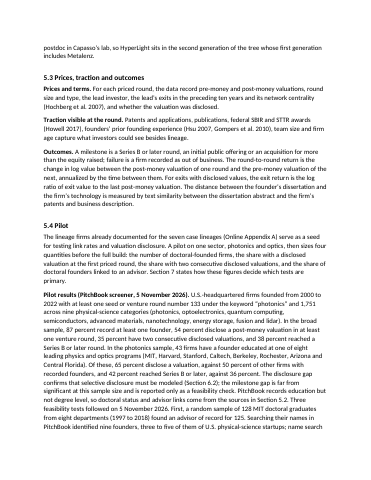
- In a pilot sample of physical-science startups, 54 percent disclose a post-money valuation in at least one venture round and 38 percent reached a Series B or later round.p.10
Key insights
- Salient prestige is visible at a glance in pitch decks, whereas lineage capital must be reconstructed from dissertations, co-authorships, and lab histories.p.2
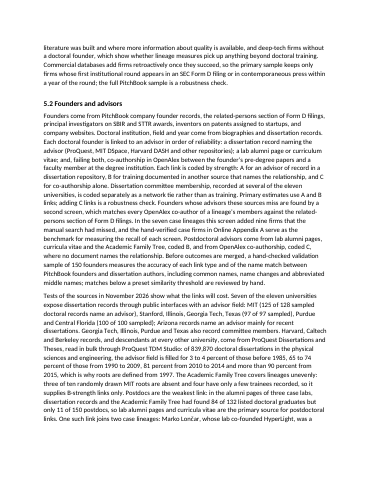
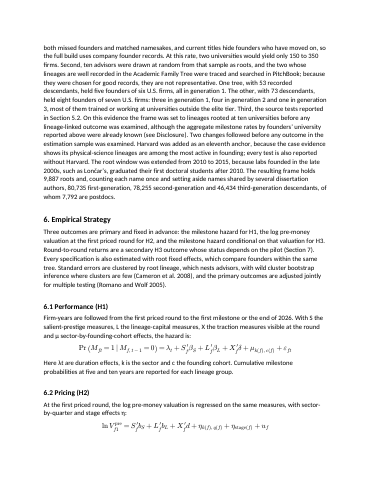
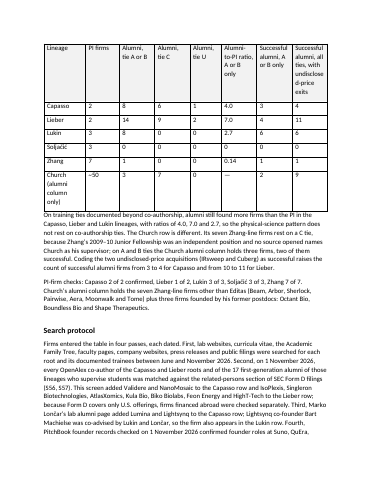
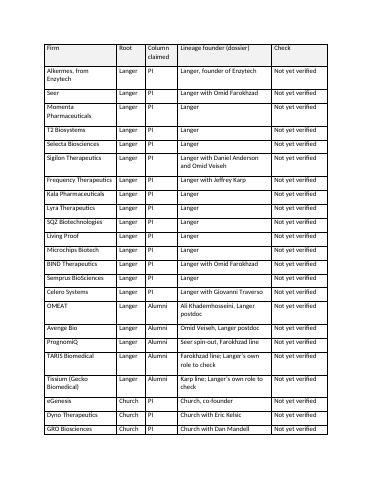
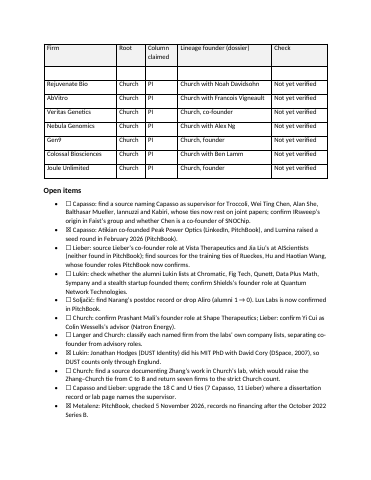
- In physical science academic lineages, alumni found approximately 3 to 12 times as many firms as the root principal investigator.p.7
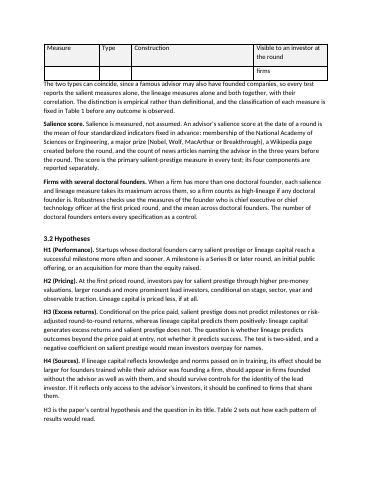
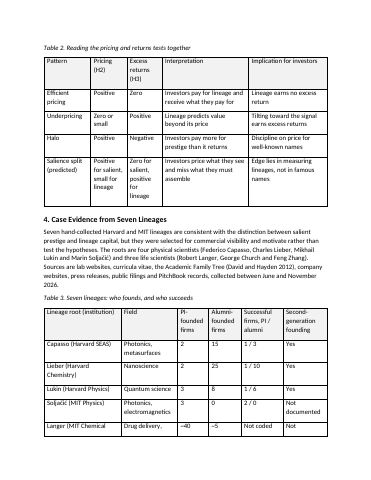
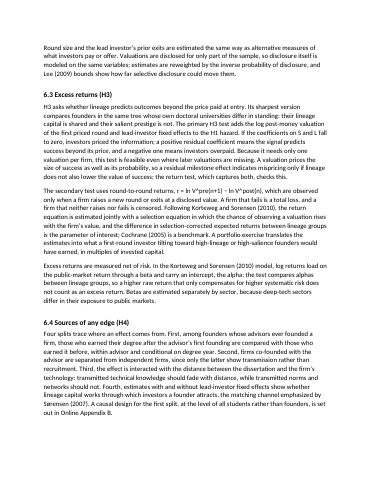
- A positive residual effect in excess-return tests indicates that lineage capital is underpriced by venture capital investors.p.5
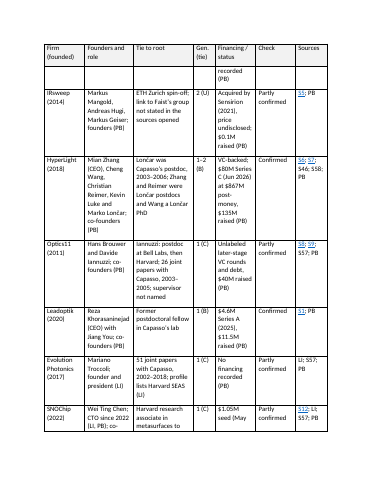
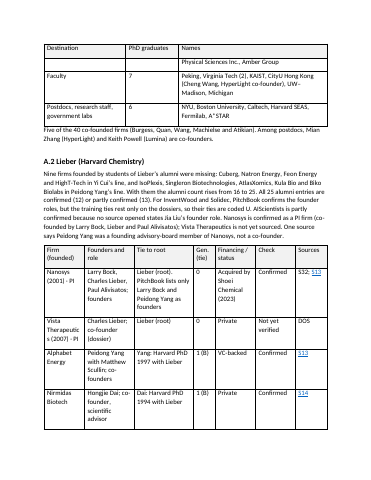
- Fifteen of the 40 doctoral graduates listed for 2012 to 2026 from Marko Lončar's lab work at startups.p.7
- Limited-attention theory predicts that venture capital investors price salient prestige while neglecting lineage capital.p.2
- Round-to-round returns in venture capital are estimated using selection models to correct for selective observation of valuations.p.12
- Lineage capital transmission is predicted to be stronger for doctoral founders trained while their advisor was actively founding a company.p.5
Pages
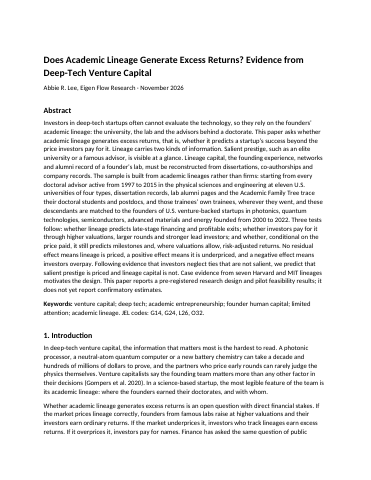 p.1
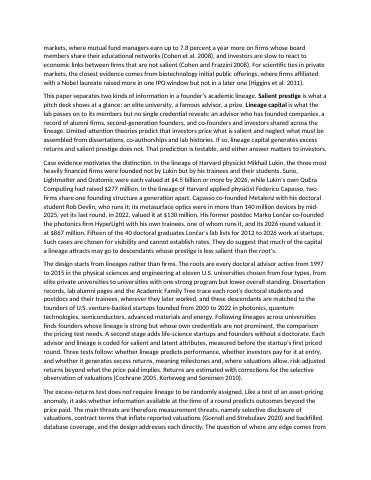 p.2
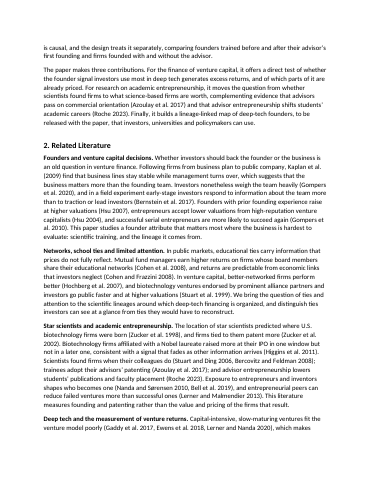 p.3
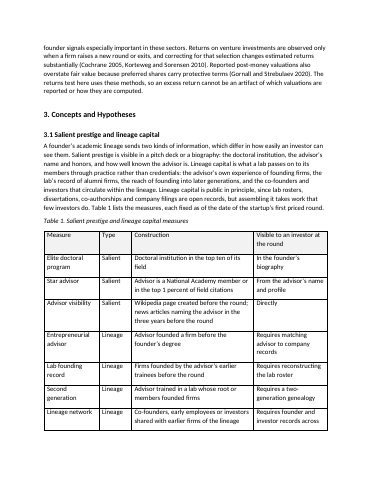 p.4
 p.5
 p.6
 p.7
 p.8
 p.9
 p.10
 p.11
 p.12
 p.13
 p.14
 p.15
 p.16
 p.17
 p.18
 p.19
 p.20
 p.21
 p.22
 p.23
 p.24
 p.25
 p.26
 p.27
 p.28
 p.29
 p.30
 p.31
 p.32
 p.33
 p.34
 p.35
 p.36
 p.37
 p.38
 p.39
 p.40
Topics and entities
Summary and figures generated from the document and checked automatically: every number shown appears on the cited page. Publishers can request removal.