Do Financing and Investment-Based Courses Influence Gen-Z Investment? (Finance: Theory and Practice)
Summary
- In 2022, Indonesia's Single Investor Identification count reached 9.87 million investors, representing a 31.85% increase from 7.49 million in 2021.p.2
- Young investors under 30 years old accounted for 58.91% of total investors in Indonesia in 2022, representing 5.81 million young investors.p.2
- Investors aged over 60 held 584.07 trillion Rupiahs in total assets, compared to 52.77 trillion Rupiahs held by young investors.p.2
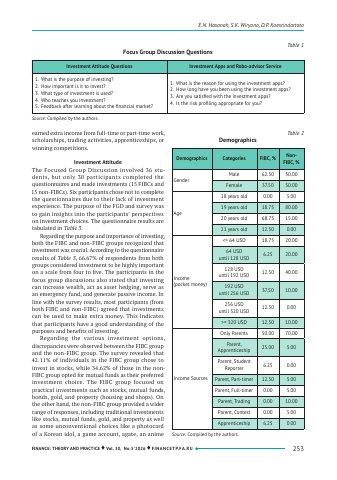
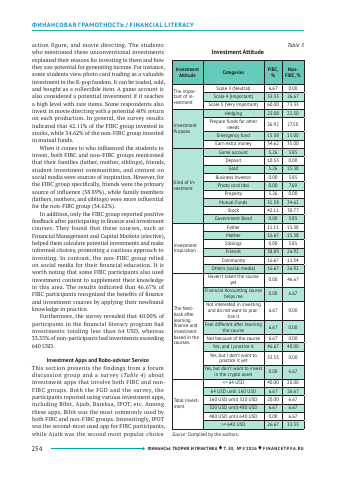
- In the survey, 42.11% of students who took finance courses preferred investing in stocks, while 34.62% of students without finance courses chose mutual funds.p.5
- Among respondents, 40.00% of finance course participants held total investments under 64 USD, whereas 33.33% of non-course participants had total investments exceeding 640 USD.p.6
Key insights
- 1. Online account opening and digital capital market infrastructure like AKSES and EASY facilitated increased participation among young Indonesian retail investors.p.2
- 2. Formal financial courses promote a more cautious and calculated approach to investment decision-making among Gen-Z students.p.6
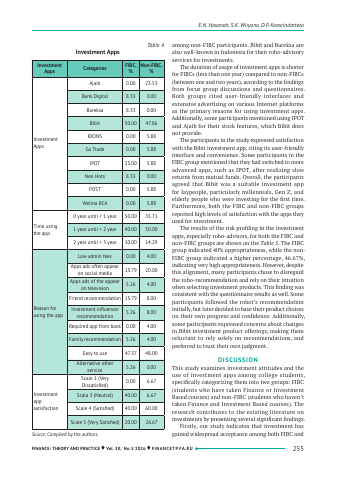
- 3. Gen-Z students without formal financial training gain investment knowledge primarily from social media content and display interest in alternative investments such as collectible items.p.8
- 4. Friends served as the primary source of investment influence for 38.89% of finance course students, whereas family members were the primary influence for 34.62% of non-course students.p.6
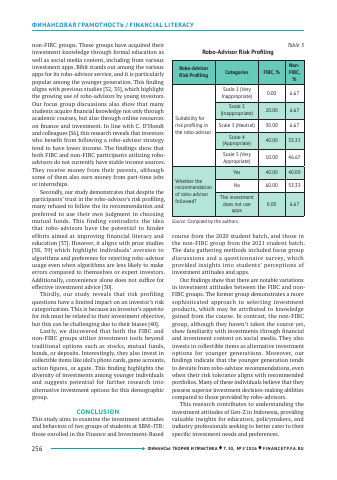
- 6. A majority of Gen-Z investors choose not to follow robo-advisor investment recommendations, preferring to make independent decisions based on personal judgment.p.8
Pages
 p.1
 p.2
 p.3
 p.4
 p.5
 p.6
 p.7
 p.8
 p.9
 p.10
 p.11
Topics and entities
Summary and figures generated from the document and checked automatically: every number shown appears on the cited page. Publishers can request removal.