Analyzing the Effectiveness of Subsidized Credit Facilities on Business Operating Capital and Production Growth in Selected Towns (Journal of economics, business and commerce.)
Summary
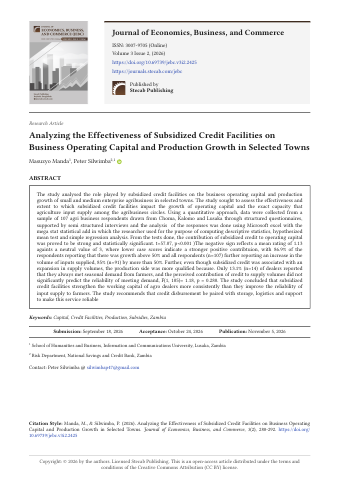
- The study surveyed 107 agribusiness respondents across Choma, Kalomo, and Lusaka to assess how subsidized credit facilities impact working capital and production growth.p.1
- Small and medium enterprises generate approximately 70% of Zambia's GDP and account for 88% of national employment.p.2
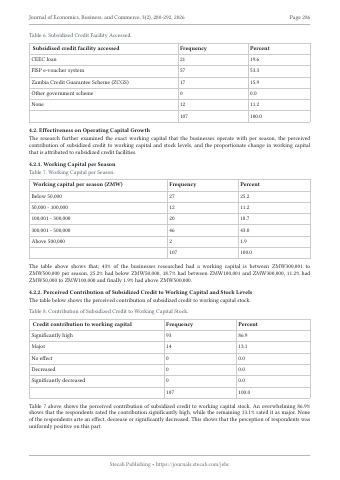
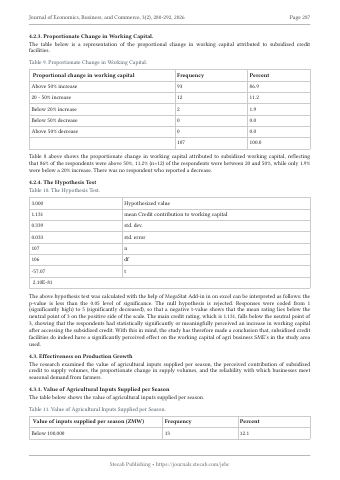
- Subsidized credit significantly strengthened working capital, with 86.9% of respondents reporting an operating capital growth of above 50%.p.1
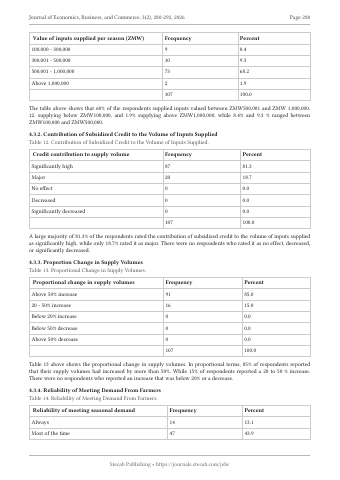
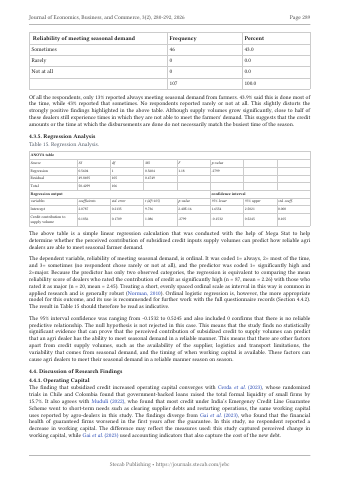
- While 85% of respondents experienced an increase in supply volumes of over 50%, only 13.1% reported always meeting seasonal demand from farmers.p.1
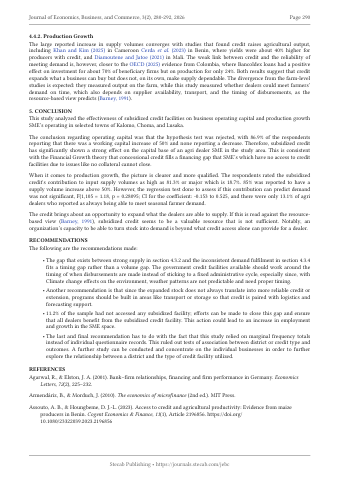
- Simple linear regression showed that perceived credit contribution to supply volumes did not significantly predict the reliability of meeting demand, F(1, 105)= 1.18, p = 0.280.p.1
Key insights
- Subsidized credit facilities demonstrated a statistically significant positive effect on agro-dealer operating capital with a t-statistic of -57.07 (p < 0.001).p.1
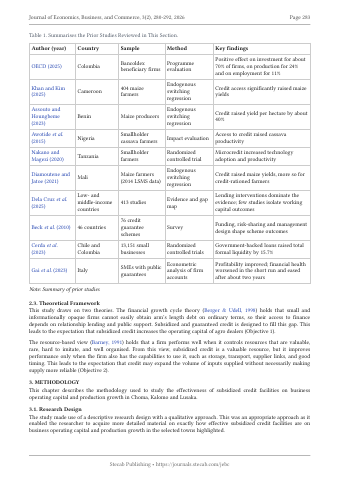
- Sub-Saharan Africa faces an estimated unmet financing demand of roughly USD 100 billion specifically for agricultural small and medium enterprises.p.2
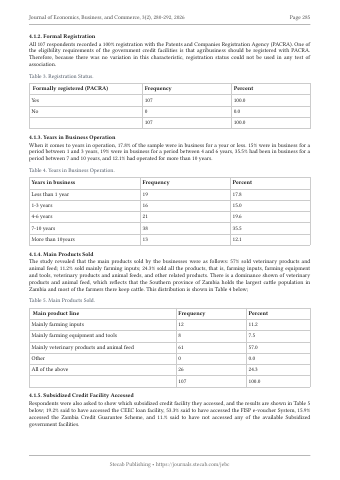
- The majority of surveyed agribusinesses (57.0%) primarily sell veterinary products and animal feed.p.7
- Seasonal working capital was between ZMW300,001 and ZMW500,000 for 43.0% of the surveyed agribusinesses.p.8
- All 107 surveyed agribusinesses (100%) were formally registered with the Patents and Companies Registration Agency.p.7
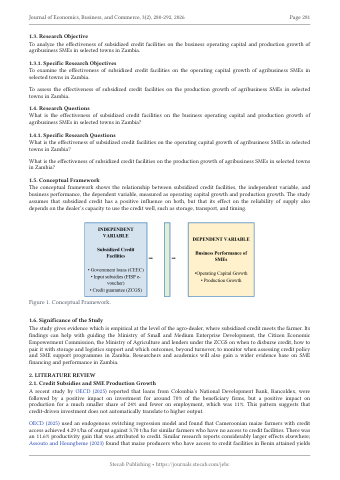
- Subsidized credit facilities strengthen the working capital of agro-dealers more consistently than they improve the reliability of input supply to farmers.p.1
Pages
 p.1
 p.2
 p.3
 p.4
 p.5
 p.6
 p.7
 p.8
 p.9
 p.10
 p.11
 p.12
 p.13
 p.14
Topics and entities
Summary and figures generated from the document and checked automatically: every number shown appears on the cited page. Publishers can request removal.