The Crime Behind the Ledger: False Recording and White-Collar Criminal Liability in Islamic Banking (Strata Social and Humanities Studies)
Summary
- Alleged false recording practices at BPRS GP in Medan led the OJK to execute the seizure of 41 assets.p.2
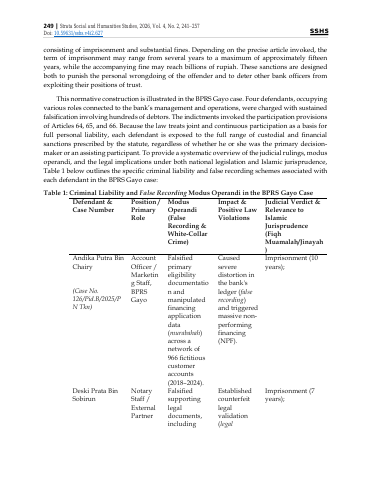
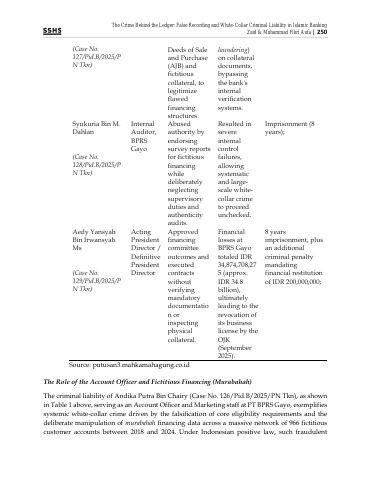
- The prosecution of four defendants at BPRS Gayo involved fictitious financing schemes that caused total losses of approximately IDR 34.8 billion.p.2
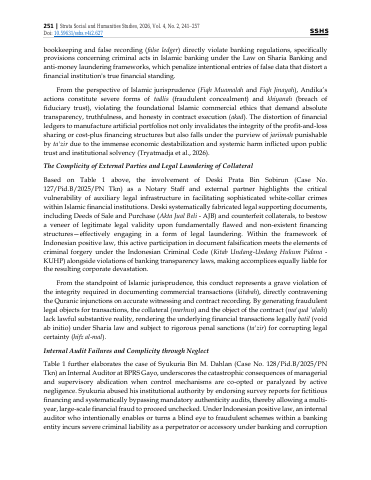
- Account Officer Andika Putra Bin Chairy manipulated murabahah financing data across a network of 966 fictitious customer accounts between 2018 and 2024.p.10
- Internal Auditor Syukuria Bin M. Dahlan was sentenced to Imprisonment (8 years) for failing to perform required supervisory duties and authenticity audits.p.10
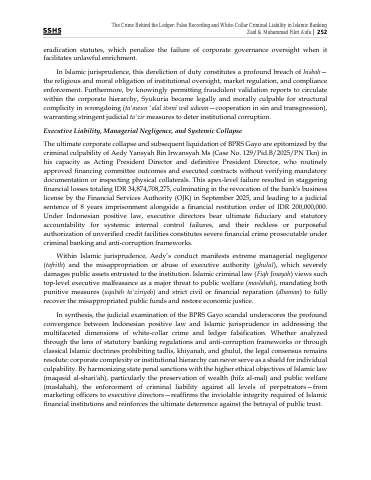
- The Financial Services Authority (OJK) executed the revocation of the business license of BPRS Gayo in September 2025.p.10
Key insights
- Ledger falsification in Islamic banking is legally constructed as a deliberate white-collar crime rather than a simple administrative error.p.1
- False recording directly breaches core Islamic ethical tenets such as amanah, sidq, tadlis, and khianah.p.2
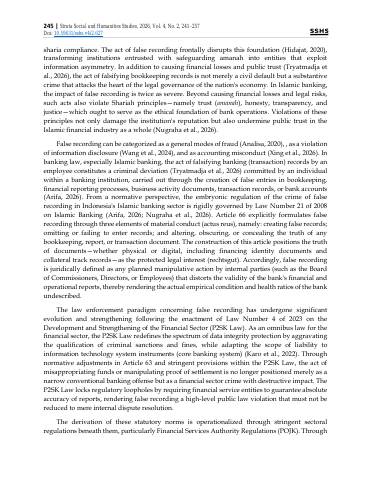
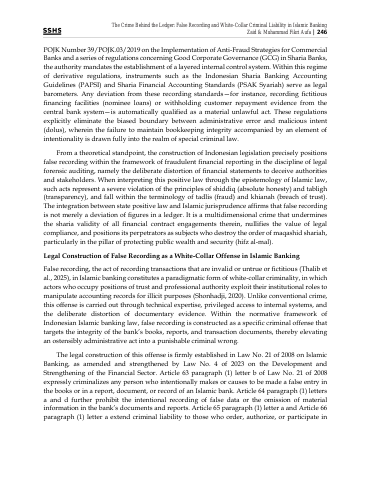
- Article 66 of Law No. 21 of 2008 formulates false recording through creating false records, omitting entries, and concealing document truth.p.5
- The enactment of the P2SK Law (Law No. 4 of 2023) strengthened penalties and expanded liability regarding core banking IT infrastructure.p.5
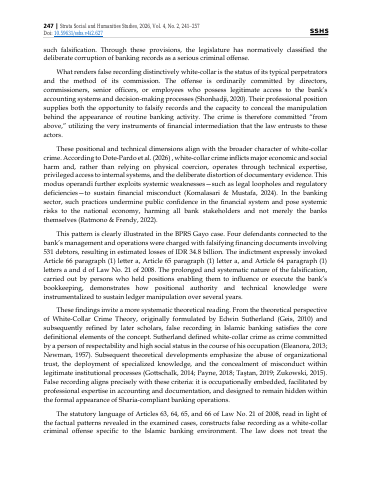
- False recording is typically committed from above by executive officers and internal actors who weaponize technical access and professional status.p.8
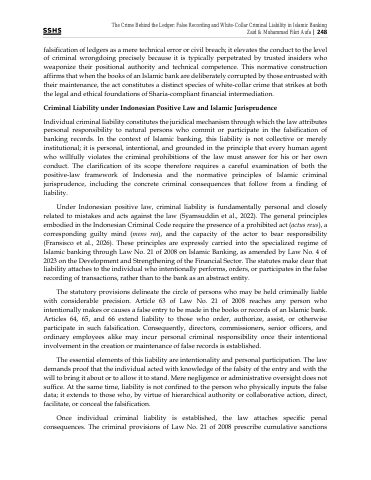
- Indonesian positive law establishes individual personal liability across organizational hierarchies rather than collective corporate immunity.p.8
- Islamic jurisprudence classifies intentional ledger falsification as a ta'zir offense that imperils the protection of wealth (hifz al-mal).p.12
Pages
 p.1
 p.2
 p.3
 p.4
 p.5
 p.6
 p.7
 p.8
 p.9
 p.10
 p.11
 p.12
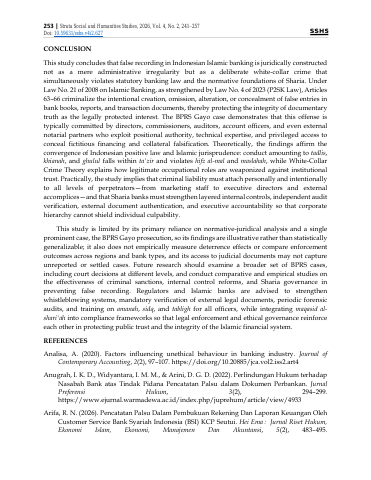 p.13
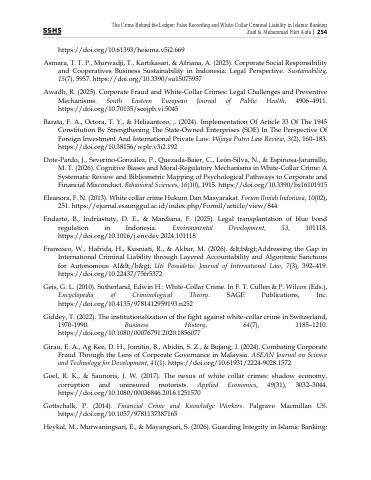 p.14
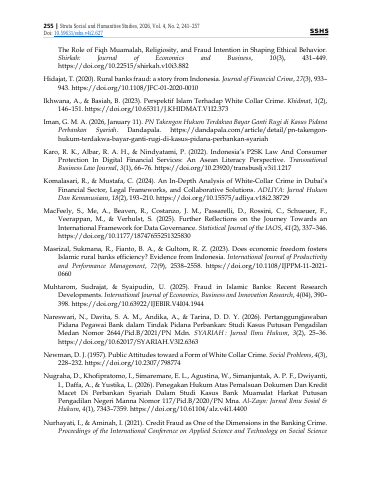 p.15
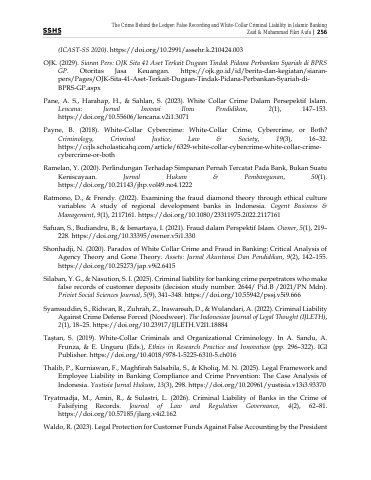 p.16
 p.17
Topics and entities
Summary and figures generated from the document and checked automatically: every number shown appears on the cited page. Publishers can request removal.