Profiting From Prediction (Academic research)
Summary
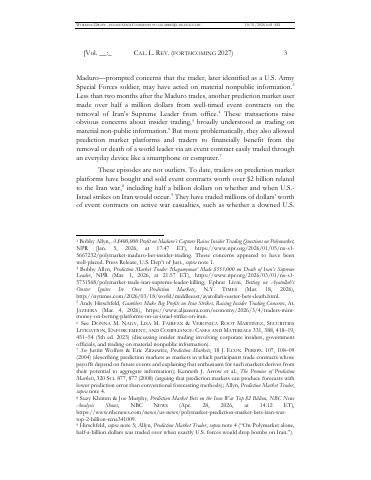
- An anonymous trader earned nearly half a million dollars in profit on a prediction market platform by wagering on the removal of Venezuelan President Nicolás Maduro shortly before his capture by the U.S. military.p.6
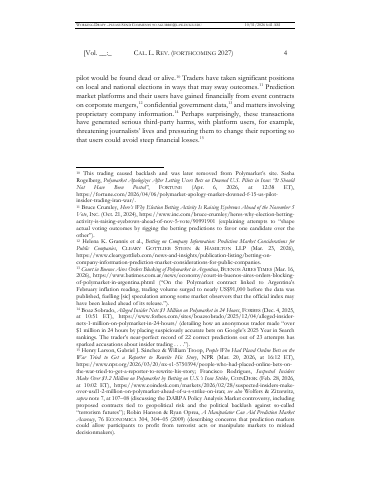
- Traders on prediction market platforms bought and sold event contracts worth over $2 billion related to the Iran war, including half a billion dollars on U.S.-Israel strikes on Iran.p.7
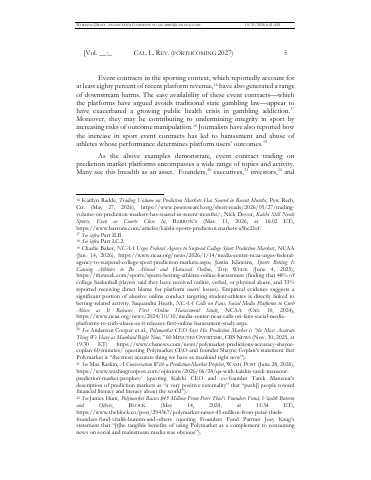
- Event contracts tied to sporting outcomes account for at least eighty percent of recent prediction market platform revenue.p.9
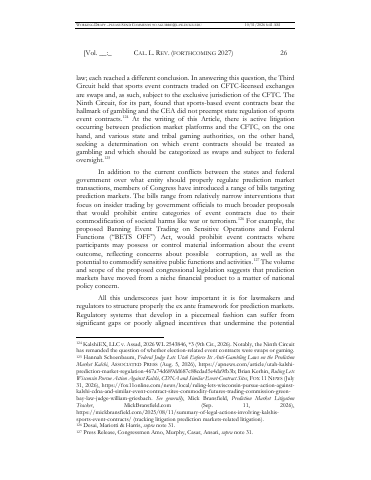
- Members of Congress introduced over thirty bills since January 2026 aiming to regulate or prohibit specific categories of prediction market event contracts.p.11
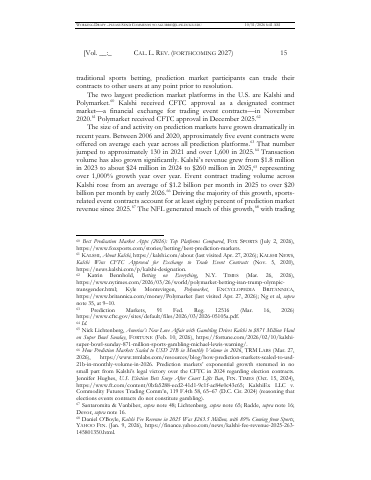
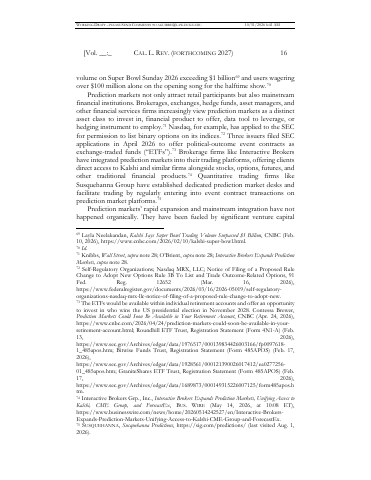
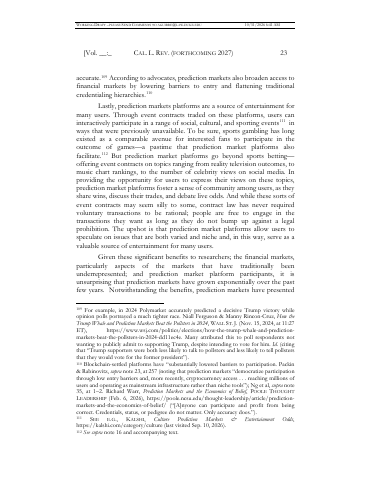
- Trading volume on Kalshi rose from an average of $1.2 billion per month in 2025 to over $20 billion per month by early 2026.p.19
- Kalshi's transaction fee revenue increased from $1.8 million in 2023 to about $24 million in 2024, reaching $260 million in 2025.p.19
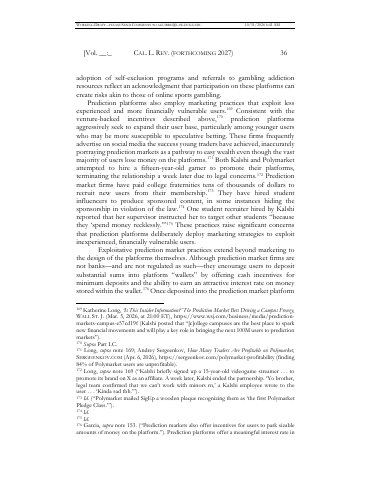
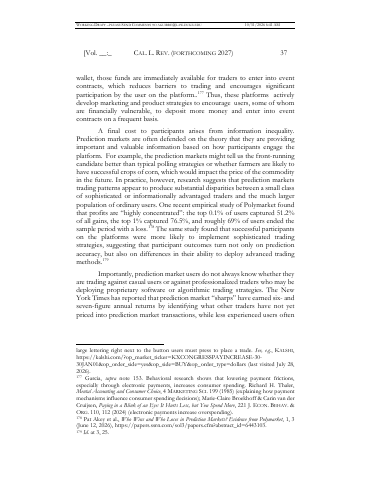
- An empirical study of Polymarket demonstrated that the top 0.1% of users captured 51.2% of all trading gains while roughly 69% of users suffered financial losses.p.41
Key insights
- Prediction market platforms transform uncertain future contingencies into tradable binary event contracts priced between $0.01 and $0.99.p.18
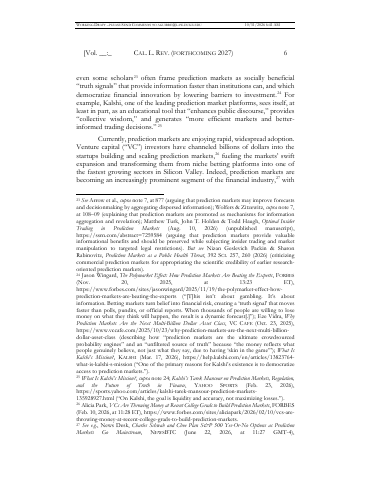
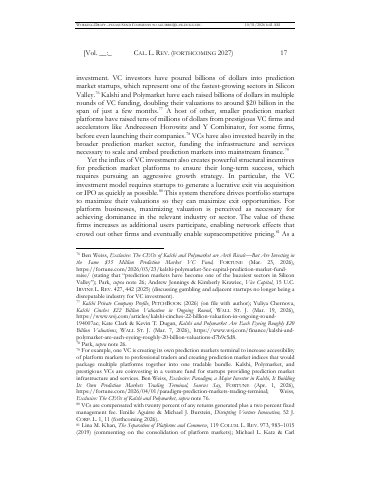
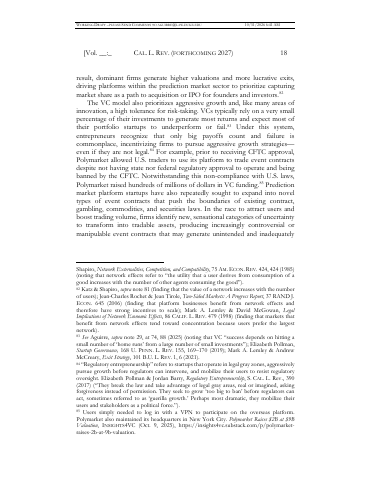
- Venture capital funding has driven rapid scaling in prediction markets, creating structural incentives for platforms to pursue aggressive growth and test regulatory boundaries.p.21
- Event contracts continuously aggregate dispersed information and have been shown to outperform traditional public polling and forecasting methods in accuracy.p.24
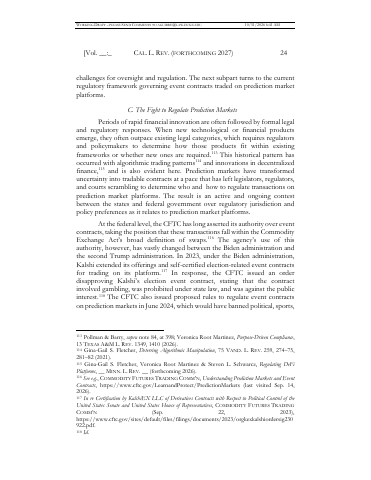
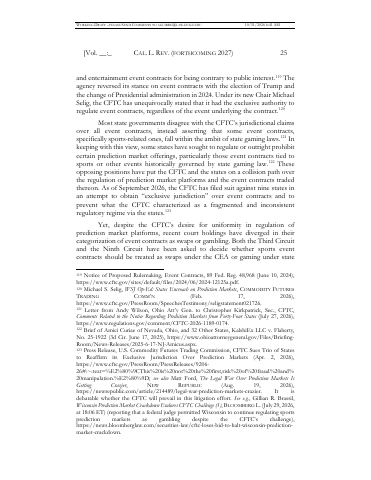
- The rapid expansion of event contracts has triggered jurisdictional disputes between the CFTC claiming exclusive oversight as financial swaps and state authorities classifying them as sports gambling.p.29
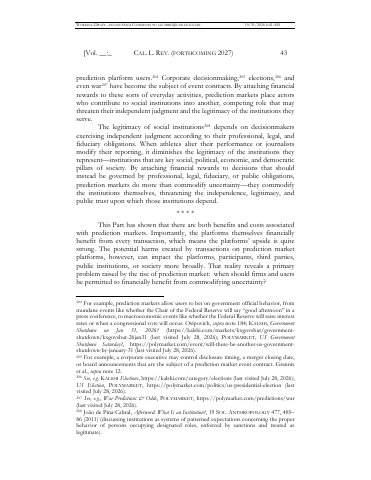
- Prediction markets introduce market integrity risks by providing alternate channels for trading on material nonpublic corporate or governmental information.p.34
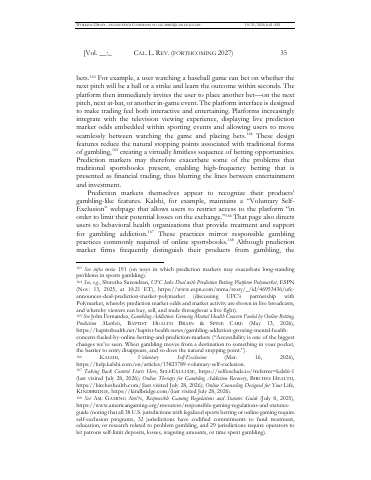
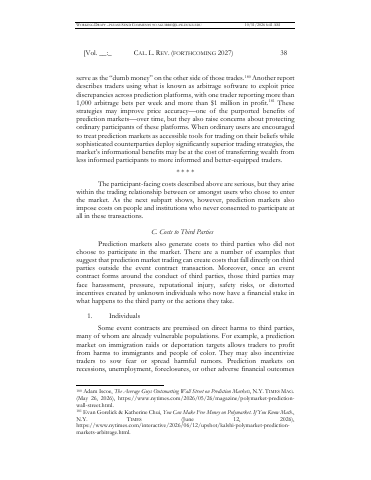
- Binary payoff structures in prediction markets create incentives for participants to manipulate real-world outcomes or engage in targeted third-party harassment.p.39
- Trading patterns on prediction platforms demonstrate extreme profit concentration, resulting in significant informational inequality between sophisticated traders and retail users.p.41
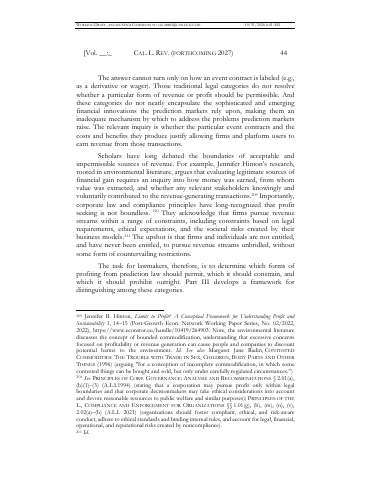
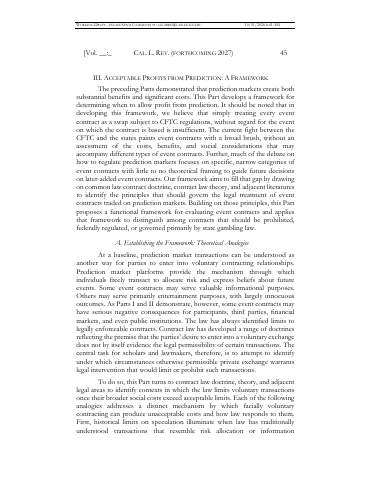
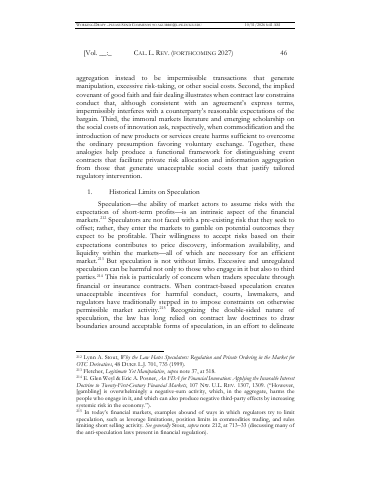
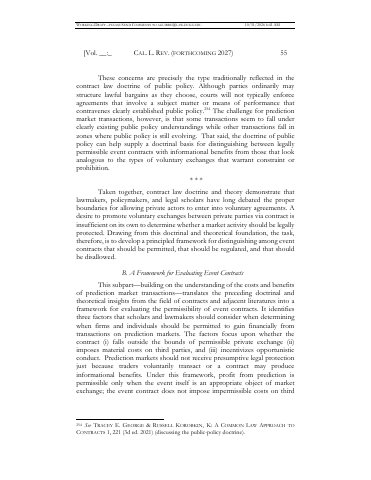
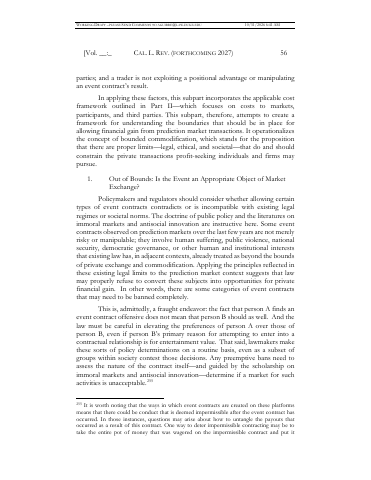
- The authors propose a legal framework based on bounded commodification to classify event contracts into prohibited, federally regulated, state-regulated, or firm-controlled categories.p.15
Pages
 p.1
 p.2
 p.3
 p.4
 p.5
 p.6
 p.7
 p.8
 p.9
 p.10
 p.11
 p.12
 p.13
 p.14
 p.15
 p.16
 p.17
 p.18
 p.19
 p.20
 p.21
 p.22
 p.23
 p.24
 p.25
 p.26
 p.27
 p.28
 p.29
 p.30
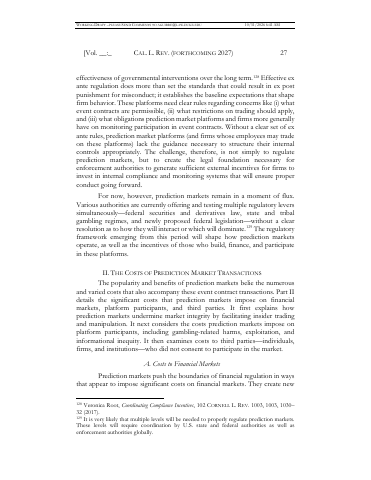 p.31
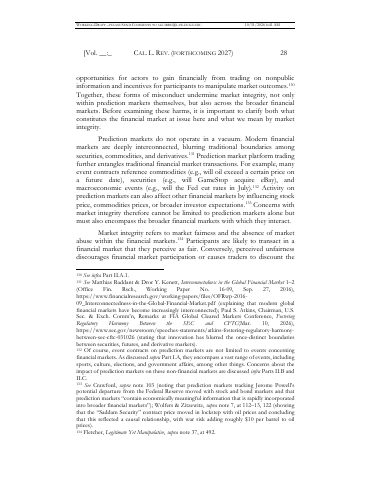 p.32
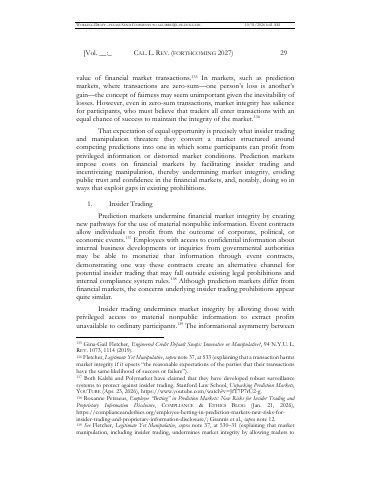 p.33
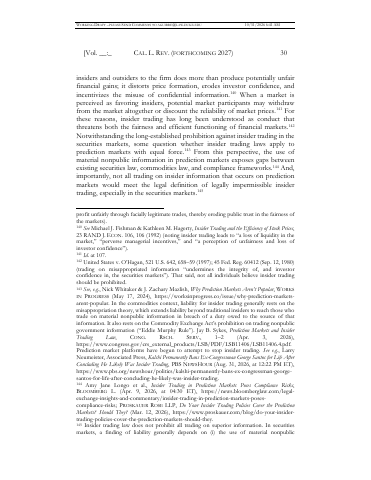 p.34
 p.35
 p.36
 p.37
 p.38
 p.39
 p.40
 p.41
 p.42
 p.43
 p.44
 p.45
 p.46
 p.47
 p.48
 p.49
 p.50
 p.51
 p.52
 p.53
 p.54
 p.55
 p.56
 p.57
 p.58
 p.59
 p.60
Topics and entities
Summary and figures generated from the document and checked automatically: every number shown appears on the cited page. Publishers can request removal.