Nonlinear Identification and Early Warning of Stablecoin Price Depegging: Empirical Evidence Based on a Cusp Catastrophe Model (Research Square)
Summary
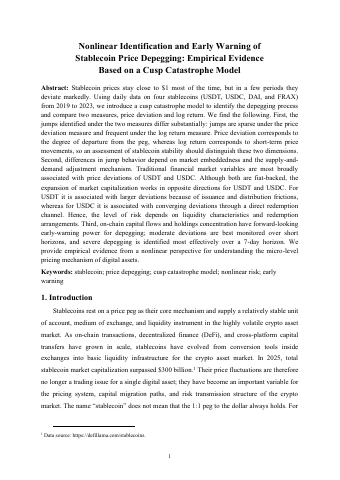
- Total stablecoin market capitalization surpassed $300 billion in 2025.p.2
- The study evaluates daily data on USDT, USDC, DAI, and FRAX across a sample period from January 1, 2019, to November 30, 2023.p.12
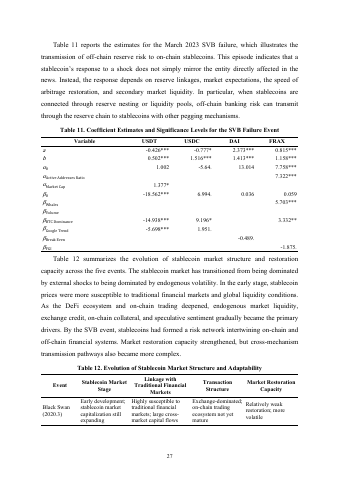
- During the Silicon Valley Bank failure in March 2023, USDC fell to $0.87 within a few days.p.4
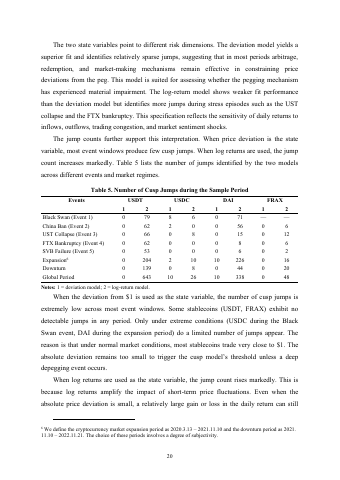
- Under the log-return state variable measure, DAI recorded 338 jumps during the global sample period.p.22
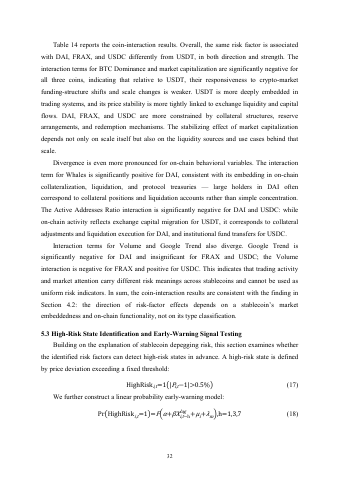
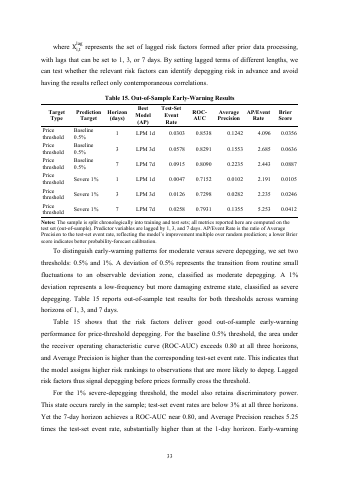
- For severe depegging under a 1% threshold, test-set event rates remain below 3% across all evaluated horizons.p.35
Key insights
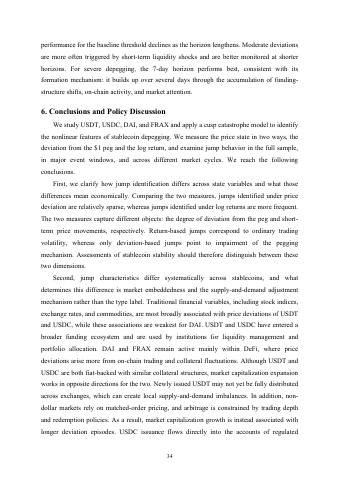
- Price deviation jumps are sparse while log return jumps are frequent, demonstrating two distinct dimensions of stablecoin price risk.p.2
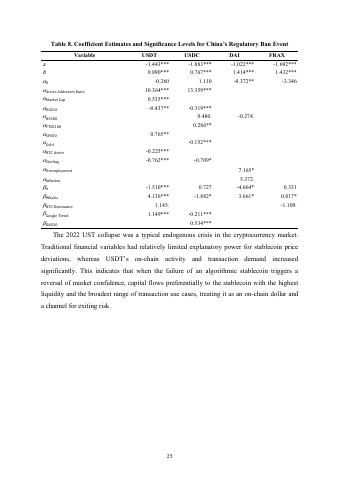
- Market capitalization expansion is associated with larger price deviations for USDT due to issuance frictions, but with smaller deviations for USDC due to direct redemption channels.p.2
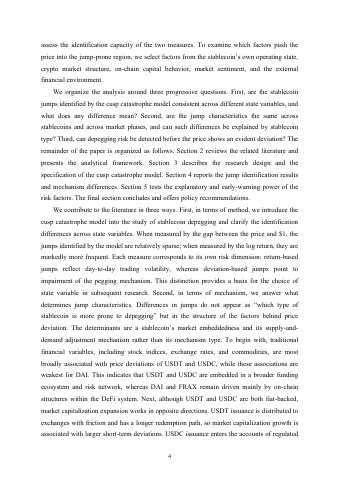
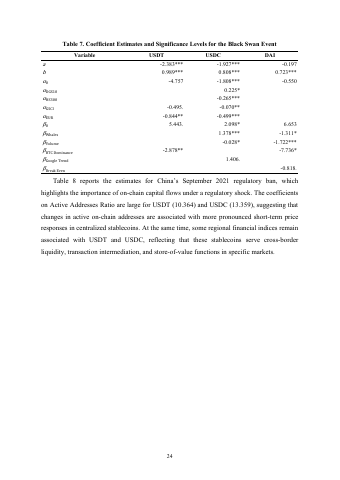
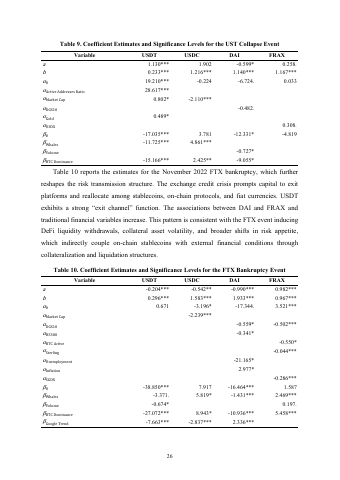
- Traditional financial market variables show strong broad associations with price deviations of USDT and USDC but exhibit weak associations for DAI.p.5
- High concentration of large address holdings increases price deviation risk for USDT and FRAX while supporting peg maintenance for USDC and DAI.p.6
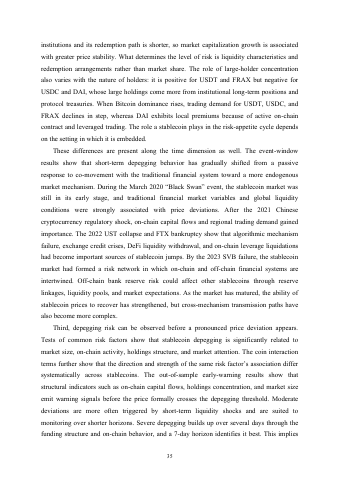
- On-chain active address ratios and holding structures provide ex ante early-warning capabilities before stablecoin prices formally cross depegging thresholds.p.35
- Moderate stablecoin price deviations are primarily driven by short-term liquidity shocks and are best monitored over short horizons.p.35
- Severe stablecoin depegging builds up over several days and is identified most effectively over a 7-day early-warning horizon.p.35
Pages
 p.1
 p.2
 p.3
 p.4
 p.5
 p.6
 p.7
 p.8
 p.9
 p.10
 p.11
 p.12
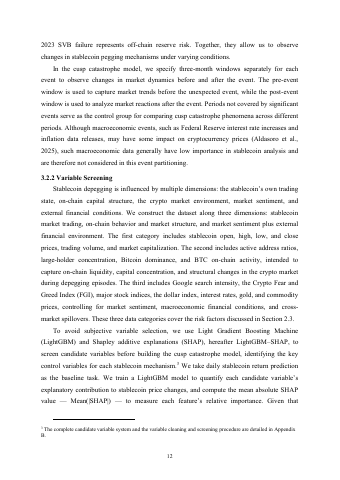 p.13
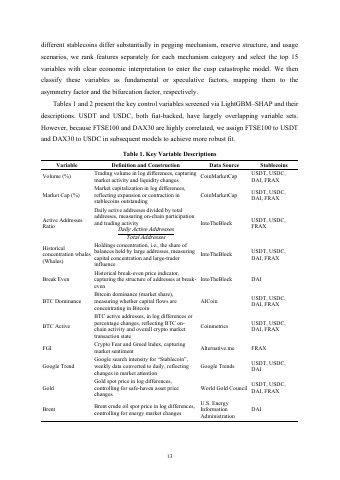 p.14
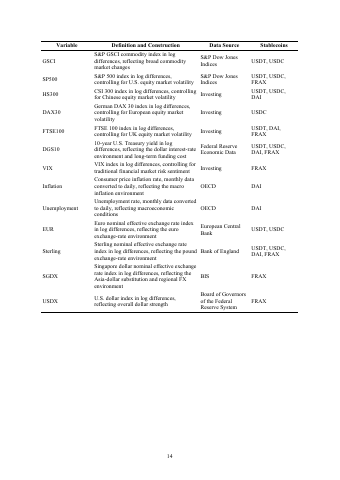 p.15
 p.16
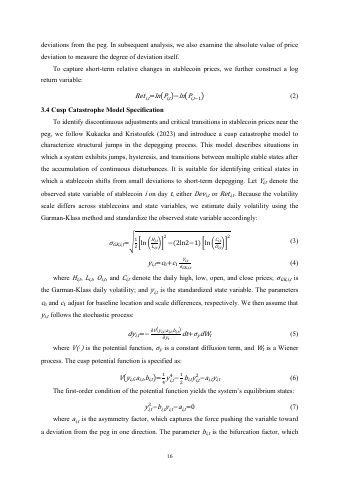 p.17
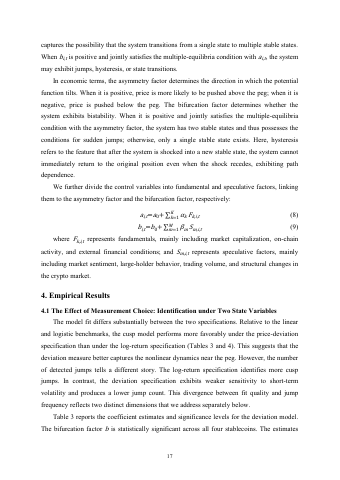 p.18
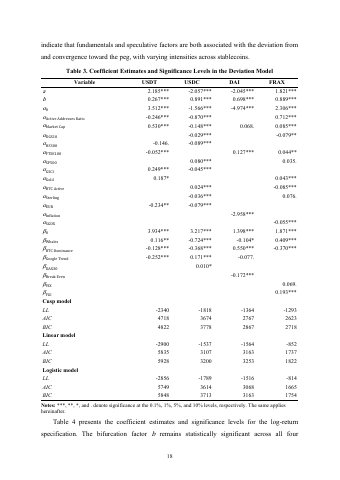 p.19
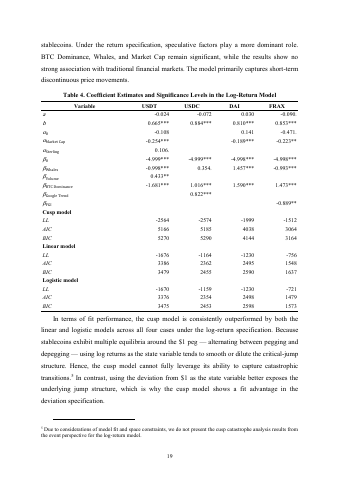 p.20
 p.21
 p.22
 p.23
 p.24
 p.25
 p.26
 p.27
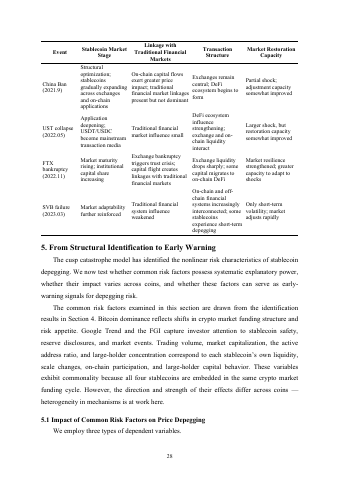
 p.28
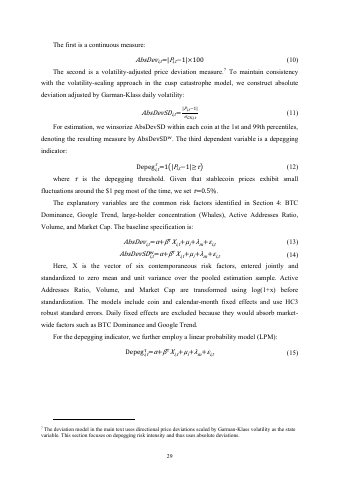
 p.29
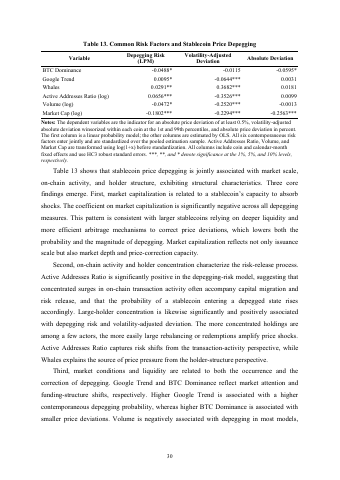
 p.30
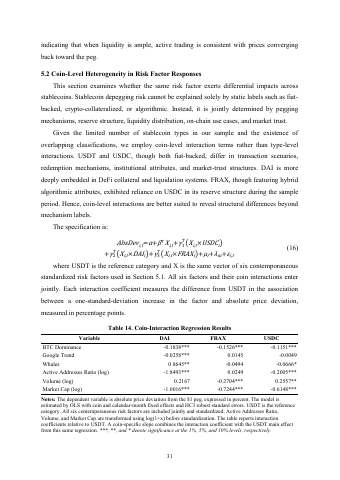
 p.31
 p.32
 p.33
 p.34
 p.35
 p.36
 p.37
 p.38
 p.39
 p.40
 p.41
 p.42
 p.43
 p.44
 p.45
 p.46
 p.47
 p.48
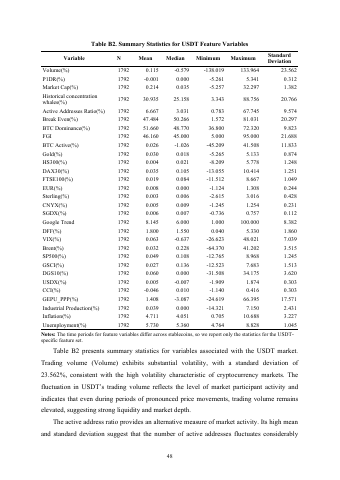 p.49
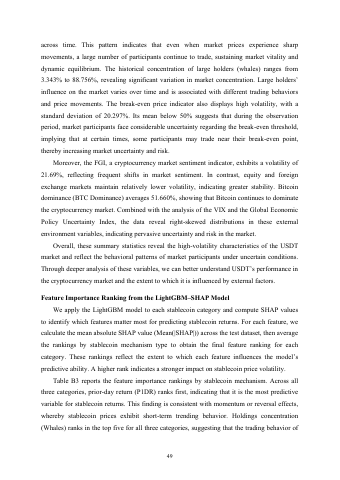 p.50
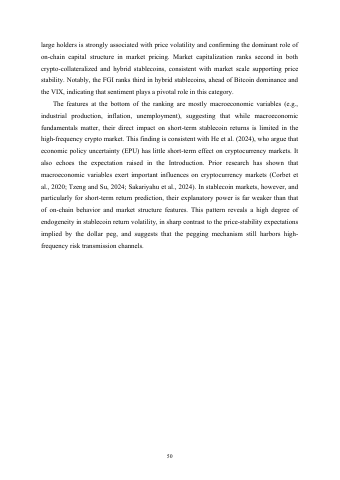 p.51
 p.52
Topics and entities
Summary and figures generated from the document and checked automatically: every number shown appears on the cited page. Publishers can request removal.