Limited Capital? Explaining Transatlantic Divergences in Artificial Intelligence Startup Financing (OpenAlex (recherche mondiale))
Summary
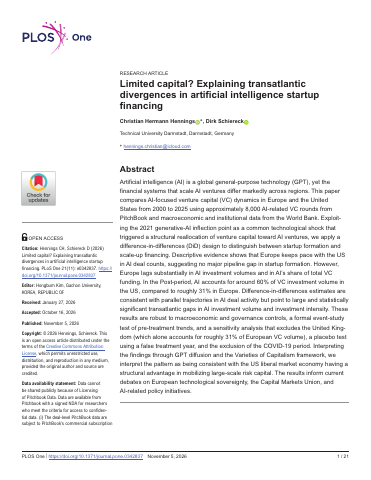
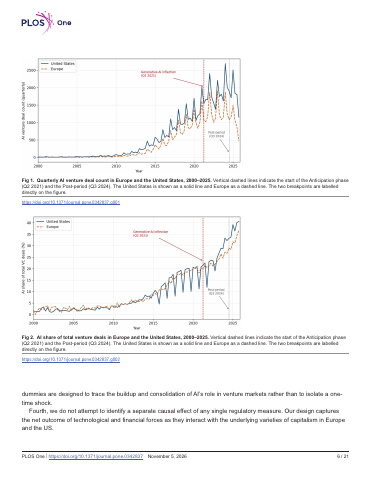
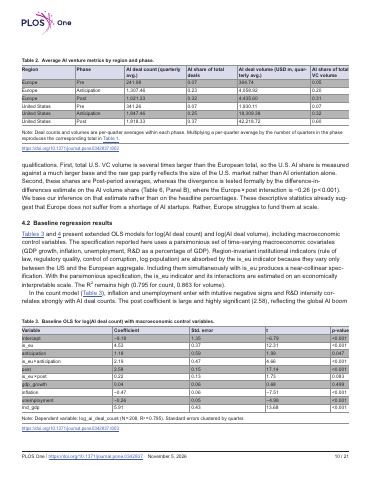
- In the Post-period, AI accounts for around 60% of VC investment volume in the US, compared to roughly 31% in Europe.p.1
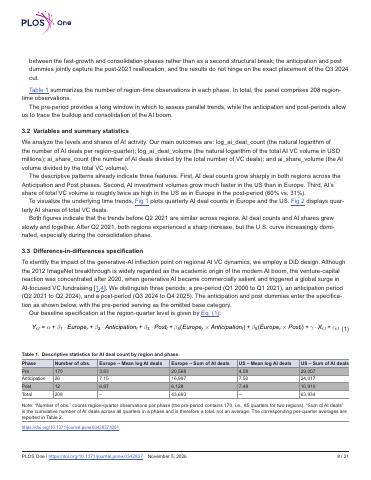
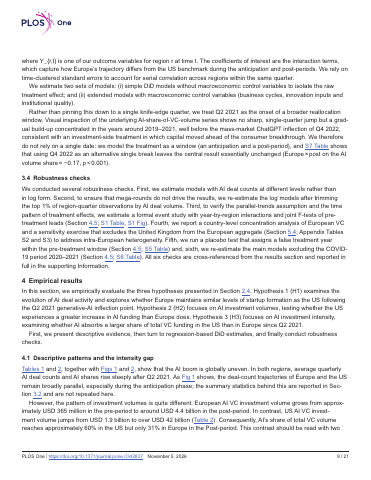
- European AI VC investment volume grew from approximately USD 365 million in the pre-period to around USD 4.4 billion in the post-period.p.9
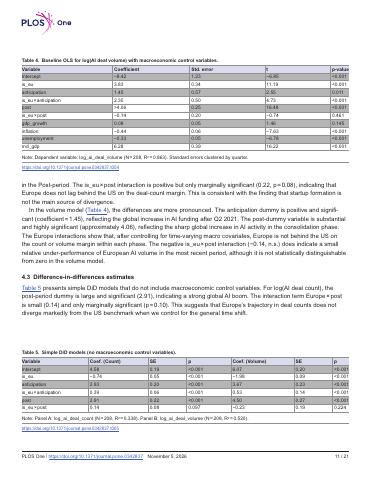
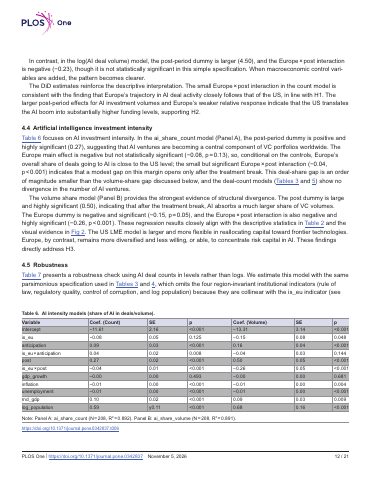
- Difference-in-differences estimates for the AI share of VC volume yield a statistically significant Europe x post interaction coefficient of -0.26.p.12
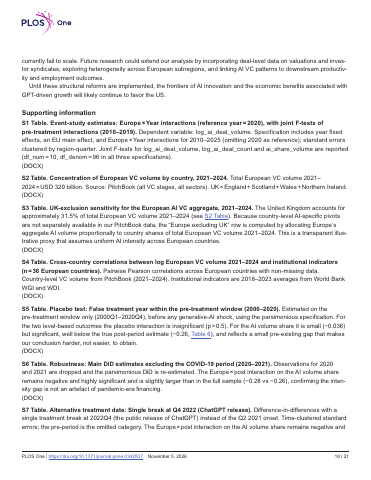
- The United Kingdom alone accounts for approximately 31.5% of total European VC volume between 2021 and 2024.p.18
Key insights
- Europe maintains relative parity with the US in AI deal counts, indicating no substantial pipeline gap in startup formation.p.1
- A pronounced transatlantic gap opens at the scaling stage, where the US mobilizes far larger volumes of growth risk capital.p.14
- Following the Q2 2021 generative-AI inflection point, US venture capital portfolios reallocated capital to AI far more aggressively than European portfolios.p.5
- Trimming the top 1% of deal-volume observations yields baseline log deal count interactions virtually identical to the main models.p.13
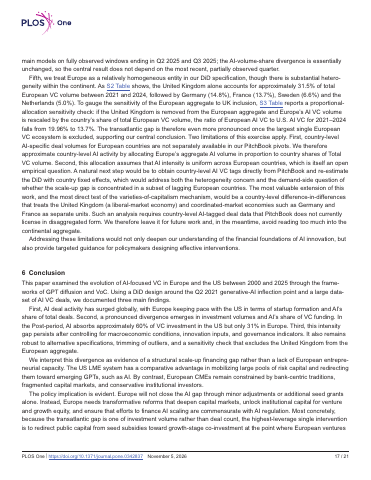
- Excluding the United Kingdom reduces the European AI VC to US AI VC volume ratio for 2021–2024 from 19.96% to 13.7%.p.17
- Country-level institutional quality indicators such as regulatory quality and control of corruption correlate positively with European VC volume allocation.p.15
Pages
 p.1
 p.2
 p.3
 p.4
 p.5
 p.6
 p.7
 p.8
 p.9
 p.10
 p.11
 p.12
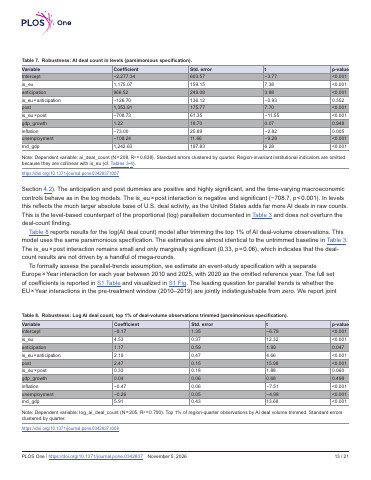 p.13
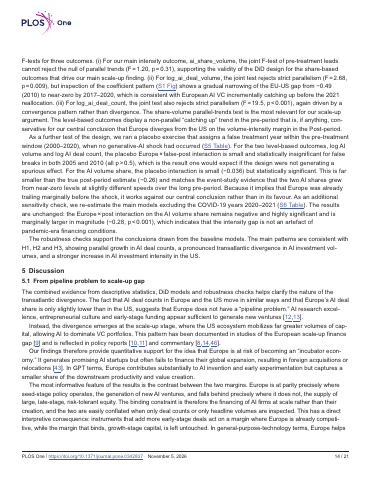 p.14
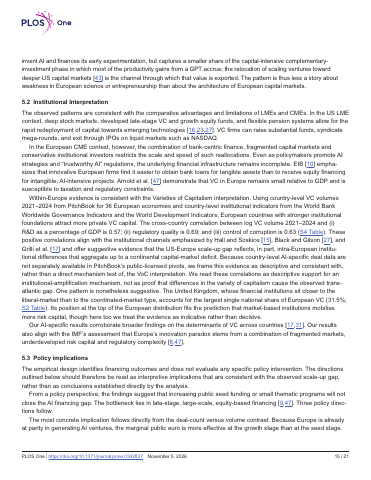 p.15
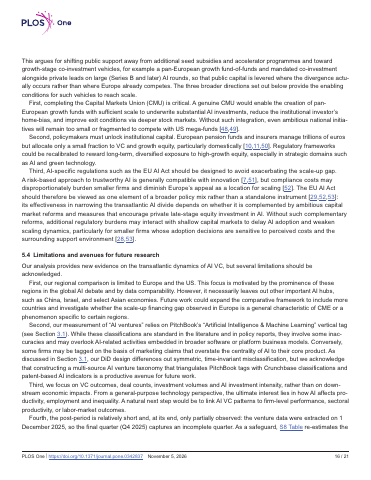 p.16
 p.17
 p.18
 p.19
 p.20
 p.21
Topics and entities
Summary and figures generated from the document and checked automatically: every number shown appears on the cited page. Publishers can request removal.