FinTech Disruption, Retail Banking Dynamics, and Digital Financial Assets: A Volatility Spillover and Risk-Adjusted Performance Analysis (International Journal For Multidisciplinary Research)
Summary
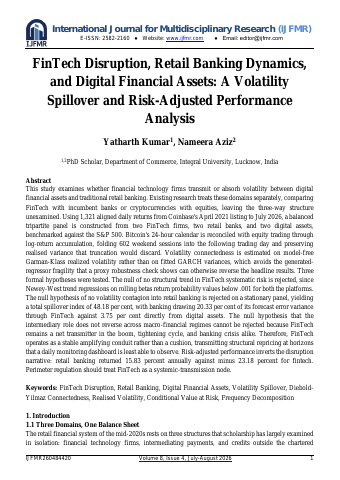
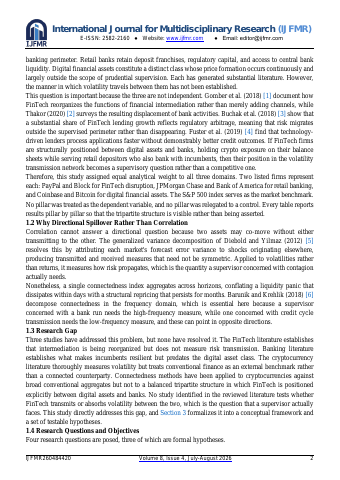
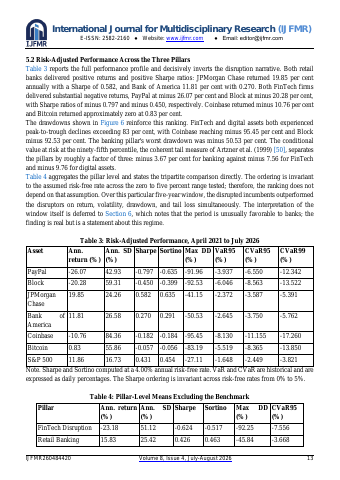
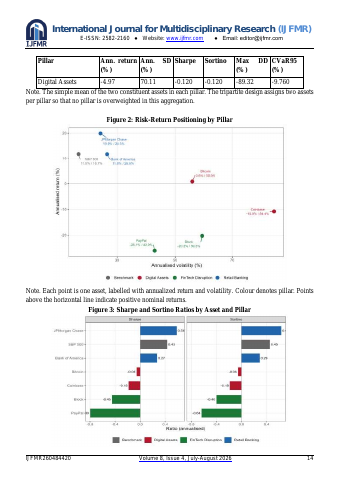
- Retail banking delivered an annual return of 15.83 percent compared to minus 23.18 percent for FinTech disruptors.p.1
- The continuous cryptocurrency calendar reconciliation folded 602 weekend sessions into equity trading days without discarding variance.p.1
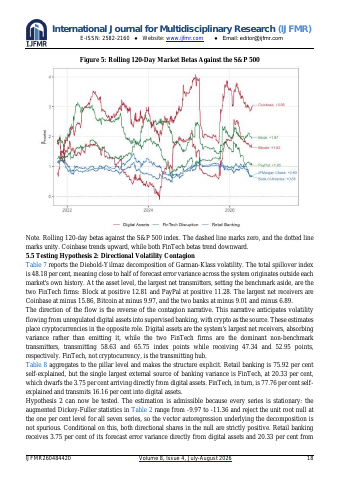
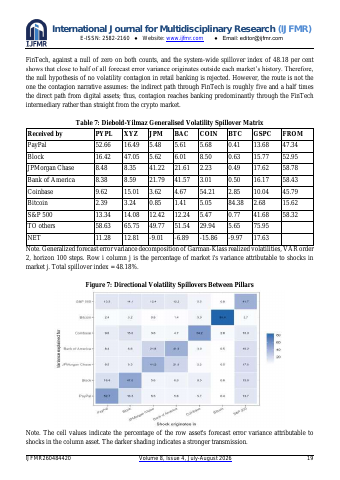
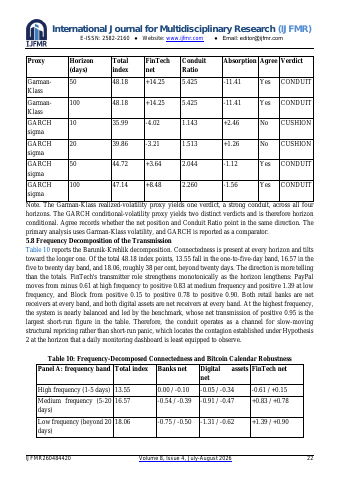
- The estimated total spillover index across the tripartite system reached 48.18 per cent.p.1
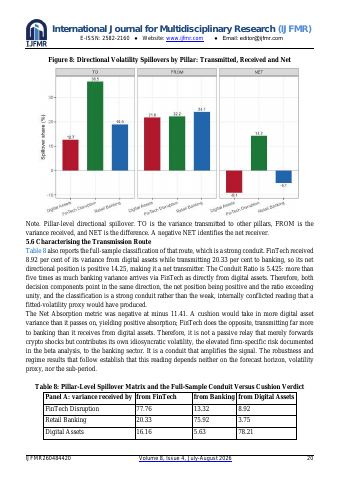
- Retail banking receives 20.33 per cent of its forecast error variance via FinTech versus 3.75 per cent directly from digital assets.p.1
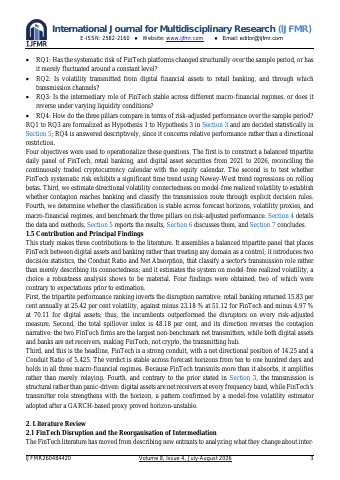
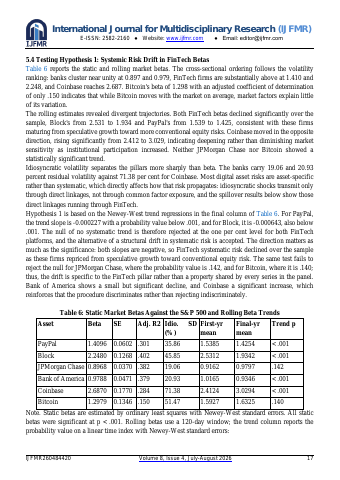
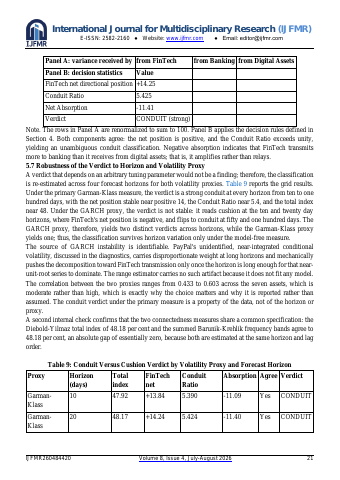
- FinTech operates with a net directional position of 14.25 and a Conduit Ratio of 5.425.p.3
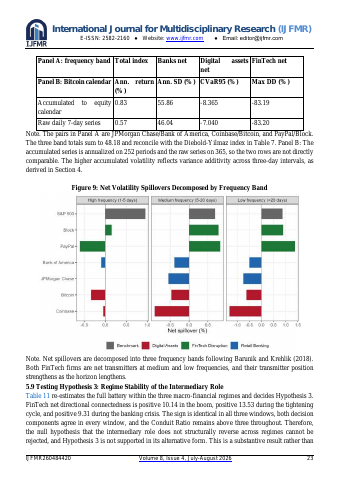
- Historical conditional value at risk at the 95th percentile stood at minus 3.67 per cent for banking, minus 7.56 per cent for FinTech, and minus 9.76 per cent for digital assets.p.13
Key insights
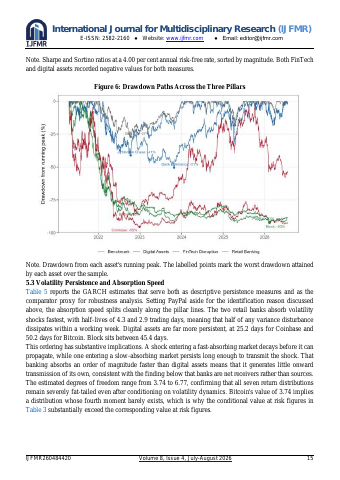
- The tripartite performance ranking inverts the disruption narrative, as incumbent retail banks outperformed disruptors on every risk-adjusted measure.p.3
- FinTech acts as a stable amplifying conduit rather than a volatility cushion between digital assets and retail banks.p.1
- Digital financial assets function as net receivers of volatility rather than net transmitters across the network.p.3
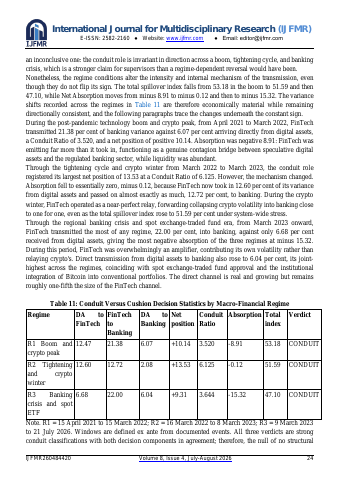
- The intermediary role of FinTech remains a net transmitter across economic booms, monetary tightening cycles, and banking crises.p.1
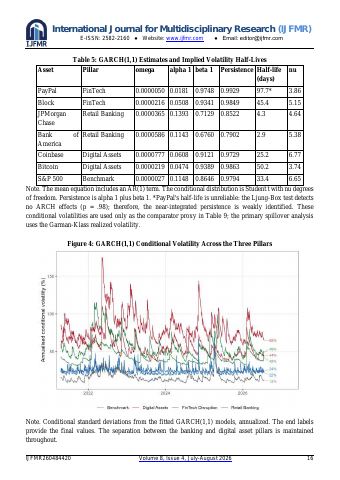
- Retail banks absorb volatility shocks rapidly, demonstrating GARCH half-lives of 4.3 and 2.9 trading days.p.15
- Using fitted GARCH variances creates proxy instability across forecast horizons compared to model-free realized volatility.p.21
Pages
 p.1
 p.2
 p.3
 p.4
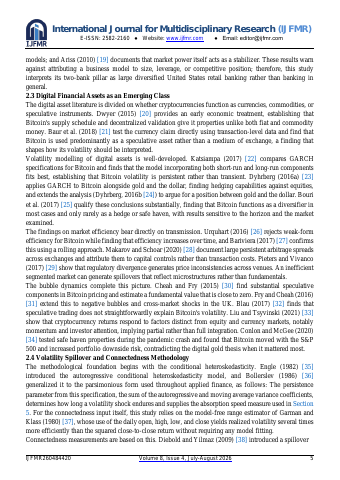 p.5
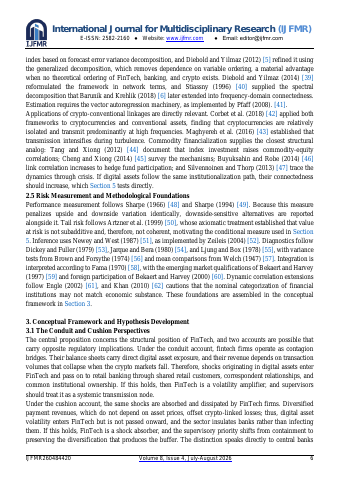 p.6
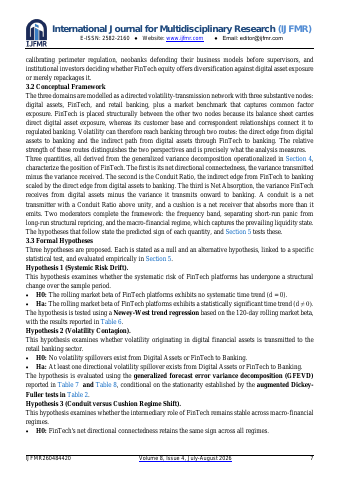 p.7
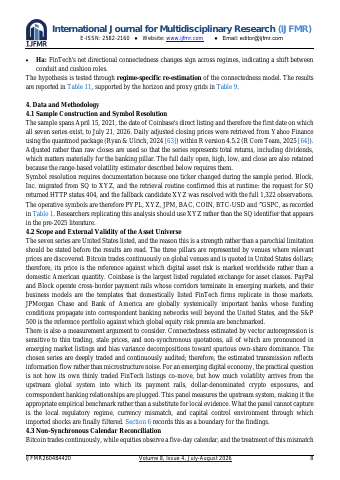 p.8
 p.9
 p.10
 p.11
 p.12
 p.13
 p.14
 p.15
 p.16
 p.17
 p.18
 p.19
 p.20
 p.21
 p.22
 p.23
 p.24
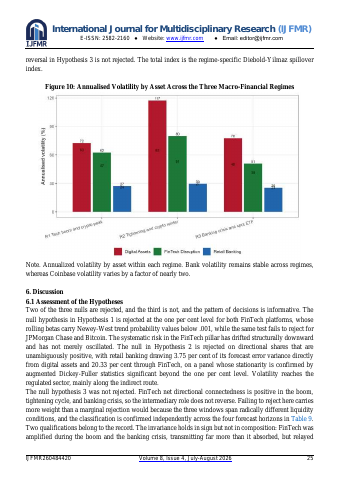 p.25
 p.26
 p.27
 p.28
 p.29
 p.30
 p.31
Topics and entities
Summary and figures generated from the document and checked automatically: every number shown appears on the cited page. Publishers can request removal.