Financial Inclusion and Institutional Resilience in AI-Driven Islamic Finance: A Contract-Based Risk Governance Framework (Electronic Integrated Computer Algorithm Journal)
Summary
- The research paper was published in Electronic Integrated Computer Algorithm Journal covering pp 64~83 in Vol. 4, No. 1.p.1
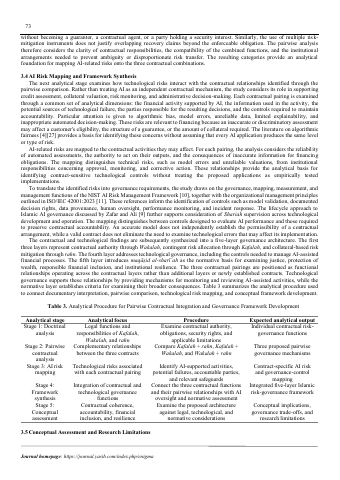
- The framework incorporates AAOIFI Shari'ah Standard No. 5 to establish normative boundaries for guarantee obligations under Kafalah.p.3
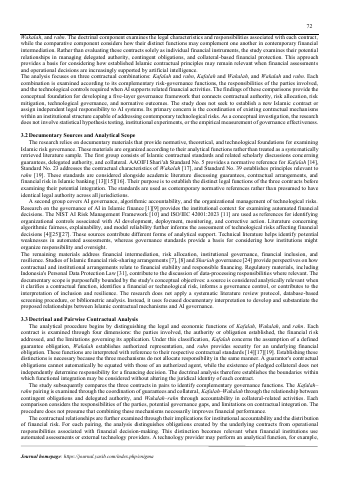
- Delegated agency standards draw upon AAOIFI Shari'ah Standard No. 23 to clarify boundaries for authority and representation under Wakalah.p.9
- Collateral governance incorporates principles from AAOIFI Shari'ah Standard No. 39 to regulate pledged assets under rahn.p.9
- Organizational AI lifecycle management aligns with requirements from ISO/IEC 42001:2023 and the NIST AI Risk Management Framework.p.2
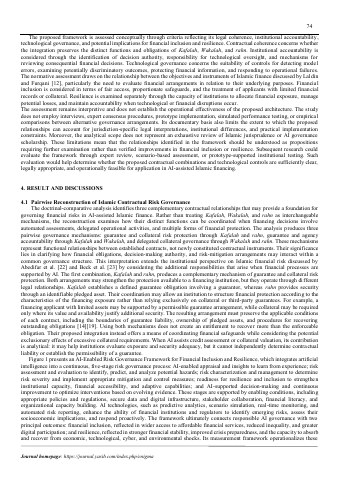
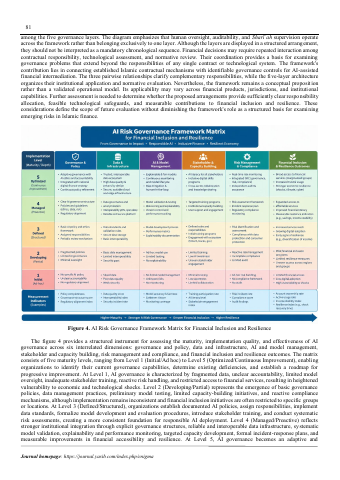
- An institutional maturity matrix establishes 5 levels ranging from Level 1 (Initial/Ad hoc) to Level 5 (Optimized/Continuous Improvement).p.18
Key insights
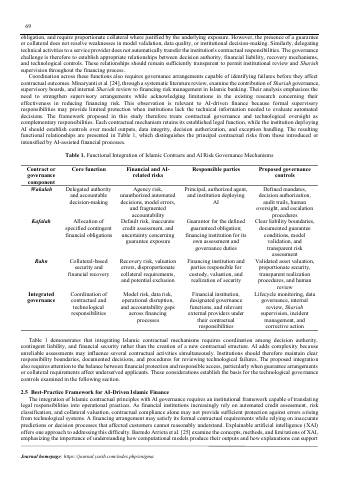
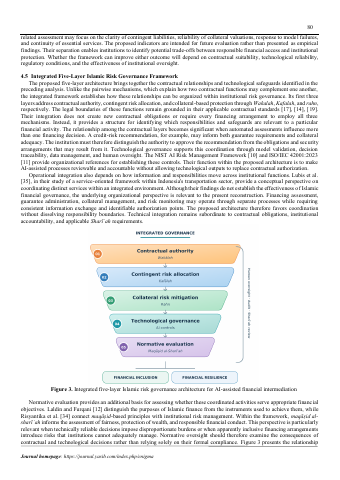
- Integrating Islamic contractual mechanisms requires coordinating decision authority, contingent liability, and financial security rather than creating a new contractual structure.p.6
- Predictive accuracy in algorithmic credit scoring does not automatically ensure fair or non-discriminatory treatment of financing applicants.p.4
- Outsourcing AI model development or data processing does not transfer a financial institution's responsibility for decisions made under its mandate.p.4
- Automated asset valuation models trained on urban property market data can produce inaccurate estimates when applied to assets with limited transaction records.p.5
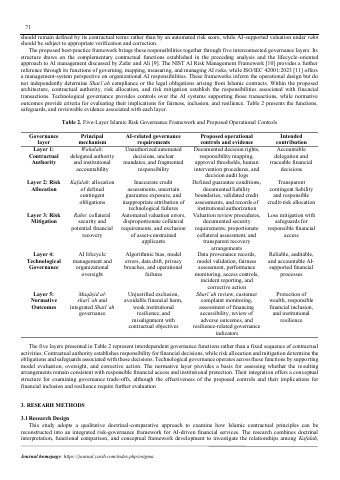
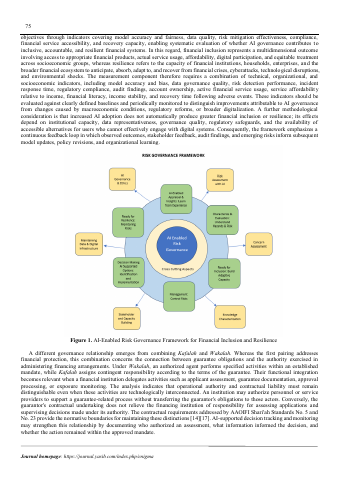
- Human oversight, auditability, and Shari'ah supervision must operate across all layers of the proposed five-layer governance architecture.p.18
- Higher governance maturity levels indicate established organizational capabilities rather than automatic proof of greater financial inclusion.p.19
Pages
 p.1
 p.2
 p.3
 p.4
 p.5
 p.6
 p.7
 p.8
 p.9
 p.10
 p.11
 p.12
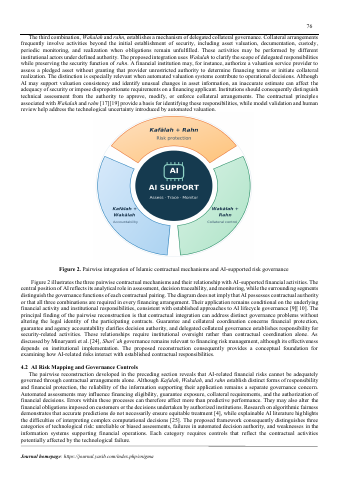 p.13
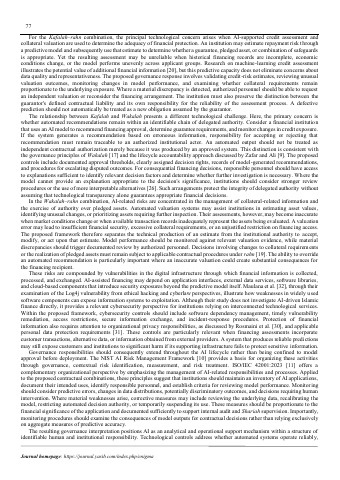 p.14
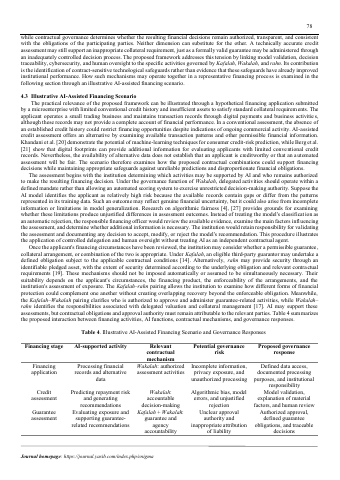 p.15
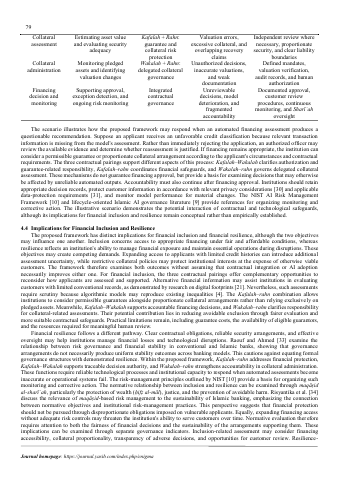 p.16
 p.17
 p.18
 p.19
 p.20
Topics and entities
Summary and figures generated from the document and checked automatically: every number shown appears on the cited page. Publishers can request removal.