Does Earnings-Call Climate Exposure Improve Machine-Learning Forecasts of Stock Downside Risk? Out-of-Sample Evidence from U.S. Firms (Cureus Journal of Computer Science.)
Summary
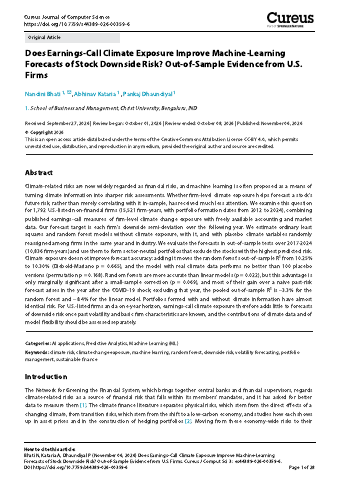
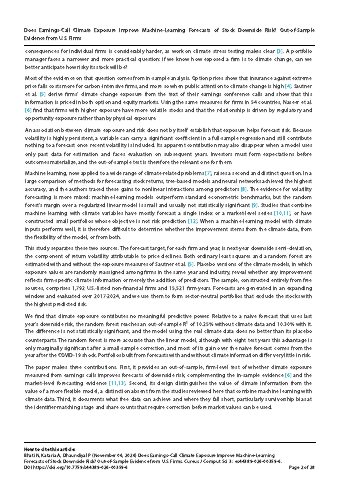
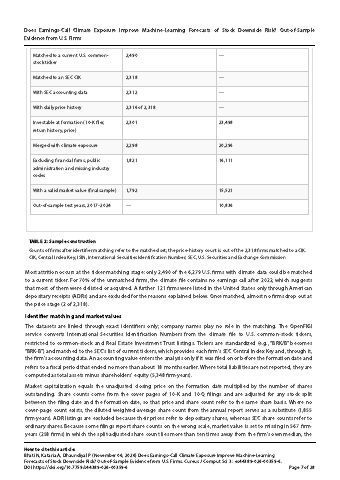
- The study evaluates out-of-sample forecasts of downside risk for 1,792 U.S.-listed non-financial firms across 15,521 firm-years from 2012 to 2024.p.1
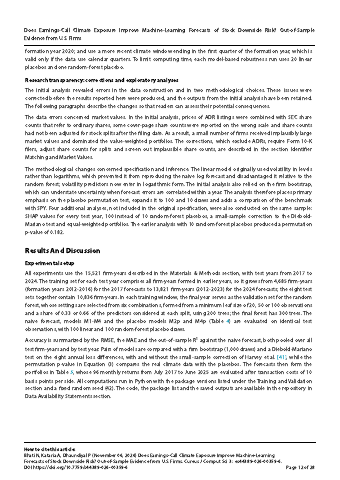
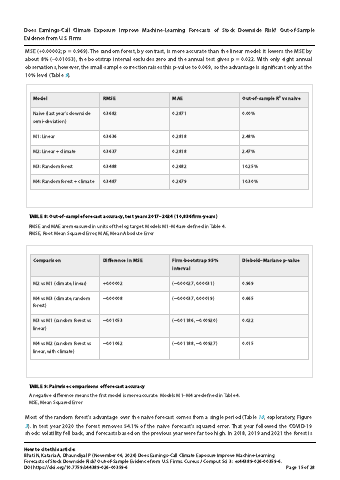
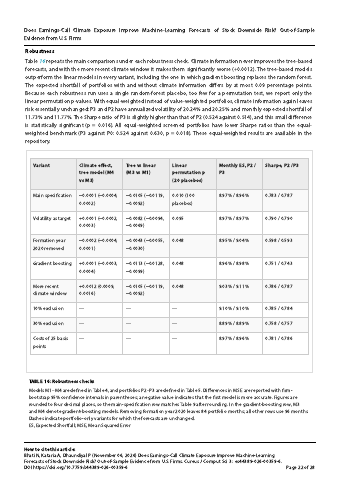
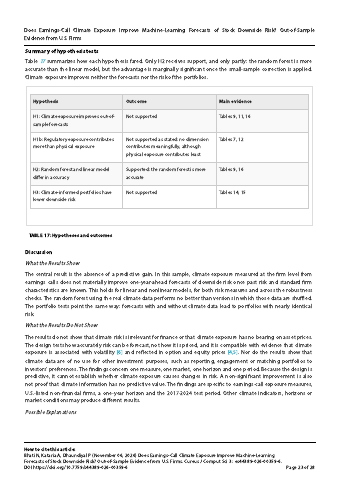
- Adding earnings-call climate exposure moves the random forest's out-of-sample R² from 10.25% to 10.30% with a Diebold-Mariano p = 0.665.p.1
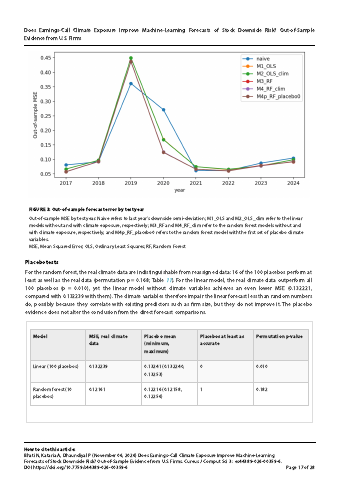
- Evaluating forecasts against 100 placebo versions demonstrates that real climate data performs no better than randomly reassigned data, yielding a permutation p = 0.168.p.1
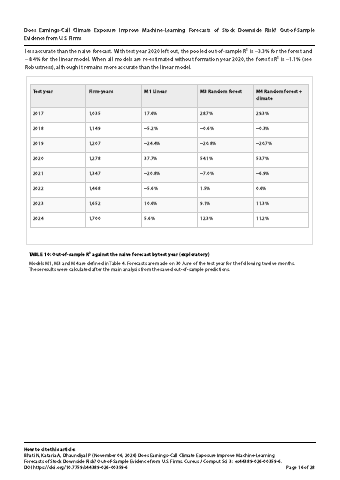
- Excluding the single year following the COVID-19 shock reduces the pooled out-of-sample R² to −3.3% for the random forest and −8.4% for the linear model.p.1
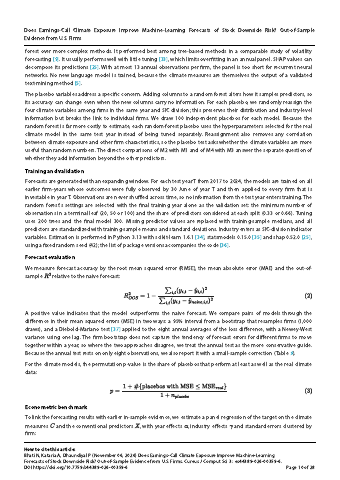
- The random forest model lowers the mean squared error by −0.01053 compared to the linear model, yielding a Diebold-Mariano p-value of 0.022.p.15
Key insights
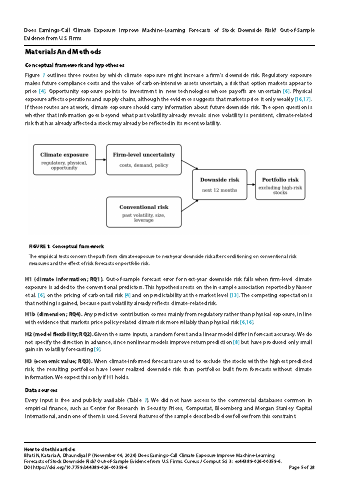
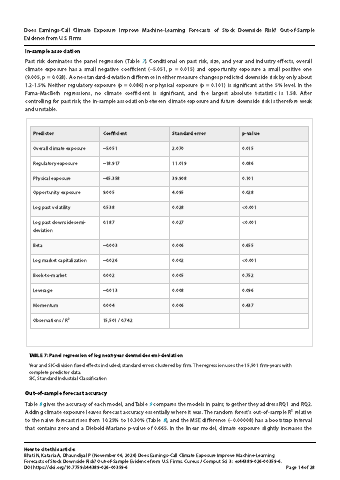
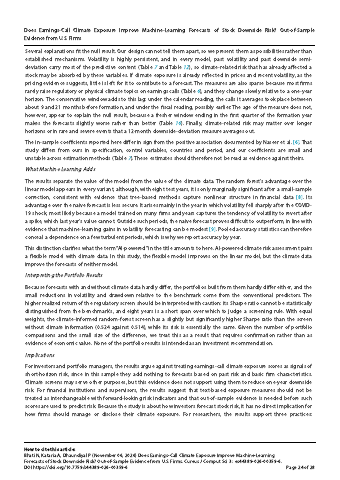
- Adding firm-level climate change exposure to conventional risk predictors does not materially improve out-of-sample forecasts of stock downside risk.p.1
- The random forest model yields an out-of-sample R² of 10.25% without climate variables and 10.30% with climate variables.p.1
- Models using real climate data perform no better than 100 placebo versions with shuffled climate variables, producing a permutation p-value of 0.168.p.1
- Most of the random forest's predictive advantage over a naive past-risk forecast is concentrated in the year following the COVID-19 shock.p.1
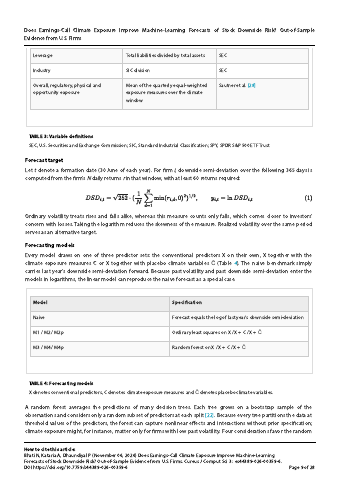
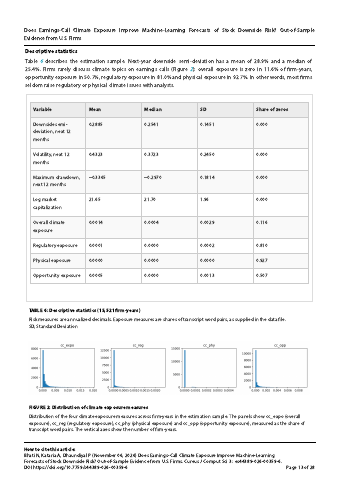
- Earnings-call climate exposure measures are highly sparse, with regulatory exposure being zero in 81.0% of firm-years and physical exposure zero in 92.7%.p.13
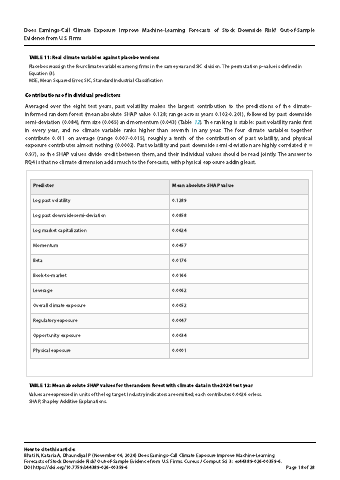
- Past volatility is the dominant predictor in the climate-informed random forest, registering a mean absolute SHAP value of 0.1289.p.18
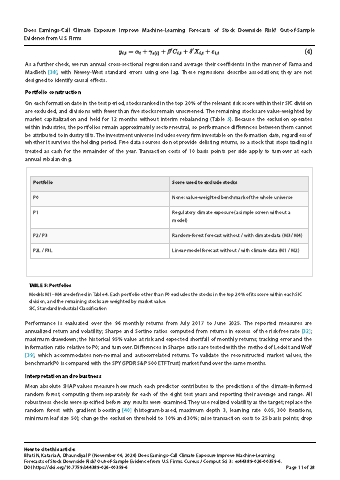
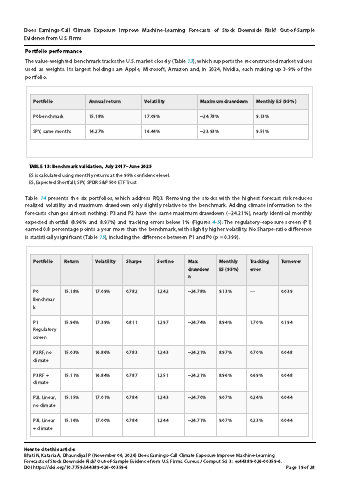
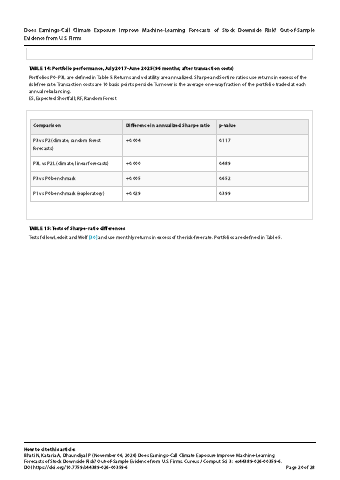
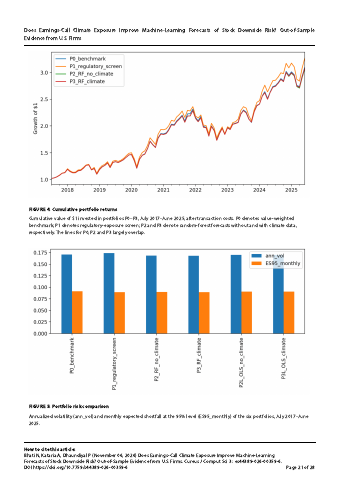
- Portfolios built with and without climate forecasts show nearly identical realized risk, with monthly expected shortfall reaching 8.96% and 8.97%.p.19
Pages
 p.1
 p.2
 p.3
 p.4
 p.5
 p.6
 p.7
 p.8
 p.9
 p.10
 p.11
 p.12
 p.13
 p.14
 p.15
 p.16
 p.17
 p.18
 p.19
 p.20
 p.21
 p.22
 p.23
 p.24
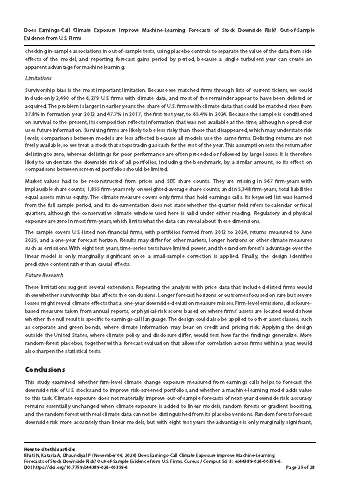 p.25
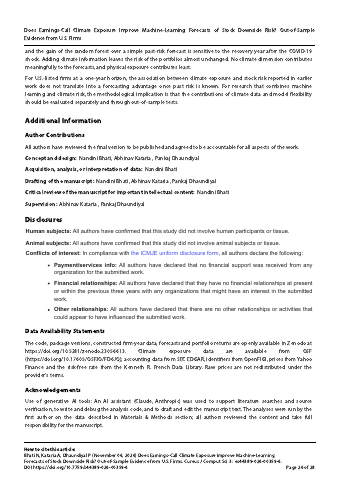 p.26
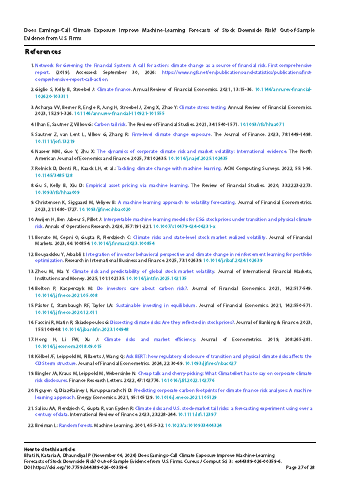 p.27
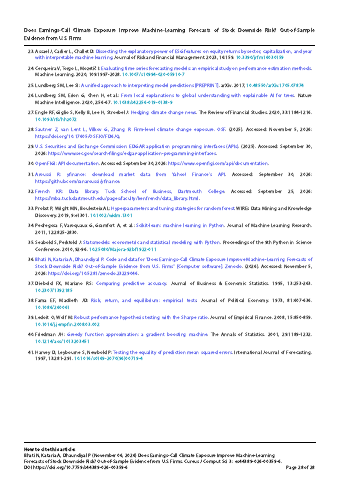 p.28
Topics and entities
Summary and figures generated from the document and checked automatically: every number shown appears on the cited page. Publishers can request removal.