Beyond Adoption: Trust and Promotion in Explaining Sustained QRIS Usage Among Micro-Enterprises (OpenAlex (recherche mondiale))
Summary
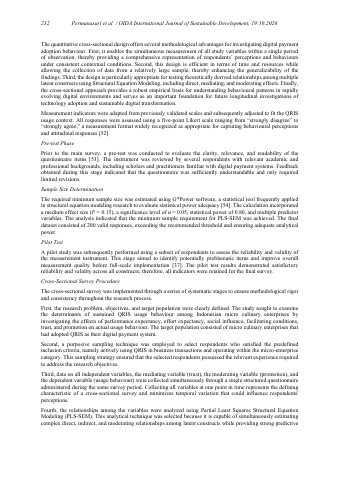
- Data were collected from 200 micro culinary enterprises in Indonesia that actively use QRIS in daily transactions.p.1
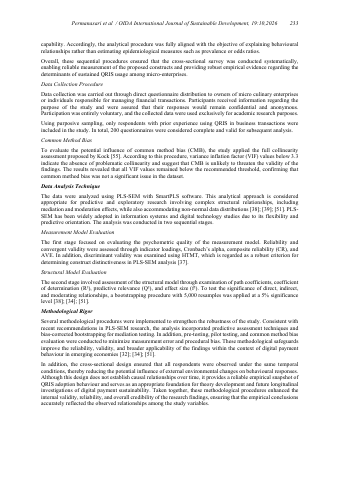
- To test structural relationships, a bootstrapping procedure with 5,000 resamples was applied at a 5% significance level.p.9
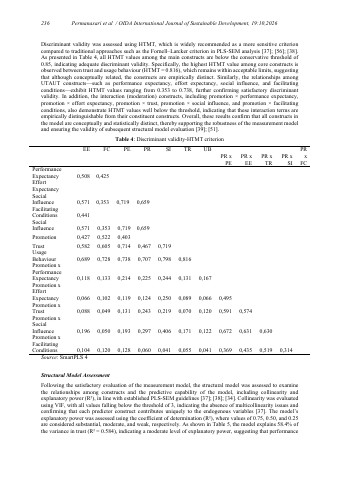
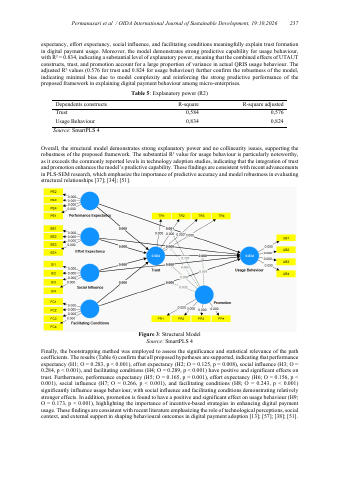
- The research model accounts for 58.4% of the variance in trust, represented by an R² value of 0.584.p.12
- The structural model demonstrates strong explanatory power for usage behaviour, achieving an R² value of 0.834.p.13
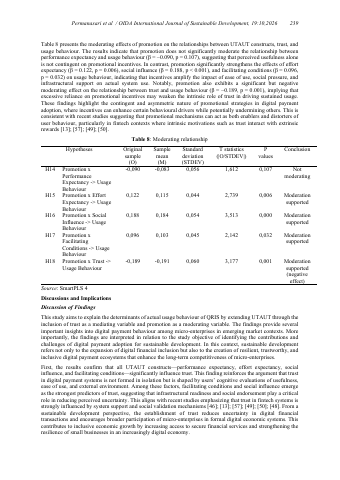
- Promotion exhibits a significant negative moderating effect on the relationship between trust and usage behaviour with a path coefficient of -0.189.p.15
Key insights
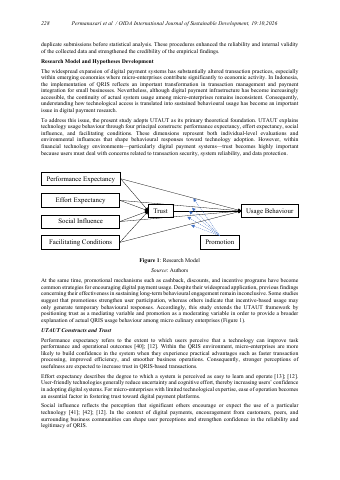
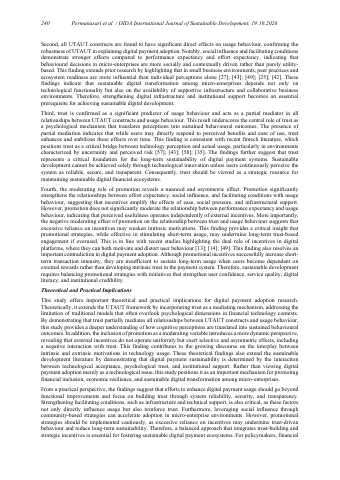
- Social influence and facilitating conditions exert relatively stronger direct effects on QRIS usage behaviour than performance expectancy and effort expectancy.p.1
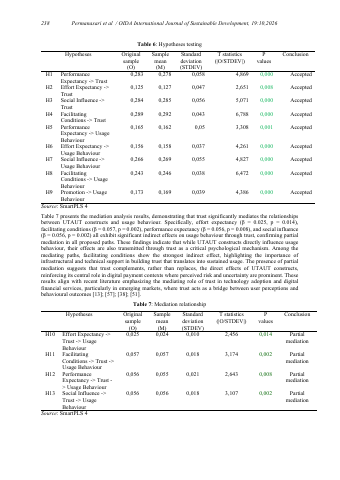
- Trust significantly influences usage behaviour and partially mediates the relationships between all UTAUT constructs and sustained QRIS usage.p.1
- Promotional incentives strengthen the positive effects of effort expectancy, social influence, and facilitating conditions on usage behaviour.p.1
- Promotion negatively moderates the relationship between trust and usage behaviour, suggesting excessive reliance on incentives may weaken trust-driven engagement.p.2
- Full collinearity assessment confirmed variance inflation factor (VIF) values remained below 3.3, demonstrating that common method bias was not a issue.p.9
- Facilitating conditions exhibit the strongest indirect effect on usage behaviour through trust among all mediating paths tested (β = 0.057).p.14
- Promotion does not significantly moderate the relationship between performance expectancy and usage behaviour (β = -0.090, p = 0.107).p.15
Pages
 p.1
 p.2
 p.3
 p.4
 p.5
 p.6
 p.7
 p.8
 p.9
 p.10
 p.11
 p.12
 p.13
 p.14
 p.15
 p.16
 p.17
 p.18
 p.19
 p.20
 p.21
 p.22
Topics and entities
Summary and figures generated from the document and checked automatically: every number shown appears on the cited page. Publishers can request removal.