A Critique of the Influence of the Loan Model on Asset Quality in Zimbabwe Commercial Banks (International Journal of Business Ecosystem and Strategy (2687-2293))
Summary
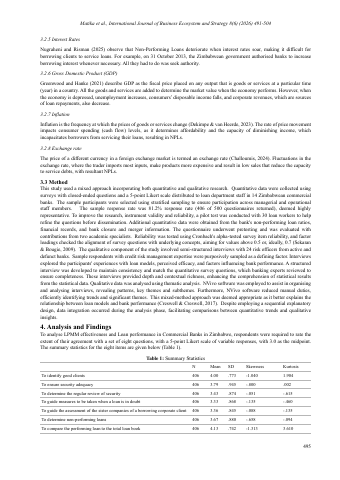
- The quantitative study surveyed 406 loan department staff across 14 Zimbabwean commercial banks, achieving an 81.2% response rate from 500 distributed questionnaires.p.5
- Qualitative semi-structured interviews were conducted with 24 risk officers from both operating and defunct commercial banks in Zimbabwe.p.5
- Non-performing loan (NPL) ratios in Zimbabwe peaked at 20% in 2015, far exceeding the 5% benchmark established by Basel II.p.2
- Bank failures and closures between 2009 and 2014 led to over 1,000 bank employees losing their jobs in Zimbabwe.p.2
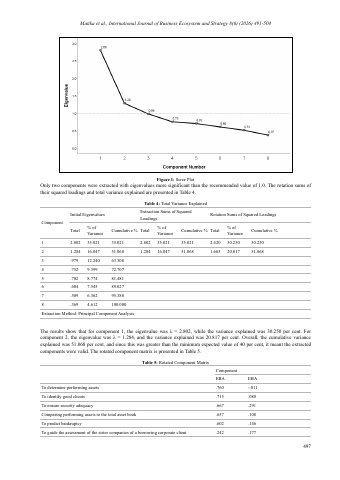
- Factor analysis extracted two principal components that explain a cumulative variance of 51.068 percent in loan portfolio management model effectiveness.p.7
- Extreme hyperinflation in Zimbabwe peaked at 489 billion% in 2008 following money printing to fund government operations.p.10
Key insights
- 1. Regression analysis indicates a statistically significant positive relationship between loan model effectiveness and loan performance (β = 0.736, p = 0.000).p.11
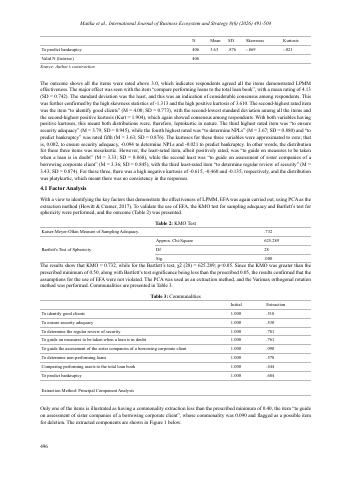
- 2. Comparing performing loans to the total loan book was rated as the highest indicator of model effectiveness with a mean score of 4.13.p.6
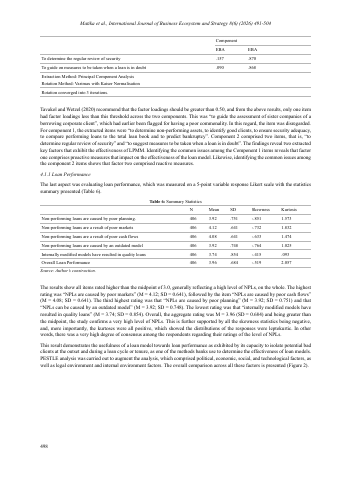
- 3. Survey respondents identified poor markets as the single largest contributor to non-performing loans, with a mean rating of 4.12.p.8
- 4. Effective credit risk management requires a combination of proactive screening factors and reactive post-disbursement measures.p.8
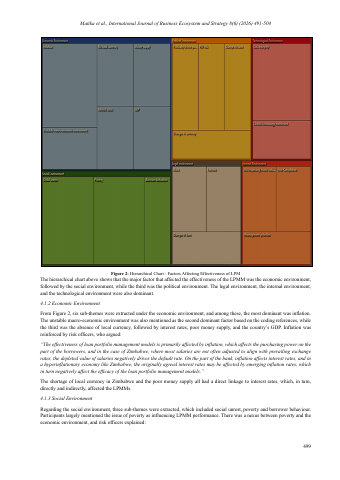
- 5. Macroeconomic volatility, inflation, and currency dislocations severely impair the predictive capability of automated loan models.p.9
- 6. Under the Altman Z-score model for private manufacturing firms, a score of 2.90 or above indicates creditworthiness, whereas 1.23 or lower denotes high risk.p.3
Pages
 p.1
 p.2
 p.3
 p.4
 p.5
 p.6
 p.7
 p.8
 p.9
 p.10
 p.11
 p.12
 p.13
 p.14
Topics and entities
Summary and figures generated from the document and checked automatically: every number shown appears on the cited page. Publishers can request removal.