Under the Shadow of the Grey List: The Adequacy and Effectiveness of South African Beneficial Ownership Transparency (OpenAlex (recherche mondiale))
Summary
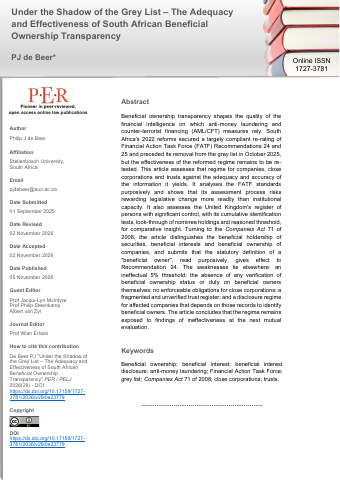
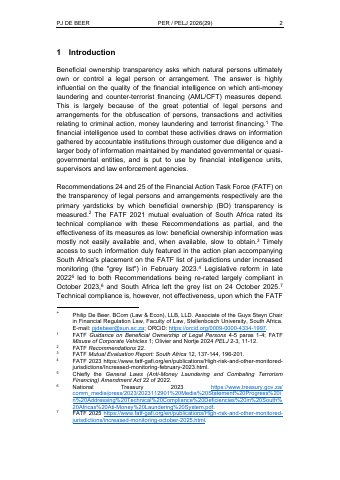
- South Africa was removed from the Financial Action Task Force list of jurisdictions under increased monitoring on 24 October 2025 following statutory reforms.p.2
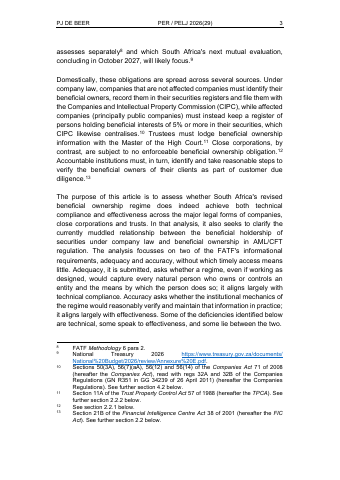
- Under South African company law, affected companies must maintain a register of persons holding beneficial interests of 5% or more in their securities.p.3
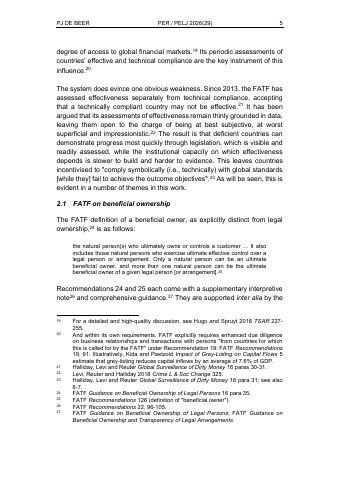
- Research by Kida and Paetzold estimates that grey-listing reduces capital inflows by an average of 7.6% of GDP.p.5
- Extrapolating historical registration and deregistration figures suggests that some 1.3 million close corporations remain registered in South Africa.p.11
- The United Kingdom established a 25% threshold for identifying persons with significant control to align with corporate voting rules for special resolutions.p.20
Key insights
- The FATF methodology evaluates technical compliance separately from effectiveness, incentivising countries to pass legislation faster than building institutional capacity.p.5
- South African close corporations lack enforceable statutory provisions for beneficial ownership disclosure, creating a significant technical compliance gap.p.11
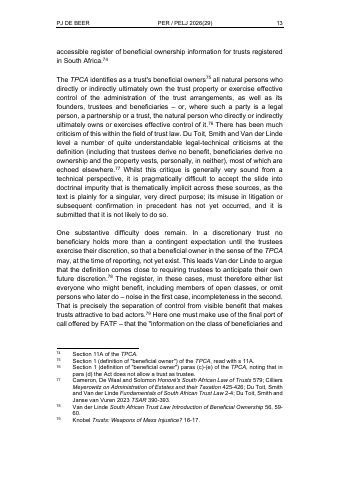
- Discretionary trusts create systemic reporting challenges under the Trust Property Control Act because beneficiaries hold only contingent expectations prior to trustee decisions.p.13
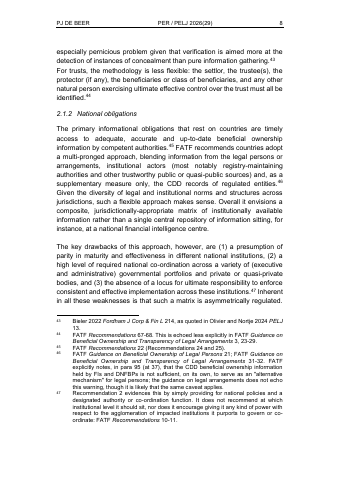
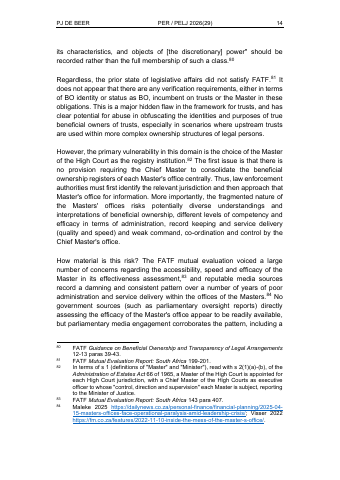
- Housing the central beneficial ownership register for trusts within the decentralized and administratively challenged offices of the Master of the High Court compromises operational accessibility.p.14
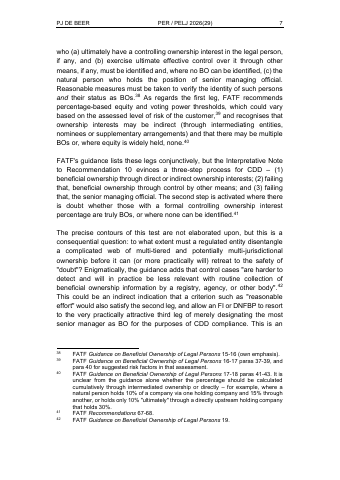
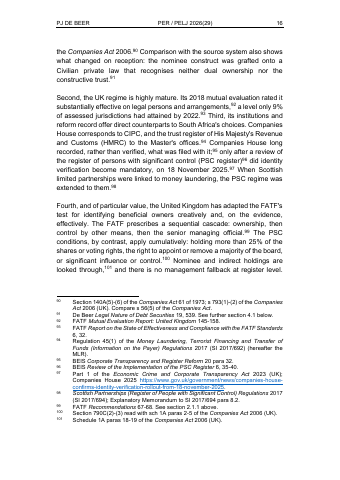
- The United Kingdom's beneficial ownership regime applies cumulative identification criteria for persons with significant control rather than relying on a sequential process of elimination.p.16
- The CIPC's adoption of a uniform 5% beneficial ownership filing threshold lacks published empirical risk evidence and risks introducing noise into regulatory datasets.p.35
- Affected companies in South Africa are required to collect and report beneficial interest holders rather than ultimate beneficial owners, relying on inter-registry linking to identify natural persons.p.42
Pages
 p.1
 p.2
 p.3
 p.4
 p.5
 p.6
 p.7
 p.8
 p.9
 p.10
 p.11
 p.12
 p.13
 p.14
 p.15
 p.16
 p.17
 p.18
 p.19
 p.20
 p.21
 p.22
 p.23
 p.24
 p.25
 p.26
 p.27
 p.28
 p.29
 p.30
 p.31
 p.32
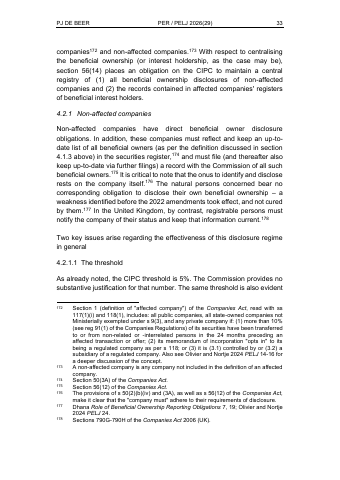 p.33
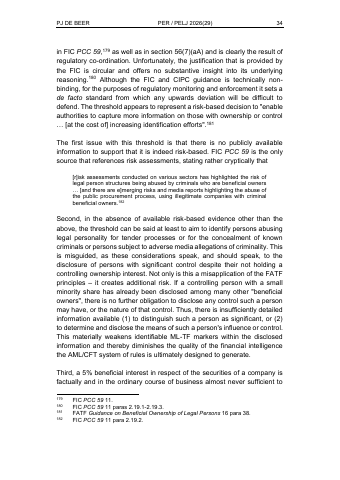 p.34
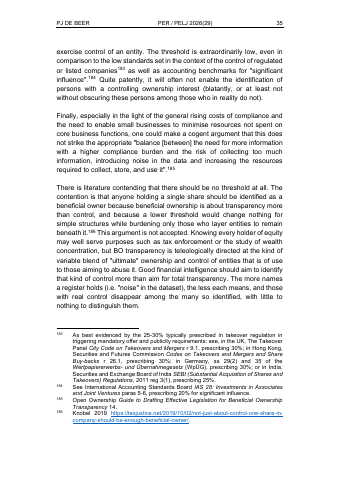 p.35
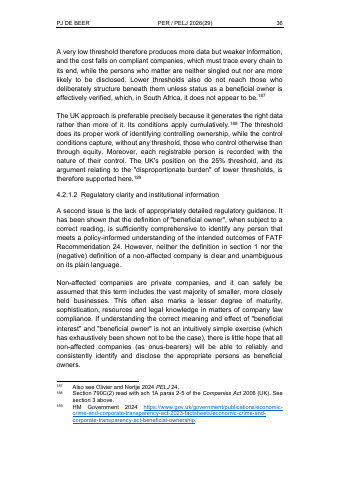 p.36
 p.37
 p.38
 p.39
 p.40
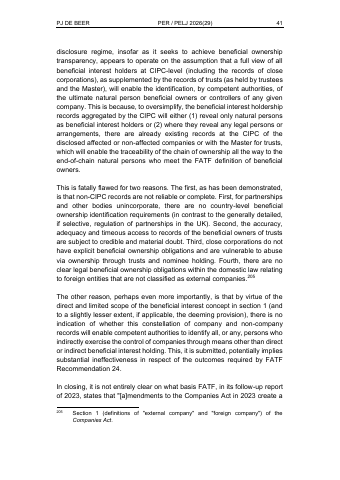 p.41
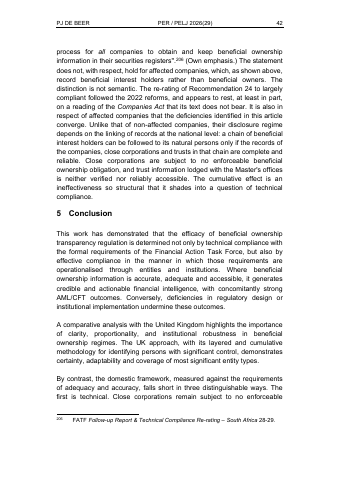 p.42
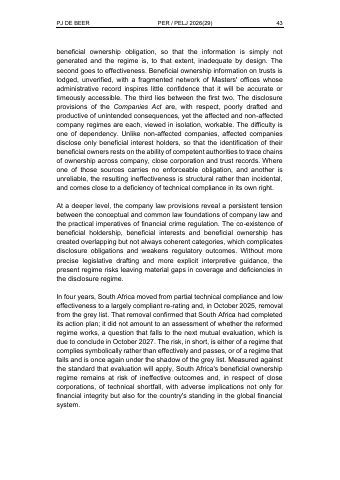 p.43
 p.44
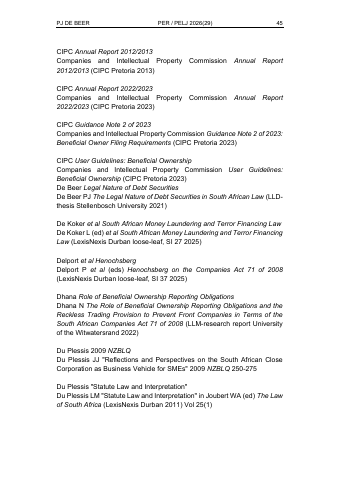 p.45
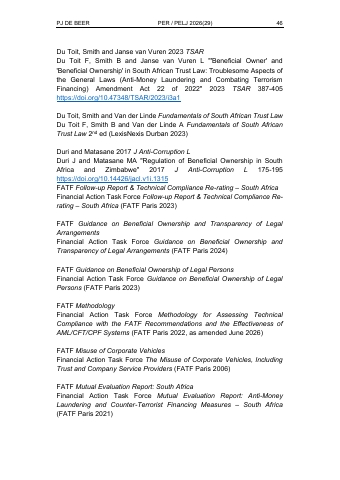 p.46
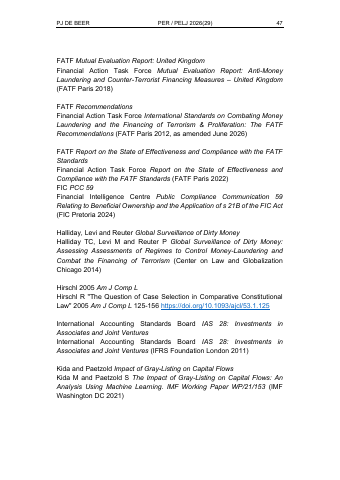 p.47
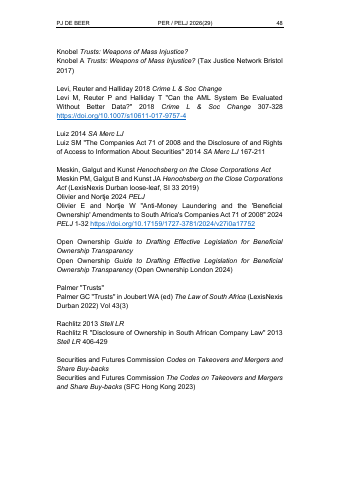 p.48
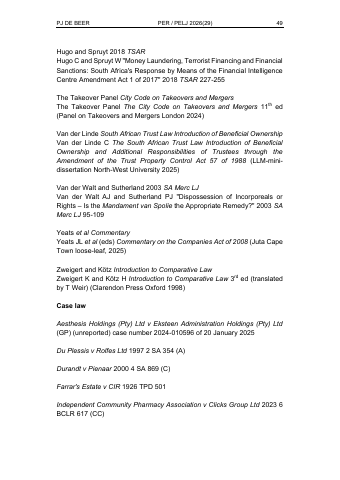 p.49
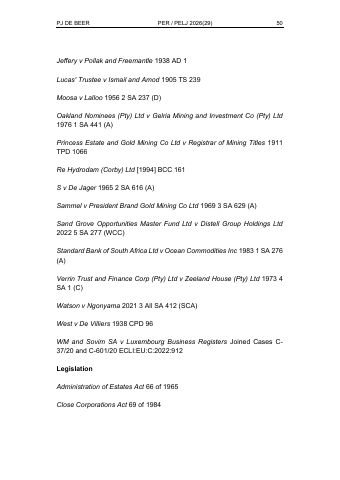 p.50
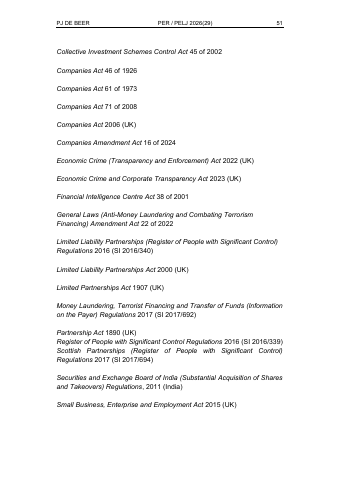 p.51
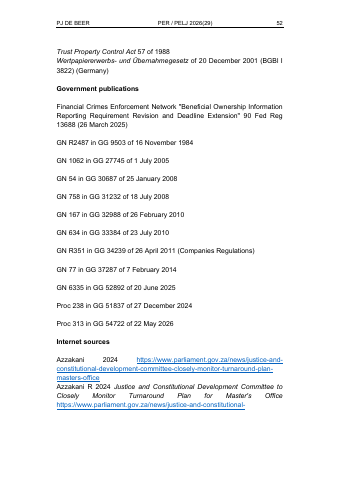 p.52
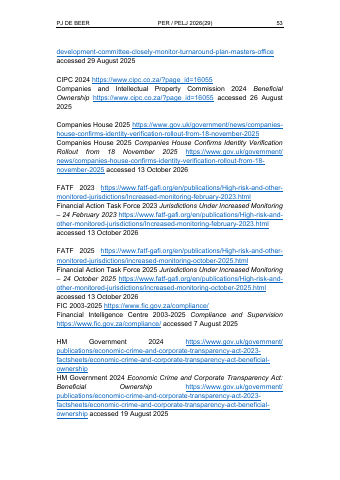 p.53
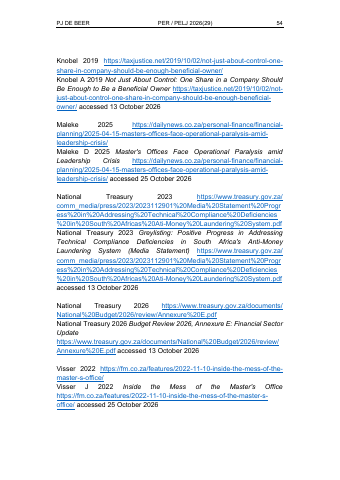 p.54
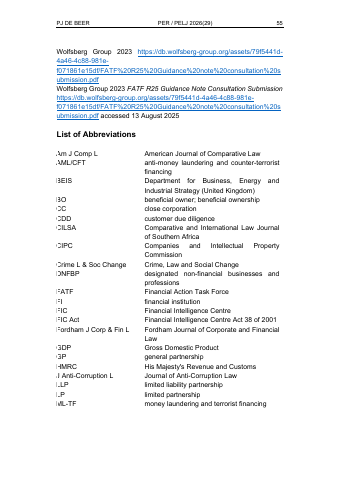 p.55
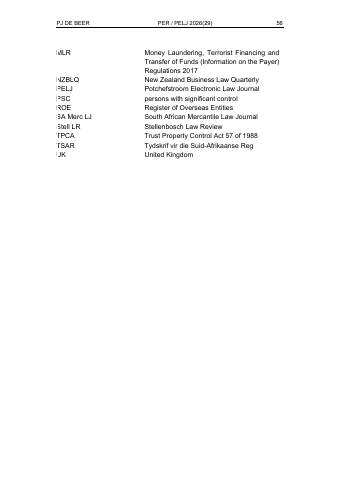 p.56
Topics and entities
Summary and figures generated from the document and checked automatically: every number shown appears on the cited page. Publishers can request removal.