Financing the Energy Transition: Assessing the Macroeconomic Determinants of Carbon Finance Adoption in Emerging Markets (Advanced Business Journal)
Summary
- Global climate finance reached approximately USD 1.46 trillion in 2022 according to Climate Policy Initiative estimates.p.2
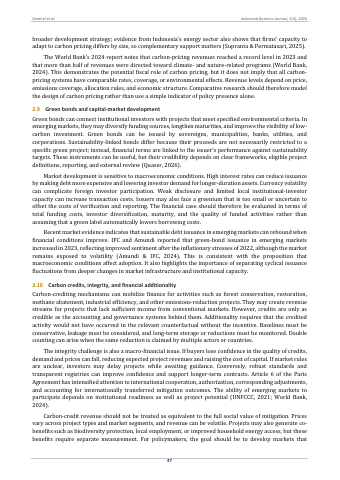
- World Bank data reveals that carbon-pricing revenues reached a record USD 104 billion globally in 2023.p.2
- A total of 75 carbon-pricing instruments were operating worldwide in 2024.p.2
- Operating carbon-pricing mechanisms covered around 24% of global greenhouse gas emissions in 2024.p.2
- More than half of global carbon-pricing revenues in 2023 were directed toward climate- and nature-related programs.p.7
- Green-bond issuance in emerging markets increased in 2023 following inflationary stresses in 2022.p.7
Key insights
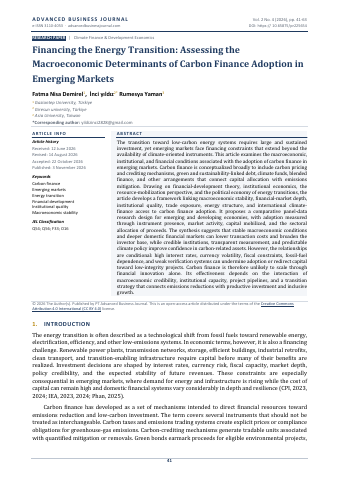
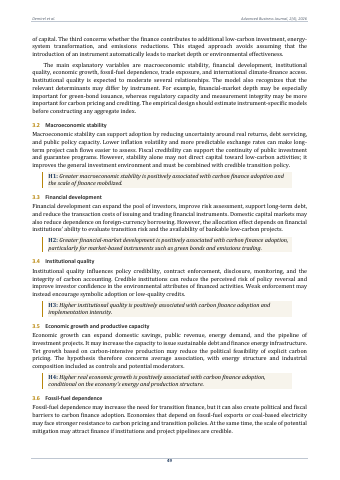
- Stable macroeconomic conditions and deeper domestic financial markets lower transaction costs and broaden the investor base for carbon finance adoption.p.1
- Carbon finance cannot scale through financial innovation alone without macroeconomic credibility, project pipelines, and supportive institutional capacity.p.1
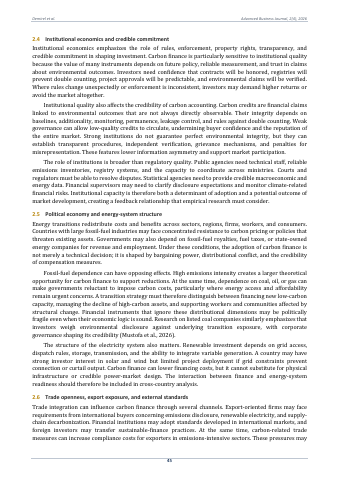
- High interest rates and foreign-exchange volatility significantly complicate local-currency project financing for long-horizon renewable energy projects in emerging markets.p.4
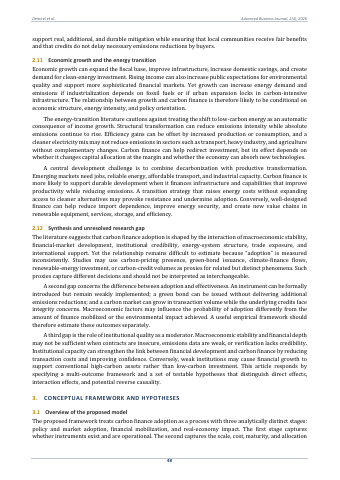
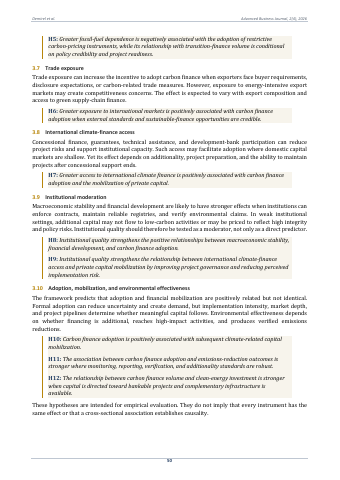
- Institutional quality acts as a vital moderator that strengthens the positive relationship between financial development and carbon finance adoption.p.10
- High dependence on fossil fuels creates political barriers to carbon pricing, making its link with transition-finance volume conditional on policy credibility.p.10
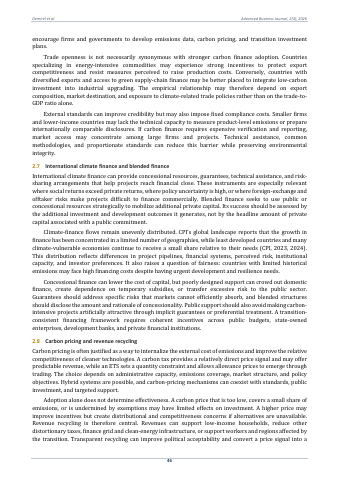
- International trade exposure increases incentives for carbon finance adoption when external standards and sustainable supply-chain opportunities are credible.p.10
- Formal adoption of carbon finance instruments does not automatically guarantee effective emissions reductions or additional low-carbon capital allocation.p.18
Pages
 p.1
 p.2
 p.3
 p.4
 p.5
 p.6
 p.7
 p.8
 p.9
 p.10
 p.11
 p.12
 p.13
 p.14
 p.15
 p.16
 p.17
 p.18
 p.19
 p.20
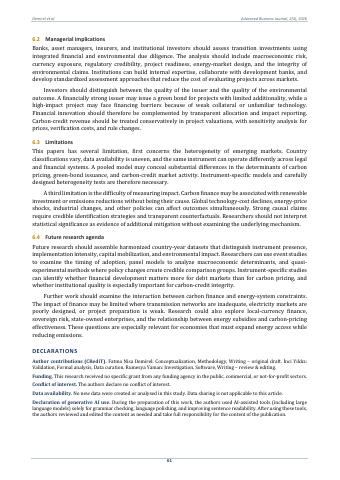 p.21
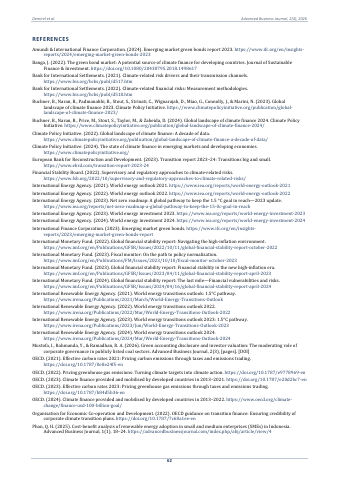 p.22
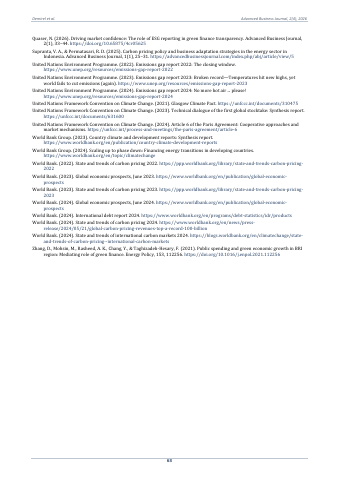 p.23
Topics and entities
Summary and figures generated from the document and checked automatically: every number shown appears on the cited page. Publishers can request removal.