Digital Financial Literacy and Trust in Hybrid AI Advisory: Explaining Perceived Private Wealth Management Capability Among Digitally Engaged Retail Investors in an Emerging Market (OpenAlex (recherche mondiale))
Summary
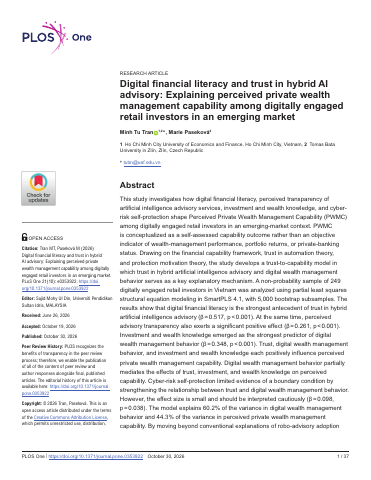
- A non-probability sample of 249 digitally engaged retail investors in Vietnam was evaluated using PLS-SEM with 5,000 bootstrap subsamples.p.1
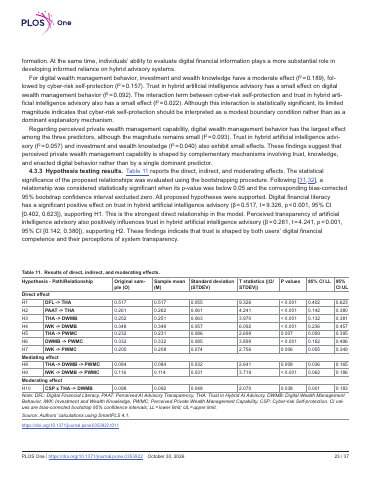
- Digital financial literacy is identified as the primary driver of trust in hybrid artificial intelligence advisory (β = 0.517, p < 0.001).p.1
- Perceived AI advisory transparency exerts a significant positive effect on trust in hybrid AI advisory (β = 0.261, p < 0.001).p.1
- Investment and wealth knowledge represents the strongest direct predictor of digital wealth management behavior (β = 0.348, p < 0.001).p.1
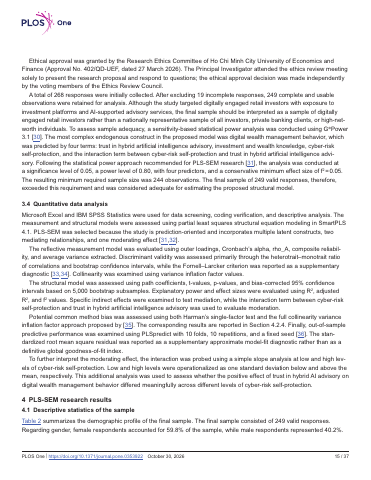
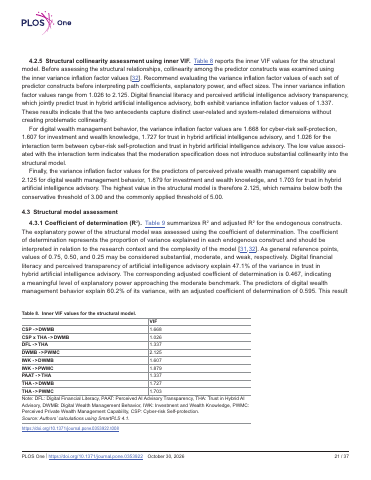
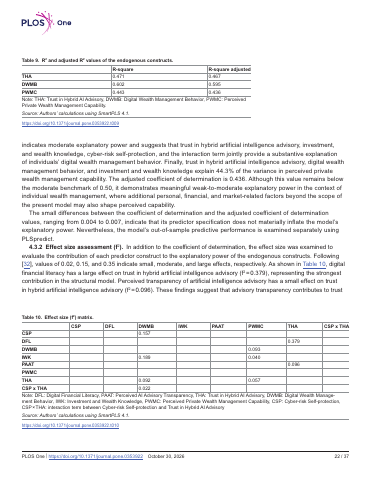
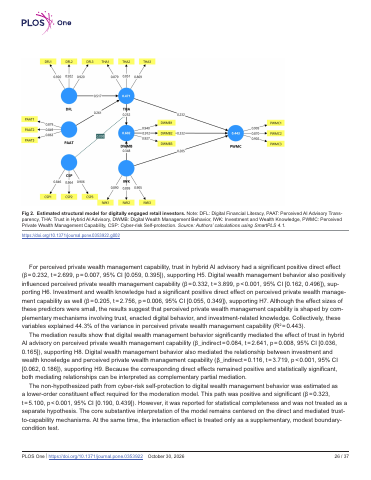
- The structural model accounts for 60.2% of the variance in digital wealth management behavior and 44.3% of the variance in perceived capability.p.1
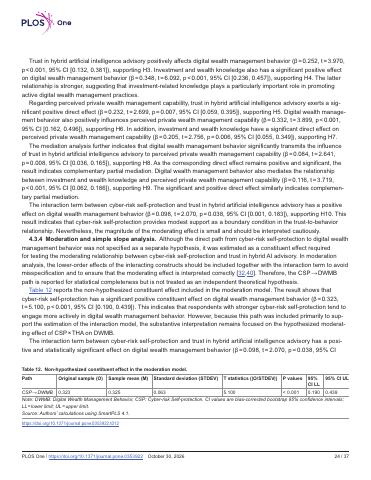
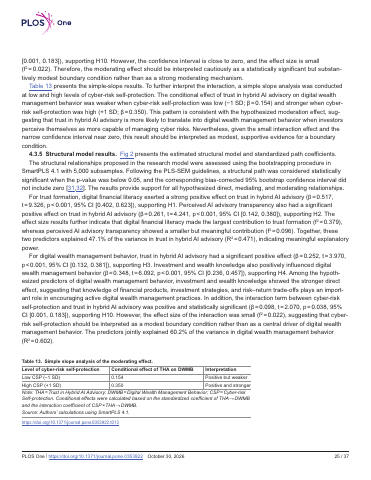
- Cyber-risk self-protection produces a small but statistically significant moderating effect on the trust-behavior relationship (β = 0.098, p = 0.038).p.1
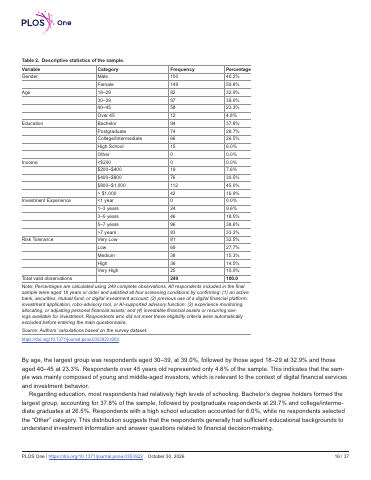
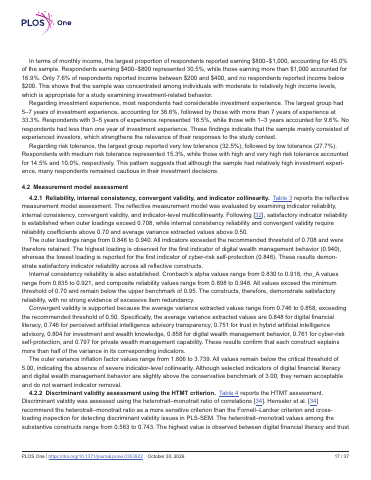
- Respondents earning $800–$1,000 per month represent the largest income group in the sample at 45.0%.p.17
Key insights
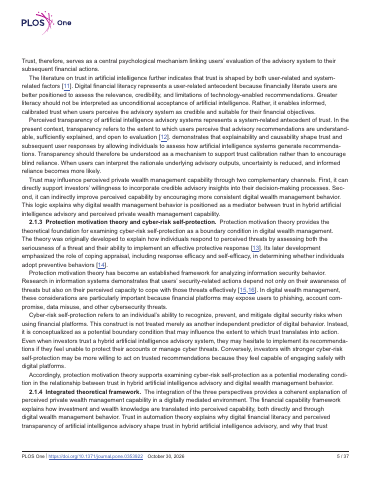
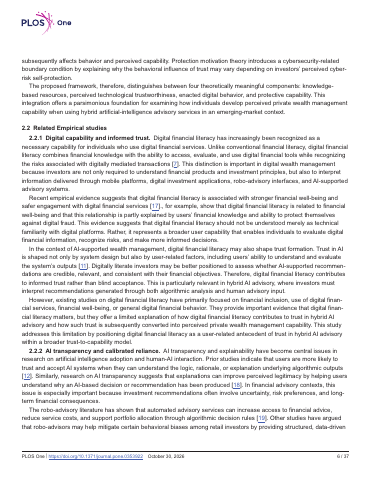
- Digital financial literacy serves as the fundamental competence enabling retail investors to establish calibrated trust in AI advisory outputs.p.1
- System transparency alone is insufficient to build trust without user-level digital financial competence to interpret recommendations.p.29
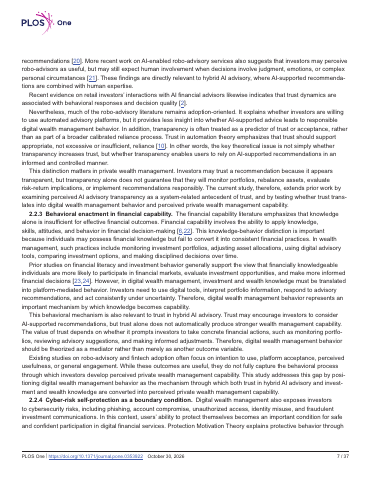
- Investment knowledge influences digital wealth management behavior more strongly than trust in the advisory system itself.p.24
- Digital wealth management behavior acts as a complementary partial mediator linking both trust and knowledge to perceived wealth capability.p.24
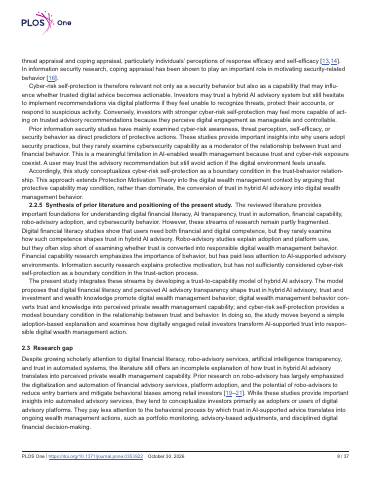
- Cyber-risk self-protection functions as a modest boundary condition that helps investors act on trusted AI advice safely.p.24
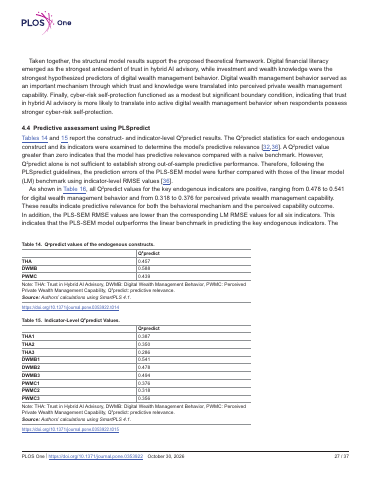
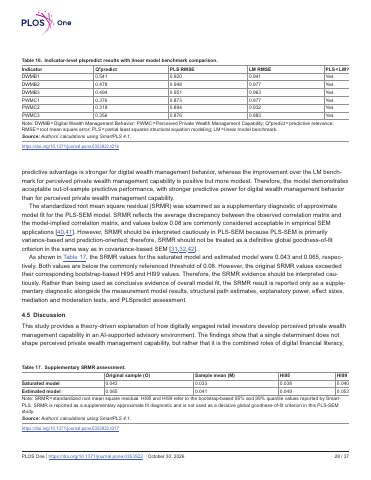
- Out-of-sample PLSpredict evaluation confirms the model outperforms linear benchmarks in predicting key behavioral indicators.p.28
Pages
 p.1
 p.2
 p.3
 p.4
 p.5
 p.6
 p.7
 p.8
 p.9
 p.10
 p.11
 p.12
 p.13
 p.14
 p.15
 p.16
 p.17
 p.18
 p.19
 p.20
 p.21
 p.22
 p.23
 p.24
 p.25
 p.26
 p.27
 p.28
 p.29
 p.30
 p.31
 p.32
 p.33
 p.34
 p.35
 p.36
 p.37
Topics and entities
Summary and figures generated from the document and checked automatically: every number shown appears on the cited page. Publishers can request removal.