Current Strategies for Financing Enterprise Development: An Innovative and Harmonious Approach (OpenAlex (recherche mondiale))
Summary
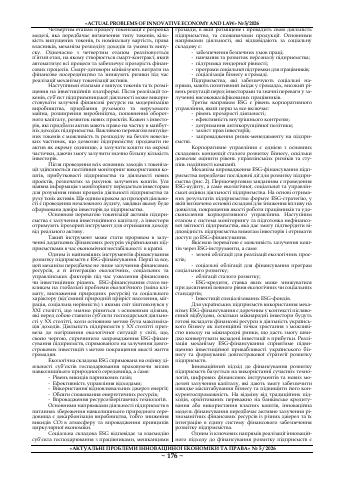
- Asset tokenization serves as a digital financing mechanism converting real asset rights into blockchain-based tokens (page 2).p.2
- Smart contracts facilitate asset tokenization by automating operational processes and reducing intermediary costs (page 3).p.3
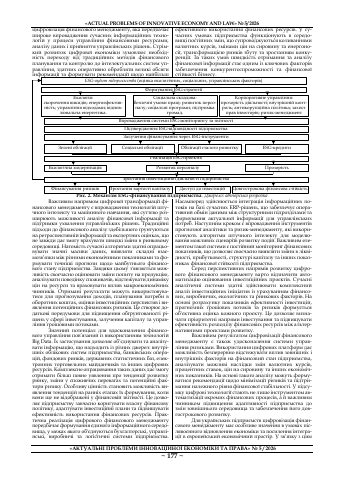
- ESG financing incorporates environmental, social, and governance evaluation to unlock access to green bonds, social bonds, and ESG loans (page 4).p.4
- Digital transformation integrates artificial intelligence and machine learning algorithms to enhance risk management and cash flow forecasting (page 4).p.4
- Alternative financing tools such as crowdfunding and venture capital allow enterprises to lower reliance on traditional bank loans (page 5).p.5
- The article was officially published on 05.11.2026 in issue No. 5 of the journal Actual Problems of Innovative Economy and Law (page 1).p.1
Key insights
- Digital financial technologies significantly cut search costs for investors while expanding enterprise access to funding (page 2).p.2
- Tokenizing corporate property and intellectual assets allows fractional investment from a broader pool of investors (page 3).p.3
- Establishing clear ESG strategies and non-financial reporting improves corporate reputation and attracts dedicated ESG funds (page 3).p.3
- Artificial intelligence tools enable automated evaluation of investment projects based on real-time financial and market data (page 4).p.4
- Crowdfunding provides early-stage startups and high-risk innovative ventures an alternative route to capital acquisition via specialized platforms (page 5).p.5
- Integrating blockchain and electronic identification enhances trust and transparency between companies and prospective investors (page 5).p.5
Pages
 p.1
 p.2
 p.3
 p.4
 p.5
 p.6
Topics and entities
Summary and figures generated from the document and checked automatically: every number shown appears on the cited page. Publishers can request removal.