Crypto-Assets and the Need for International Regulatory Harmonization: Challenges for the Prevention of Money Laundering and for the Legal Certainty of Global Financial Markets (Revista Tópicos.)
Summary
- Cryptoasset seizures in criminal investigations by Brazil's Federal Police reached a record R$ 71 million in 2025.p.20
- The value of cryptoassets seized by Brazilian authorities in 2025 was more than 6 times larger than the amount recorded in 2024.p.21
- The European Union's MiCA regulation establishes unified standards across 27 countries that represent nearly 1/5 of the global economy.p.25
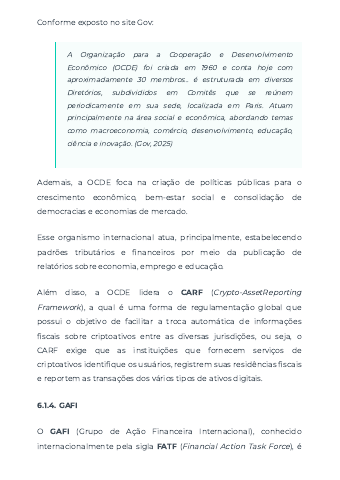
- The OECD was created in 1960 and comprises approximately 30 member states working on global economic standards.p.38
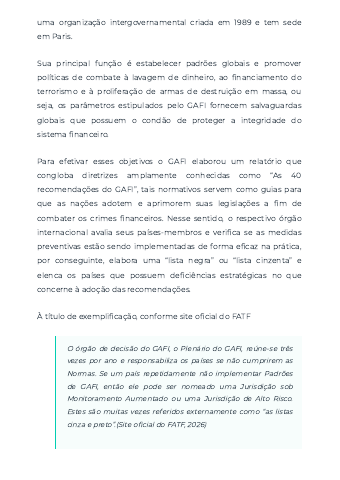
- FATF (GAFI) was founded in 1989 to establish international anti-money laundering and counter-terrorism financing standards.p.39
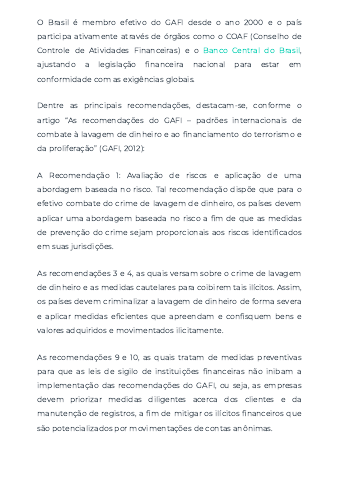
- Brazil has been an active full member of FATF since 2000, aligning its national framework with international mandates.p.40
Key insights
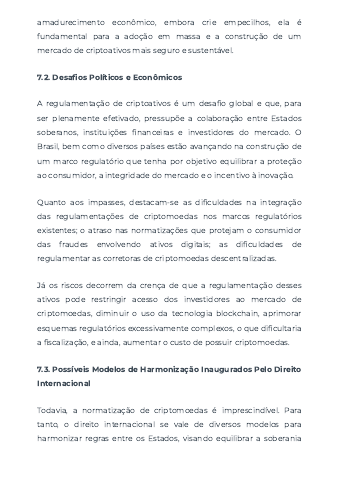
- The absence of international regulatory harmonization for cryptoassets creates legal uncertainty and facilitates cross-border financial crimes.p.51
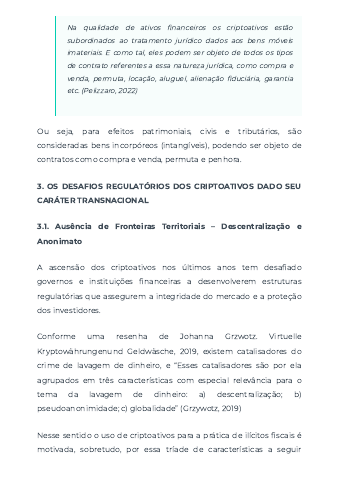
- Decentralization, pseudo-anonymity, and borderless global reach act as primary catalysts for money laundering risks in virtual assets.p.17
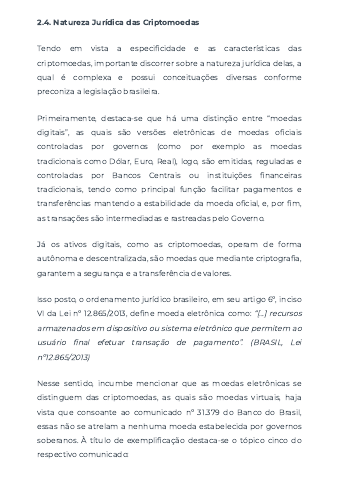
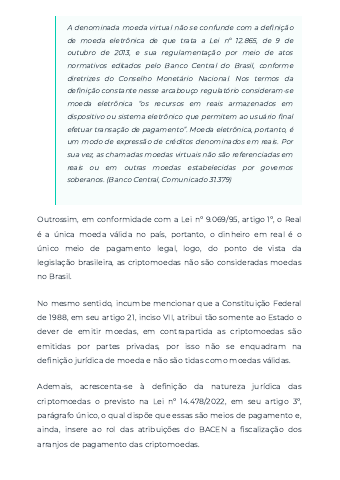
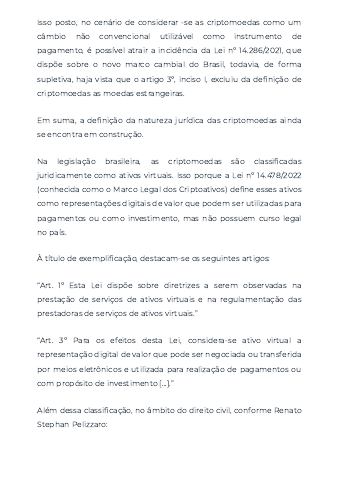
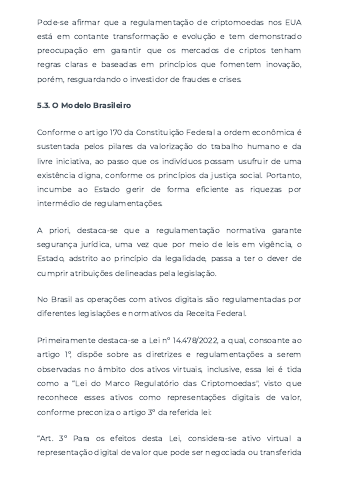
- Brazilian law classifies cryptoassets as virtual assets and incorporeal movable property rather than official legal tender.p.16
- The European Union's MiCA framework provides a pioneer harmonized model for licensing issuers and service providers.p.24
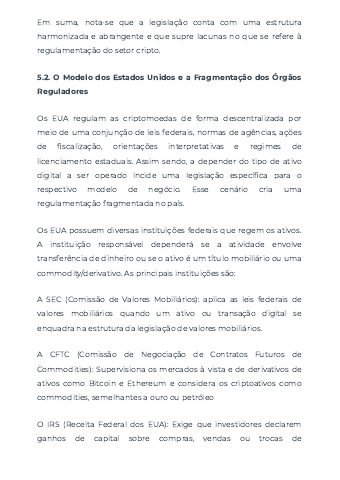
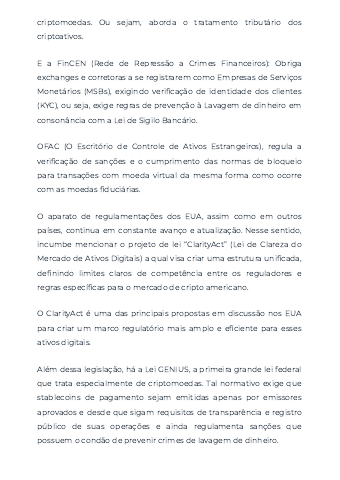
- United States crypto regulation remains highly fragmented across multiple federal and state regulatory bodies.p.26
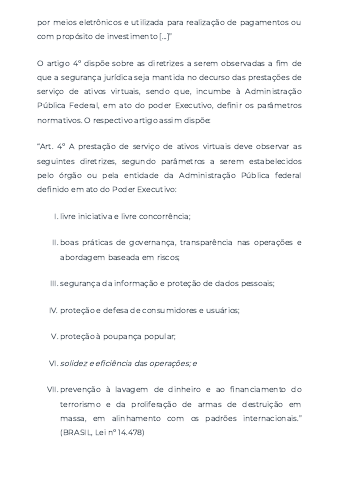
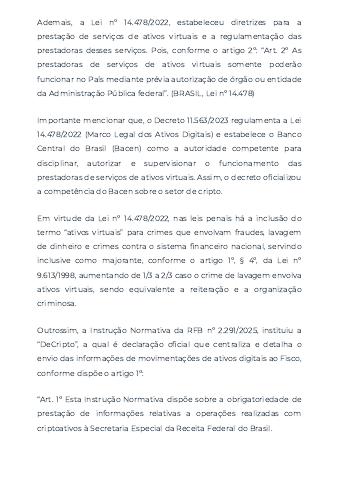
- Brazilian Decree 11.563/2023 officially authorized the Central Bank of Brazil to regulate and supervise virtual asset service providers.p.30
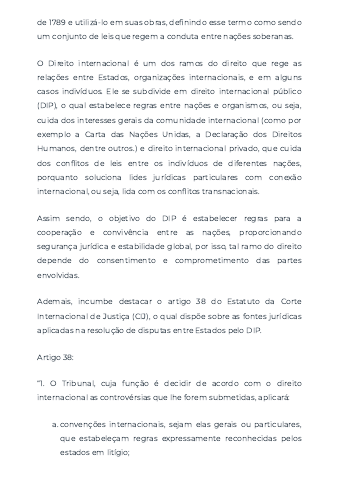
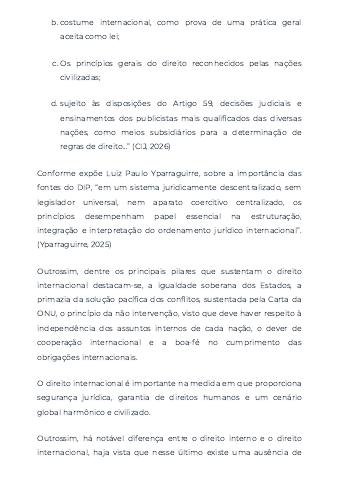
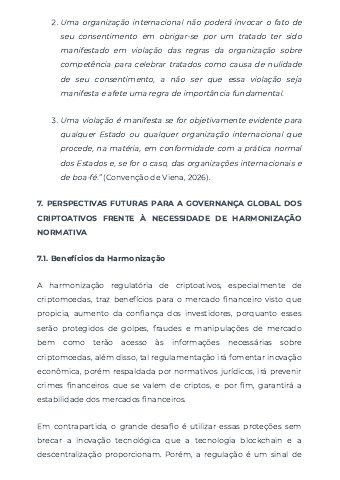
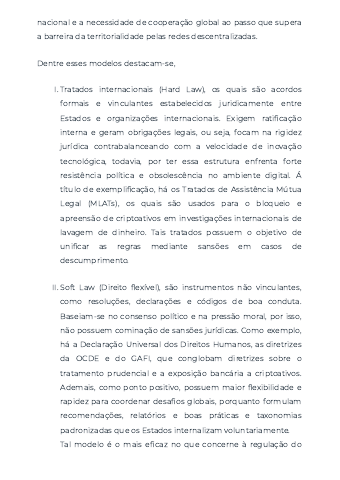
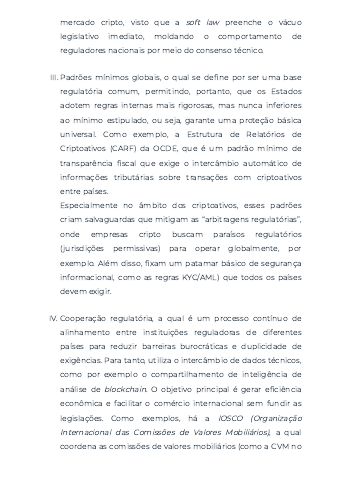
- International bodies rely on soft law mechanisms and minimum global standards to foster convergence without compromising national sovereignty.p.52
Pages
 p.1
 p.2
 p.3
 p.4
 p.5
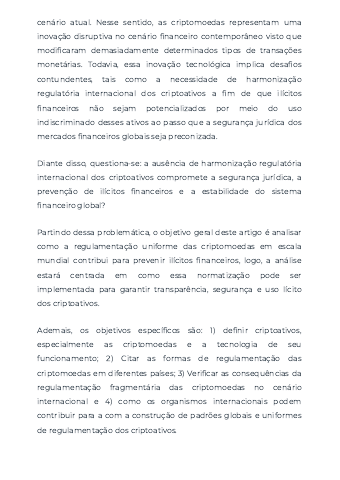 p.6
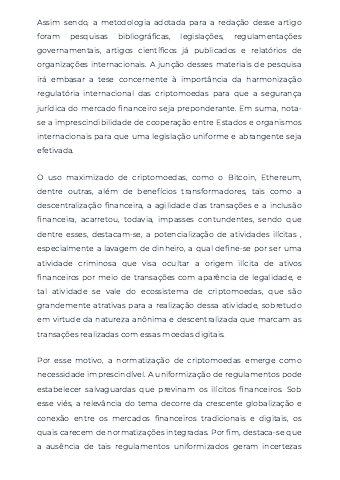 p.7
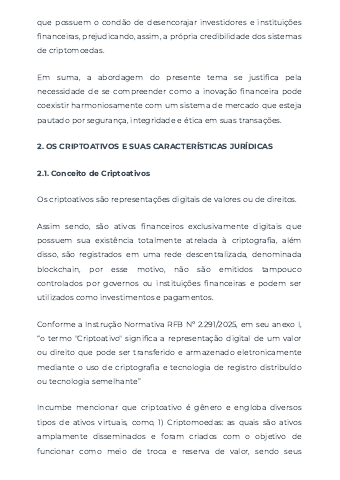 p.8
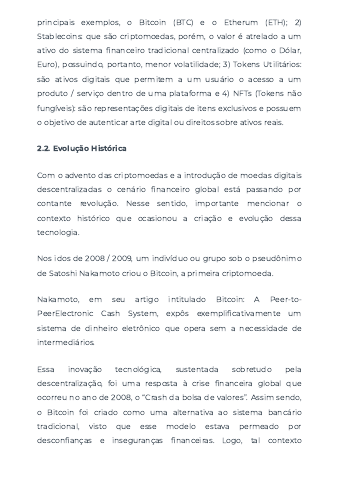 p.9
 p.10
 p.11
 p.12
 p.13
 p.14
 p.15
 p.16
 p.17
 p.18
 p.19
 p.20
 p.21
 p.22
 p.23
 p.24
 p.25
 p.26
 p.27
 p.28
 p.29
 p.30
 p.31
 p.32
 p.33
 p.34
 p.35
 p.36
 p.37
 p.38
 p.39
 p.40
 p.41
 p.42
 p.43
 p.44
 p.45
 p.46
 p.47
 p.48
 p.49
 p.50
 p.51
 p.52
 p.53
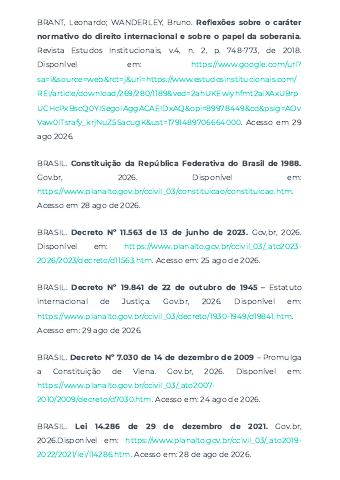 p.54
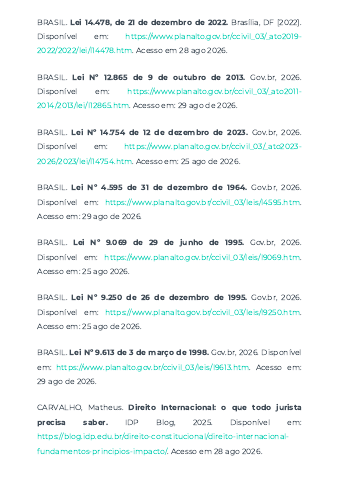 p.55
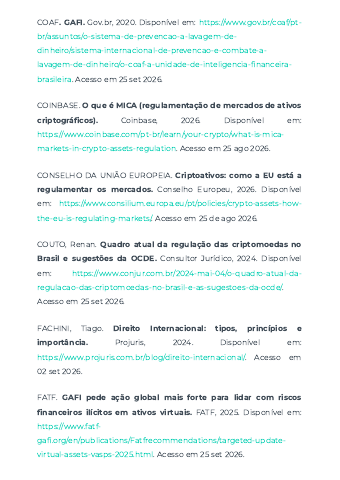 p.56
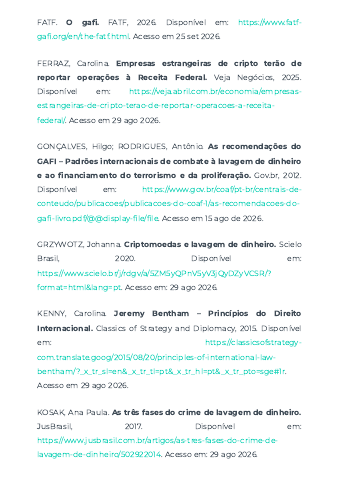 p.57
 p.58
 p.59
 p.60
Topics and entities
Summary and figures generated from the document and checked automatically: every number shown appears on the cited page. Publishers can request removal.