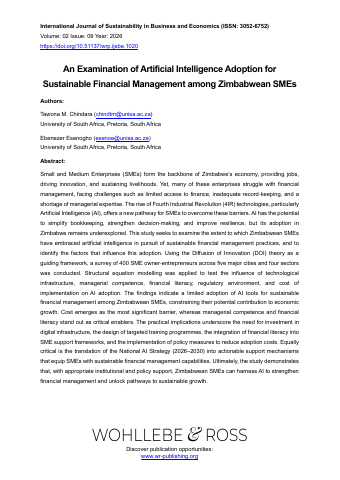
An Examination of Artificial Intelligence Adoption for Sustainable Financial Management among Zimbabwean SMEs (International Journal of Sustainability in Business and Economics)
Summary
- Micro and SMEs represent approximately 90% of Zimbabwe's economy and around 60% of the nation's Gross Domestic Product.p.5
- A quantitative survey was administered across 5 major cities to a final usable sample of 400 SME owner-entrepreneurs.p.11
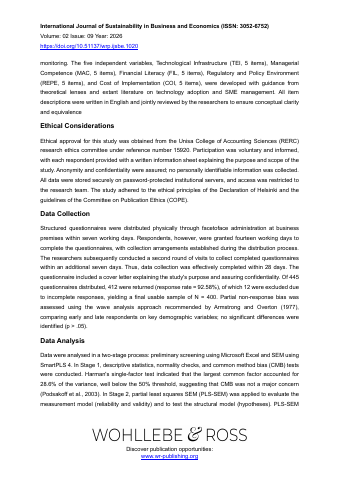
- Out of 445 questionnaires distributed, 412 were returned, achieving a response rate of 92.58%.p.13
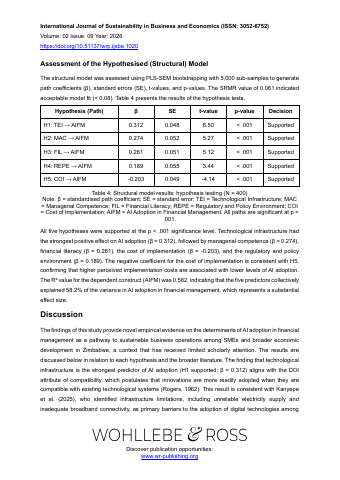
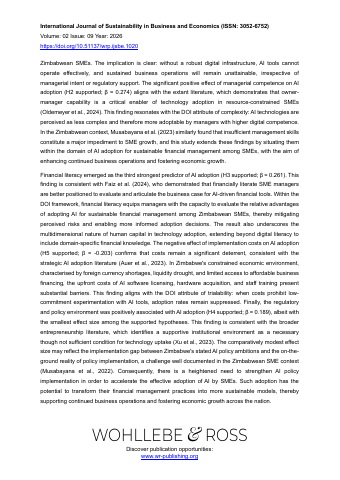
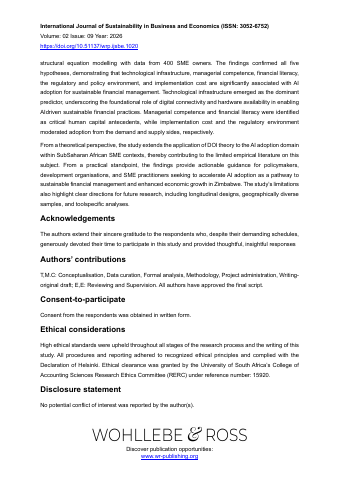
- The structural equation model accounted for 58.2% of the variance (R² = 0.582) in AI adoption for financial management.p.16
- Technological infrastructure had the strongest positive influence on AI adoption with a path coefficient of β = 0.312.p.16
- Implementation cost showed a statistically significant negative association with AI adoption (β = -0.203).p.16
Key insights
- Cost of implementation represents the most significant barrier to AI adoption among Zimbabwean SMEs (β = -0.203).p.16
- Technological infrastructure serves as the primary positive enabler for AI adoption in sustainable financial management (β = 0.312).p.16
- Managerial competence significantly drives AI adoption among SMEs with a path coefficient of β = 0.274.p.16
- Financial literacy plays a critical enabling role in AI adoption decisions with a path coefficient of β = 0.261.p.16
- Regulatory and policy environments positively influence AI adoption (β = 0.189), though showing the smallest effect size among tested drivers.p.16
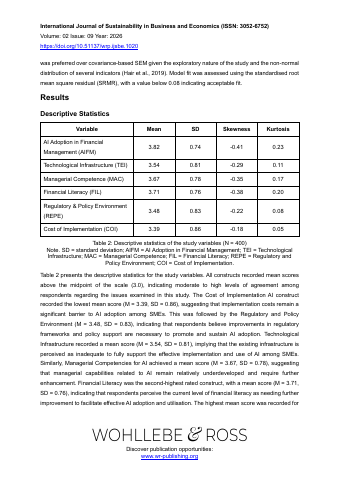
- The majority of surveyed SME owner-entrepreneurs were aged 26–35 years, representing 37.0% of total respondents.p.12
Pages
 p.1
 p.2
 p.3
 p.4
 p.5
 p.6
 p.7
 p.8
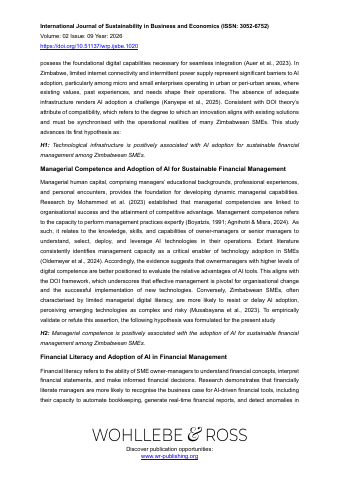 p.9
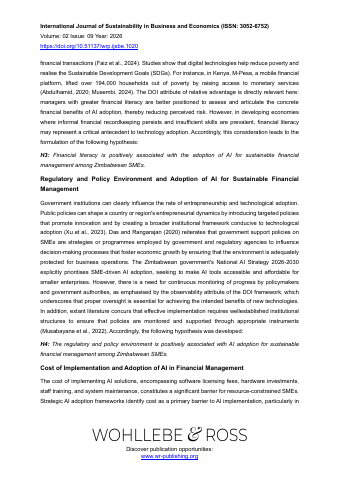 p.10
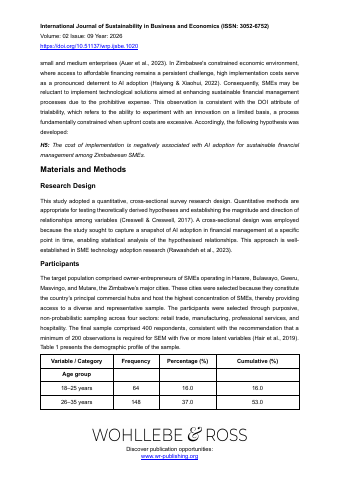 p.11
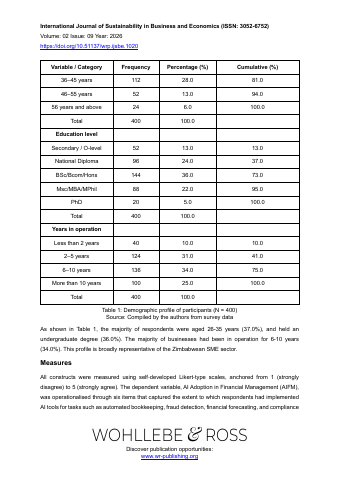 p.12
 p.13
 p.14
 p.15
 p.16
 p.17
 p.18
 p.19
 p.20
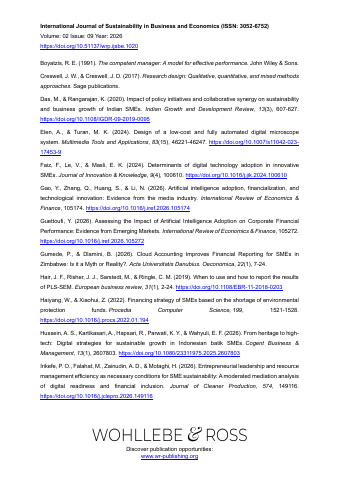 p.21
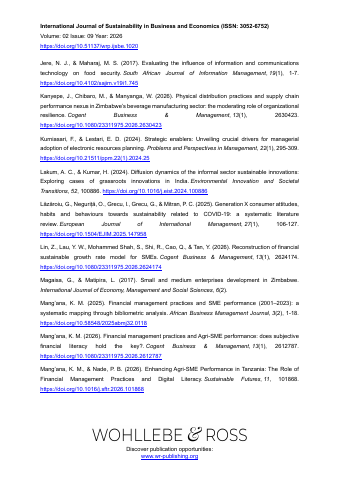 p.22
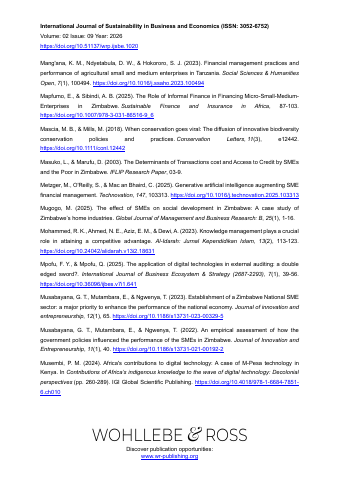 p.23
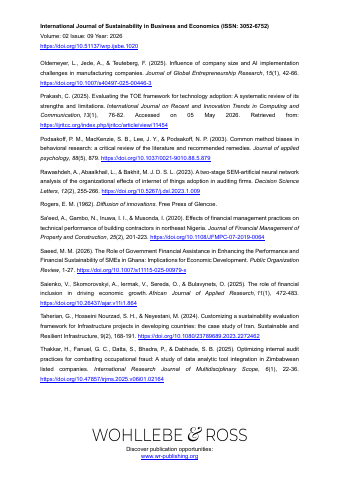 p.24
 p.25
Topics and entities
Summary and figures generated from the document and checked automatically: every number shown appears on the cited page. Publishers can request removal.