Are the Hedges of Funds Green? (OpenAlex (recherche mondiale))
Summary
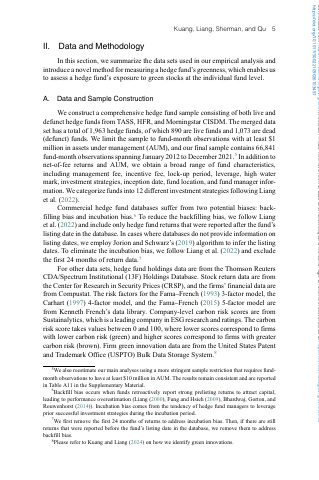
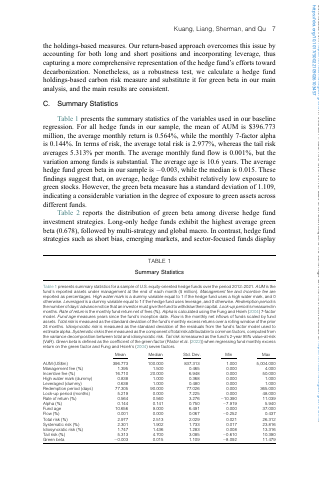
- The sample hedge funds report an average monthly AUM of $396.773 million, a average monthly rate of return of 0.564%, and a monthly 7-factor alpha of 0.144%.p.7
- A 1-standard-deviation increase in fund green beta is associated with a 0.985% per annum increase in fund alpha and a 1.624% per annum increase in excess return.p.11
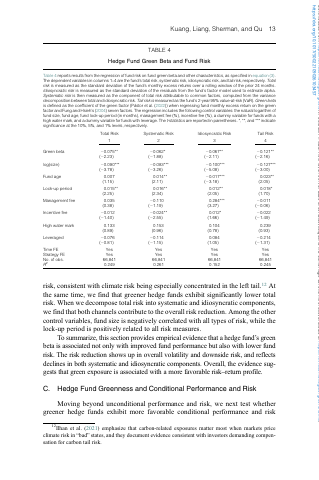
- A 1-standard-deviation increase in fund green beta corresponds to a monthly reduction of 0.083% in total risk and 0.134% in tail risk.p.12
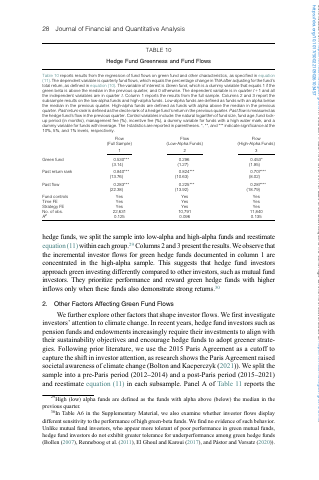
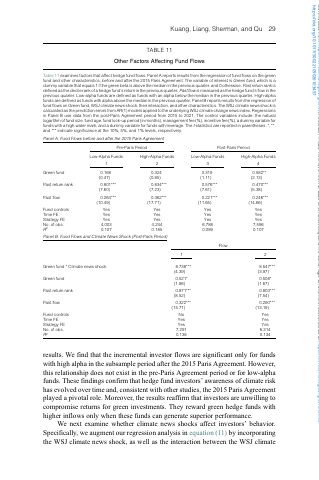
- Funds with an above-median green beta attract a 0.53% increase in quarterly investor flows, with gains concentrated among high-performing funds.p.28
Key insights
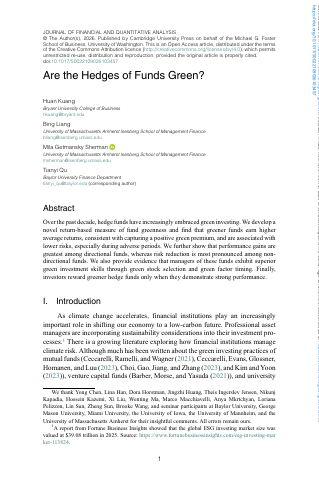
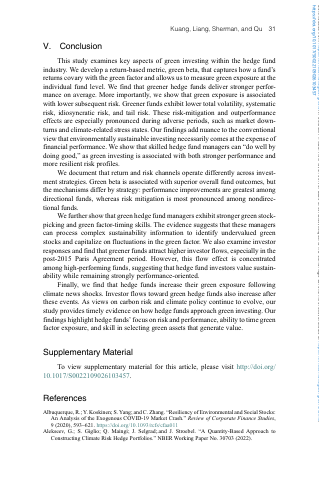
- Greener hedge funds achieve higher average excess returns and 7-factor alphas, consistent with capturing a positive green premium.p.1
- Hedge fund greenness acts as a risk mitigation strategy, associated with lower total, systematic, idiosyncratic, and tail risks.p.12
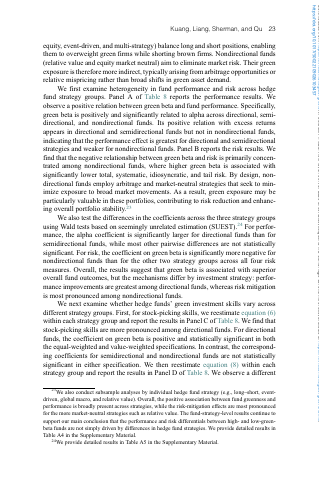
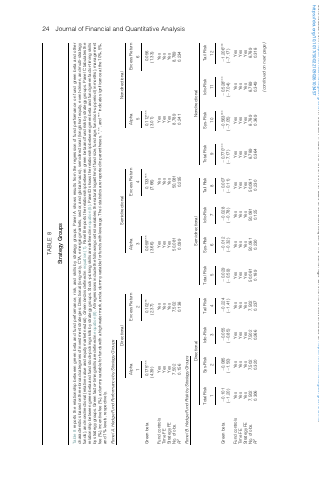
- Performance gains from green exposure are largest among directional hedge funds, whereas risk-reduction benefits are most pronounced in nondirectional funds.p.23
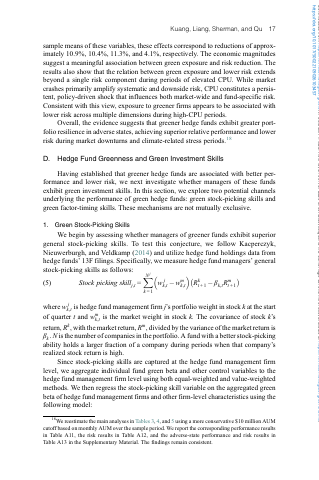
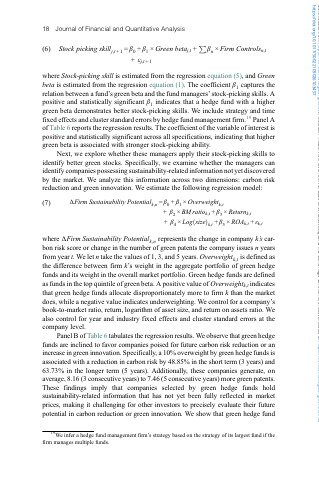
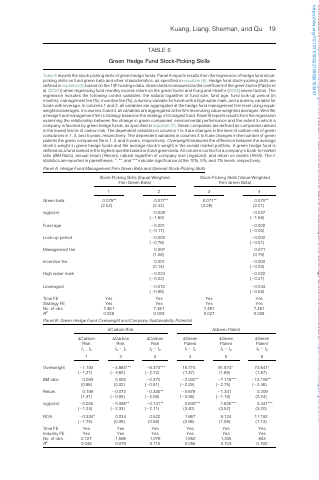
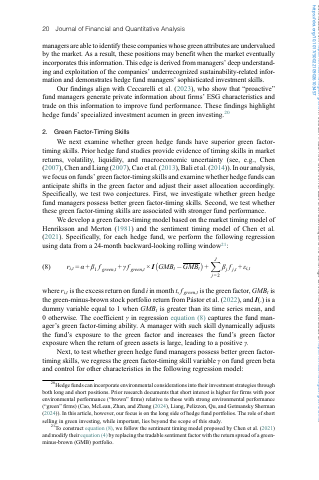
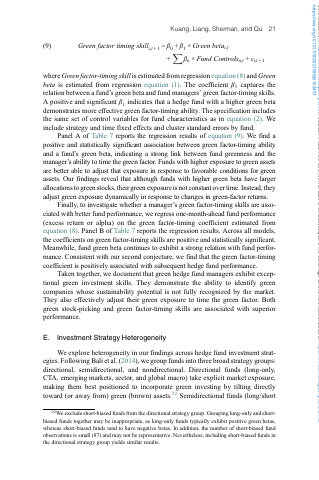
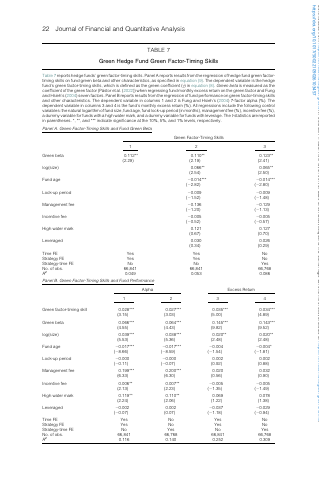
- Green hedge fund managers demonstrate distinct managerial skills through superior green stock selection and dynamic green factor timing.p.17
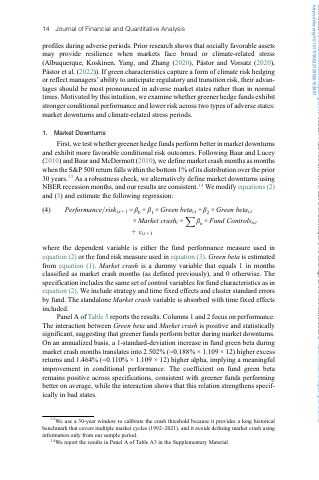
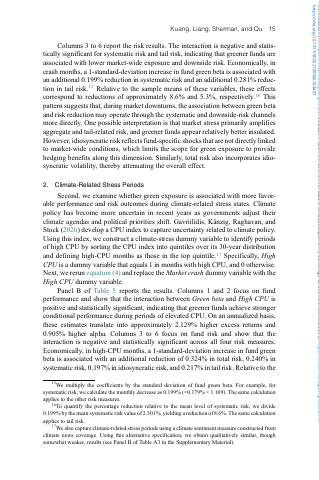
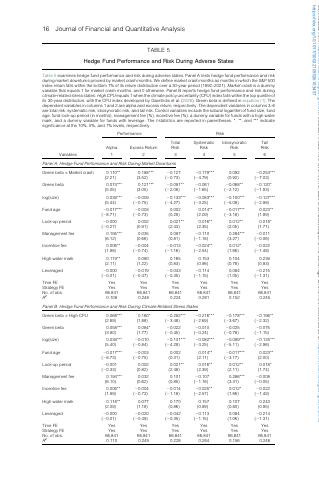
- Greener hedge funds display enhanced portfolio resilience during adverse states, including market downturns and periods of high climate policy uncertainty.p.14
- Hedge funds tilt their trading toward companies poised for future carbon risk reduction and greater green patent output.p.18
- Investors reward greener hedge funds with increased capital inflows only when the funds deliver strong financial performance.p.28
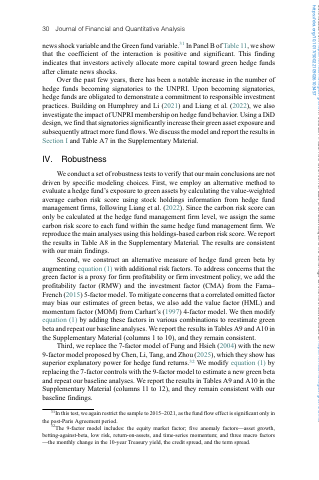
- Hedge fund managers actively expand their portfolio green exposure following unexpected climate news shocks.p.26
Pages
 p.1
 p.2
 p.3
 p.4
 p.5
 p.6
 p.7
 p.8
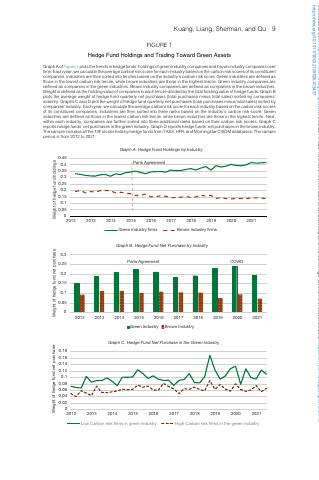 p.9
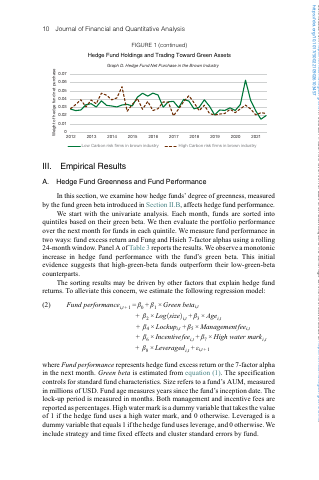 p.10
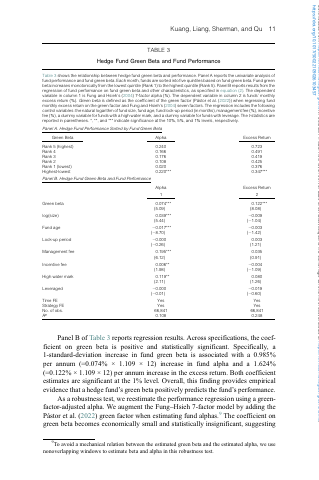 p.11
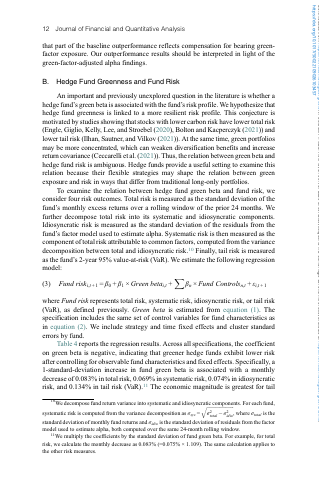 p.12
 p.13
 p.14
 p.15
 p.16
 p.17
 p.18
 p.19
 p.20
 p.21
 p.22
 p.23
 p.24
 p.25
 p.26
 p.27
 p.28
 p.29
 p.30
 p.31
 p.32
 p.33
Topics and entities
Summary and figures generated from the document and checked automatically: every number shown appears on the cited page. Publishers can request removal.