Top Banking Trends for 2026
If digital currencies continue to gain traction, up to $13 trillion in transaction value could shift to alternative payment methods by 2030, putting an estimated $13 billion in payment fees at risk.
53 documents
If digital currencies continue to gain traction, up to $13 trillion in transaction value could shift to alternative payment methods by 2030, putting an estimated $13 billion in payment fees at risk.
The Financial Conduct Authority spent £14m on its InvestSmart campaign to promote positive investing principles.
Over 1 billion people currently live in Fragile and Conflict-Affected States, where payment ecosystem disruptions present severe risks to economic stability.
The note categorizes single-ledger arrangements into 4 operating models: integration, distribution, separation, and permissionless.
Over 90 percent of surveyed central banks are engaged in some form of CBDC work, with more than half involved in experiments or pilot projects.
The Boston Consulting Group estimates that asset tokenization could reach $16 trillion or 10 percent of global GDP by 2030.
Thirty of the 33 central banks in sub-Saharan Africa responded to the regional survey on digital currencies and payments.
reached 483 companies by the close of 2023, reflecting a yearly growth of eleven percent, while Liechtenstein hosted 22 FinTech companies.
Total crypto asset market capitalization peaked at around $3 trillion in November 2021 before falling below $1 trillion.
According to a 2022 BIS survey, 93 percent of central banks are actively exploring CBDCs and 58 percent report being likely to or possibly issuing a retail CBDC in the short or medium term.
The IMF mandate is governed by the central banks and finance ministries of 190 member countries.
In Ghana, the growth of mobile money increased access to financial services for unbanked demographics, with 35 percent of adults in rural areas reporting having used the service between 2014 and 2017.
Tether and USD Coin attempt to maintain a stable value by being purportedly backed one-for-one in value to underlying assets.
By August 2021, total crypto asset volume had grown by 230 percent year over year in Asian emerging market economies.
The global payment system is estimated to consume 47.3 TWh of energy annually, accounting for roughly 0.2 percent of total global electricity consumption.
Globally, the scale of crypto assets remains relatively small at $2–$3 trillion, or about 1 percent of total market value of financial assets.
In late 2021, the Central Bank of The Bahamas recorded around 20,000 active Sand Dollar wallets within a population of about 400,000.
BigTech firms invested over $2 billion in fintech companies in 2020, with Alphabet generating 23 fintech investments alone.
Bitcoin block rewards fell from 12.5 Bitcoins to 6.25 Bitcoins in May 2020.
Fintech Note 2022/001 provides guidance on modernizing commercial law frameworks to accommodate technological innovation while mitigating legal risks.
The IMF note examines the institutional frameworks for fintech regulation and supervision across 10 selected jurisdictions.
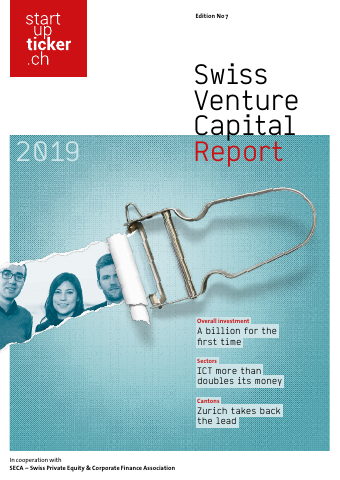
In 2018, nearly CHF 1.24 billion in venture capital was invested in Swiss start-ups, representing an increase of 31.8% on the previous year.
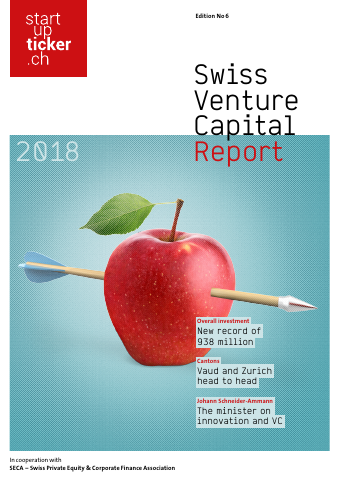
Total venture capital investment in Swiss start-ups reached CHF 937.7 million in 2017 across 175 financing rounds.