Central Bank Digital Currency's Role in Promoting Financial Inclusion
Financial inclusion is a top priority, with about 60 percent of emerging and low-income countries considering it one of their top three motivations for issuing a retail CBDC.
142 documents
Financial inclusion is a top priority, with about 60 percent of emerging and low-income countries considering it one of their top three motivations for issuing a retail CBDC.
Central banks must develop a long-term vision for monetary and payment systems spanning a time horizon of at least 5 to 10 years as economic digitalization accelerates.
ChatGPT acquired more than 100 million active users within two months of its launch on November 30, 2022.
The IMF mandate is governed by the central banks and finance ministries of 190 member countries.
In Ghana, the growth of mobile money increased access to financial services for unbanked demographics, with 35 percent of adults in rural areas reporting having used the service between 2014 and 2017.
In 2021, there were more than 300 million users of digital payments and more than 30 million users of digital banks across Latin America.
By August 2021, total crypto asset volume had grown by 230 percent year over year in Asian emerging market economies.
The global payment system is estimated to consume 47.3 TWh of energy annually, accounting for roughly 0.2 percent of total global electricity consumption.
Globally, the scale of crypto assets remains relatively small at $2–$3 trillion, or about 1 percent of total market value of financial assets.
In late 2021, the Central Bank of The Bahamas recorded around 20,000 active Sand Dollar wallets within a population of about 400,000.
BigTech firms invested over $2 billion in fintech companies in 2020, with Alphabet generating 23 fintech investments alone.
Bitcoin block rewards fell from 12.5 Bitcoins to 6.25 Bitcoins in May 2020.
Fintech Note 2022/001 provides guidance on modernizing commercial law frameworks to accommodate technological innovation while mitigating legal risks.
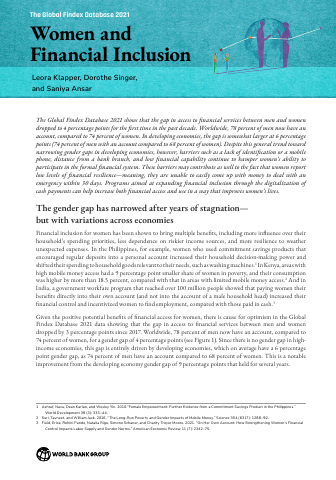
Worldwide, 78 percent of men have an account, compared to 74 percent of women.
Central banks in Brazil, Canada, the Euro Area/Japan, Singapore, South Africa, and Thailand have conducted large-value interbank payment DLT experiments.
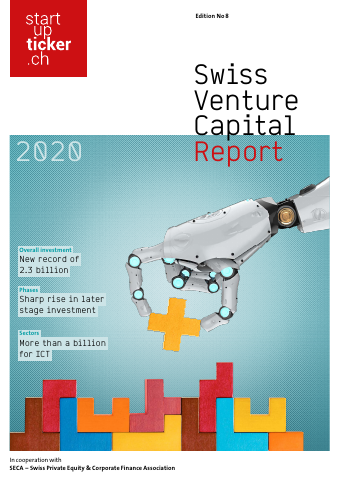
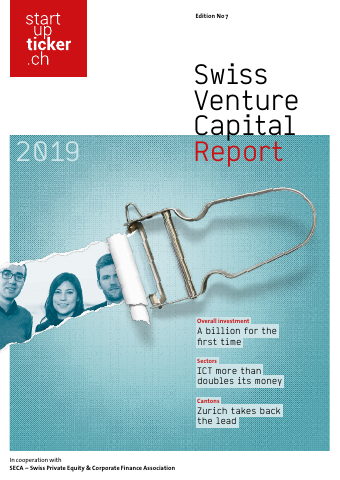
In 2019, almost CHF 2.3 billion was invested in 266 Swiss start-ups, representing an 85.5% increase compared with the previous year.
The IMF note examines the institutional frameworks for fintech regulation and supervision across 10 selected jurisdictions.
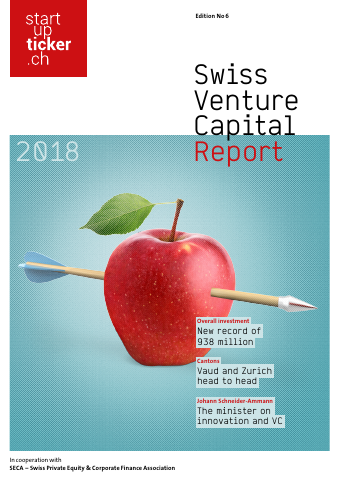
In 2018, nearly CHF 1.24 billion in venture capital was invested in Swiss start-ups, representing an increase of 31.8% on the previous year.
Six out of ten respondents used the mobile payment service Swish during the past month in 2018, compared to around 10 per cent in 2014.
Total venture capital investment in Swiss start-ups reached CHF 937.7 million in 2017 across 175 financing rounds.
Switzerland's financial sector employs over 200,000 people and generates nearly ten per cent of the country's gross domestic product.
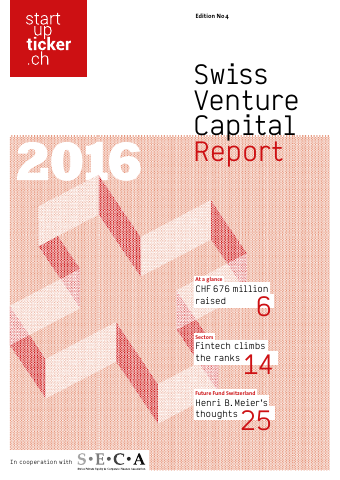
Venture capital investment in Swiss start-ups reached a peak of CHF 676 million across 120 financing rounds in 2015.